
Tanzania’s Richest Man Wants to Put $100 Million Into Dangote’s Proposed East Africa Refinery.
Aliko Dangote is planning a second mega-refinery on Africa’s east coast, likely in Lamu, Kenya. Mohammed Dewji of Tanzania wants in.

Ethiopia spends more than $4.5 billion a year importing refined petroleum products — petrol, diesel, jet fuel, kerosene — because it has no domestic refinery. Fuel costs 167 Birr a litre at the pump in Addis Ababa, all of it refined elsewhere and transported overland from Djibouti. Ethiopia’s export earnings hit a record $10.7 billion in 2025/26, meaning the country now earns more than twice what it spends on fuel imports, but the import bill still represents a significant foreign exchange drain and leaves the economy exposed to global oil price shocks. When the Middle East conflict pushed crude above $115 per barrel earlier this year, the government increased its budget by $2.63 billion in a single supplementary allocation to cover the additional fuel cost.
Dangote’s Lagos refinery, commissioned in phases from 2024, processes 700,000 barrels per day and supplies petrol, diesel, aviation fuel and other products to Ghana, Cameroon, Togo, Tanzania, Angola, and Ivory Coast. It took Nigeria from near-total dependence on imported refined products to covering 44 percent of its own fuel demand from one domestic facility. Dangote’s plan for East Africa follows the same logic: one large coastal refinery, processing crude from regional and international sources, distributing by sea and road across a region that currently imports all of its refined output. Kenyan President William Ruto has said construction is expected to begin this year, with Lamu on the northern Kenya coast identified as the preferred site for commercial and technical reasons. Dangote has not provided further detail on the site selection.
Dewji, CEO of MeTL Group with manufacturing operations across 11 African countries, told Bloomberg he would prefer the refinery in Tanzania but will invest regardless of whether it goes to Kenya. He has not yet spoken to Dangote directly. Several other potential investors have approached Dangote Industries, according to a senior company executive, with no further names or amounts disclosed. At $17 billion total project cost, $100 million is 0.6 percent of the capital requirement. Dewji is the wealthiest private investor in Tanzania. His public interest indicates the project economics work at the regional level.
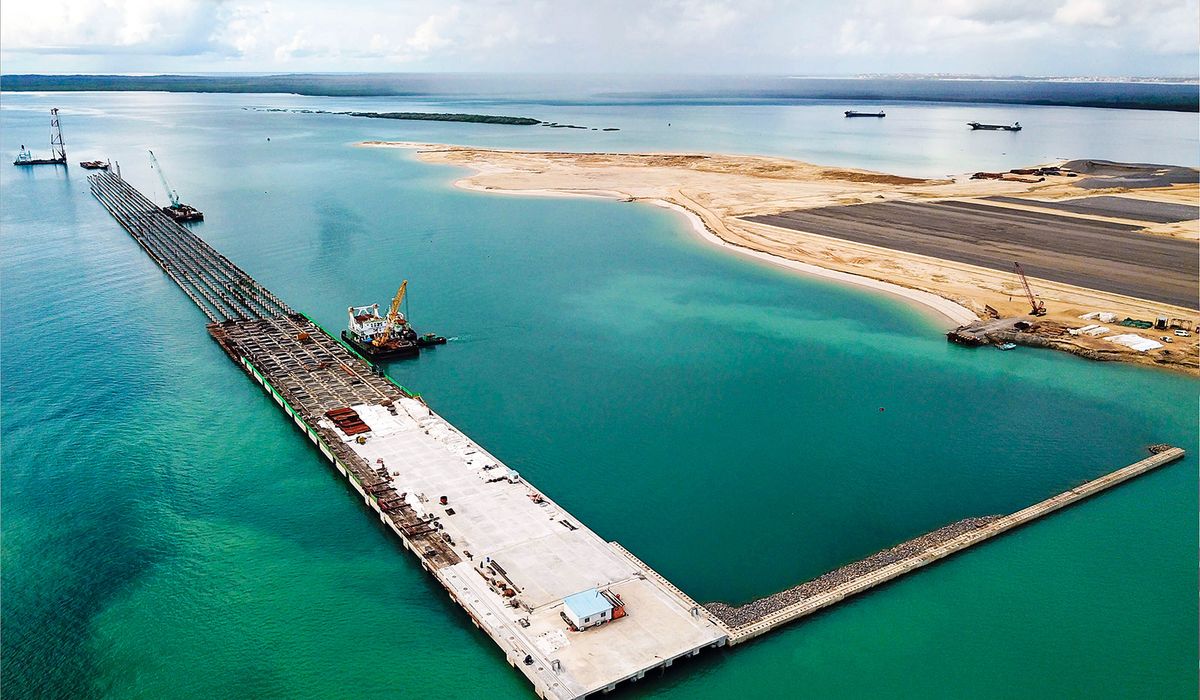
For Ethiopia, a Lamu-based refinery changes the cost structure of fuel procurement. Refined products currently travel from Gulf refineries to Djibouti port, then 900 kilometres overland to Addis Ababa. A Lamu facility, 1,200 kilometres away via the LAPSSET road corridor, would refine regionally without a 7,000-kilometre sea voyage. The Middle East shock earlier this year demonstrated how directly that supply chain exposes Ethiopia’s public finances to external energy price movements.
East Africa’s fuel import dependency runs across every country in the region. Kenya refines a small volume at the aging Mombasa refinery, around 80,000 barrels per day, operating below capacity. Uganda, Rwanda, Burundi, South Sudan, and the DRC import everything. Tanzania imports the majority of its refined products. Sub-Saharan Africa has refining capacity of around 1.5 million barrels per day against consumption of roughly 4 million. A facility at Lamu sized to the $17 billion investment level would process several hundred thousand barrels per day, enough to supply Kenya, Ethiopia, Uganda, Rwanda, and Tanzania combined.
The Lamu refinery is at the investment interest stage. Dewji’s commitment is public and uncontracted. Construction has not started. Dangote’s Lagos refinery took over 12 years from groundbreaking to first production and cost roughly three times its original estimate. For Ethiopia, Dangote Group is already a capital partner in the Gode urea fertilizer complex under construction in Somali Region. A Lamu refinery supplying East Africa in the early 2030s would arrive into an economy that will have spent well over $50 billion on imported fuel by that point.