
Fewer than 2 in 100 African infrastructure projects Default, the Lowest Rate of Any Region on Earth
AFDB says only 1.9% of African infrastructure projects fail to pay back the banks and governments that built them.
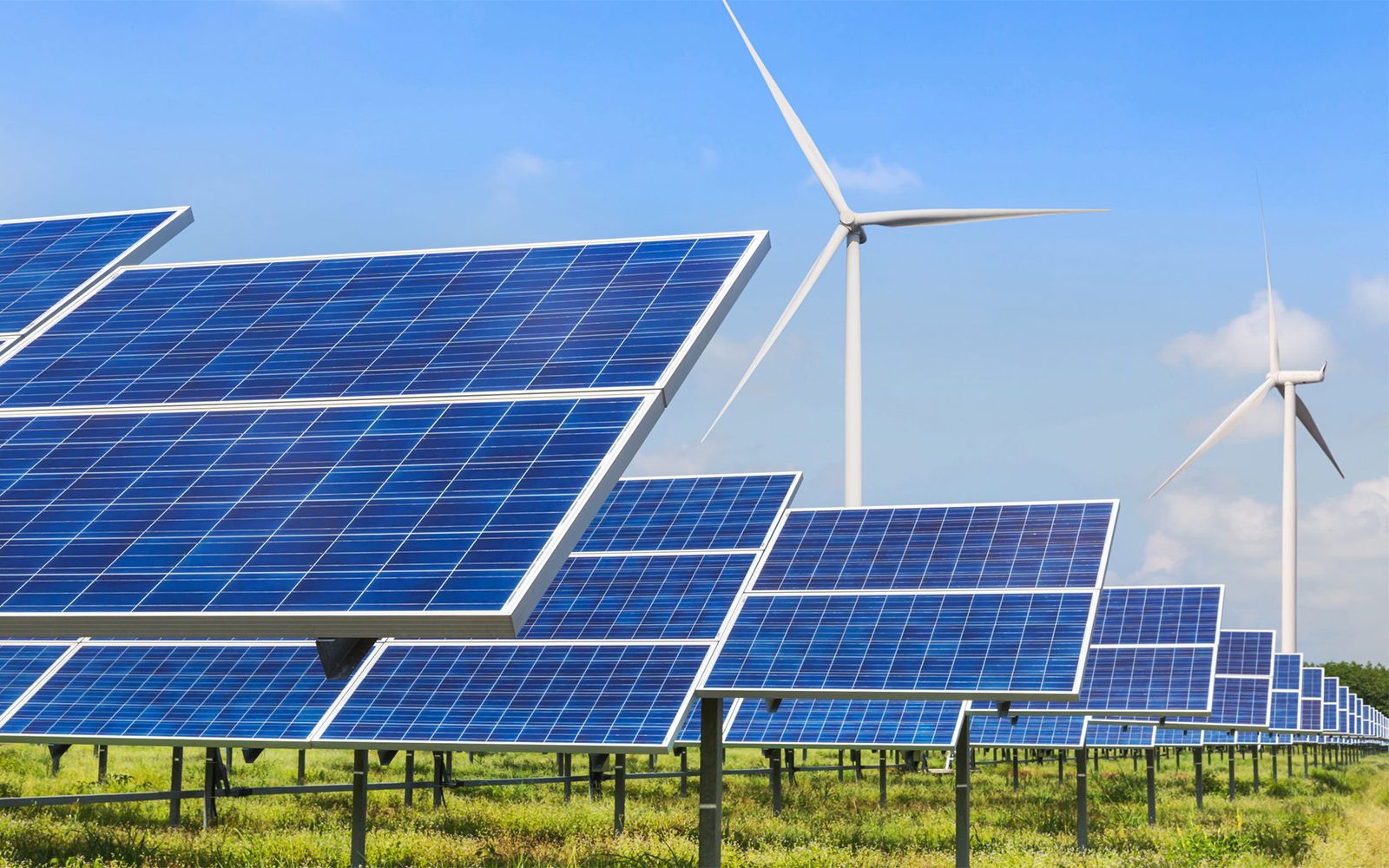
Fewer than two out of every hundred infrastructure projects across Africa fail to pay back the money that built them. That default rate — 1.9% — is the lowest logged for any region on the planet, according to the African Development Bank's Country Focus Report 2026 for Ethiopia. An investor weighing a solar plant outside Adama, or a toll road through the Rift Valley, is starting from safer numbers than the continent's reputation would suggest.
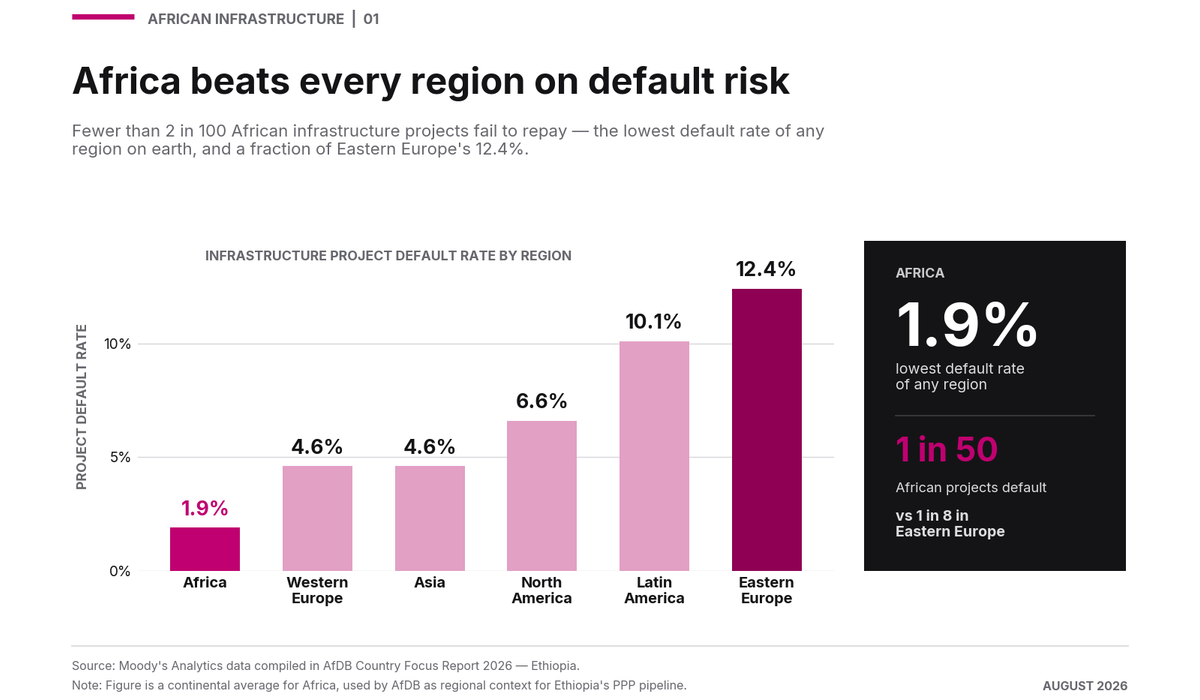
A default, in plain terms, is a project that stops paying its bills — the infrastructure equivalent of missing mortgage payments until the bank forecloses. Lenders around the world brace for that outcome more often than most people assume. Western Europe and Asia each post default rates of 4.6%. North America sits at 6.6%. Latin America climbs to 10.1%, and Eastern Europe tops the list at 12.4%, according to Moody's Analytics data compiled in the report. Set side by side with Africa's 1.9%, the difference is stark: in Eastern Europe, roughly 1 project in 8 runs into trouble. In Africa, it is fewer than 1 in 50.
The figure covers the whole continent, not Ethiopia on its own — the report treats it as regional context rather than a country-specific score. But Ethiopia sits inside that number, and the AfDB uses it directly to argue that the country's public-private partnership pipeline is more bankable than its debt headlines suggest.
That pipeline runs through Ethiopia's Ministry of Finance, which screens every proposed deal and ring-fences the fiscal risk before it reaches the government's books. The screening already has a working proof point. The ACWA Power solar plants — 250 megawatts of generating capacity — reached financial close on the strength of standardized contracts, government guarantees, and disciplined risk-sharing between the developer and the state. The power itself is priced at US$2.526 cents per kilowatt-hour, which works out to roughly 4 Birr for every unit of electricity an Ethiopian factory or household draws from that plant — cheap enough to undercut diesel generator backup by a wide margin.

Two further pieces are falling into place around that low-default backdrop. A National Bank of Ethiopia directive, FXD/86/2023, lets qualifying strategic power and infrastructure projects open offshore accounts and lock in convertibility guarantees for debt repayments and dividends — the kind of foreign-exchange certainty that has historically kept international lenders wary of Ethiopian deals. And the Ethiopian Securities Exchange began trading government securities in 2025, opening a future path for infrastructure loans to be refinanced through bonds once a project is running, instead of sitting on a bank's balance sheet for decades.
The pattern is not universal yet. Many projects, concentrated in energy and transport, have entered Ethiopia's PPP pipeline in recent years, but only a handful have reached financial close — the point at which money starts moving. Even so, the projects that do close are landing in a market where non-payment is rare by world standards, and where a real solar plant is already selling real power at a price competitive with anywhere on the continent.