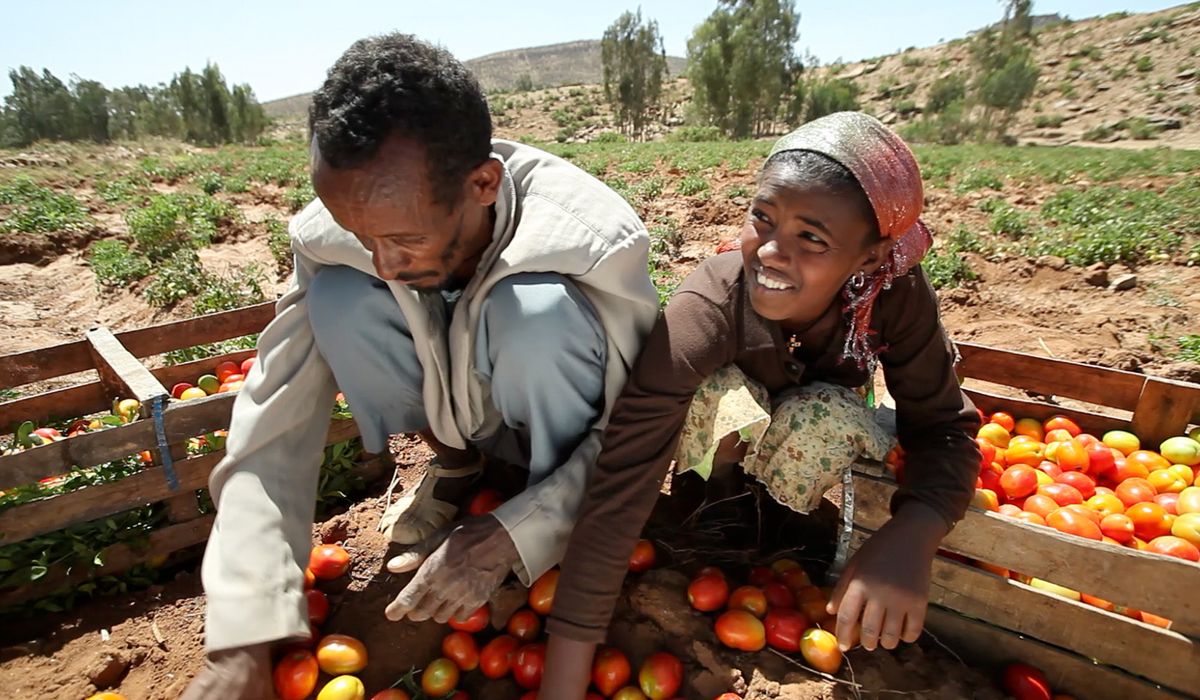
New $10 Million Fund Helps East African Agribusinesses Grow Without Heavy Bank Collateral
A new financing agreement signed in Kigali bypasses the punitive short-term lending of local commercial banks, utilizing development capital to absorb initial risks and unlock private investment for agricultural SMEs.

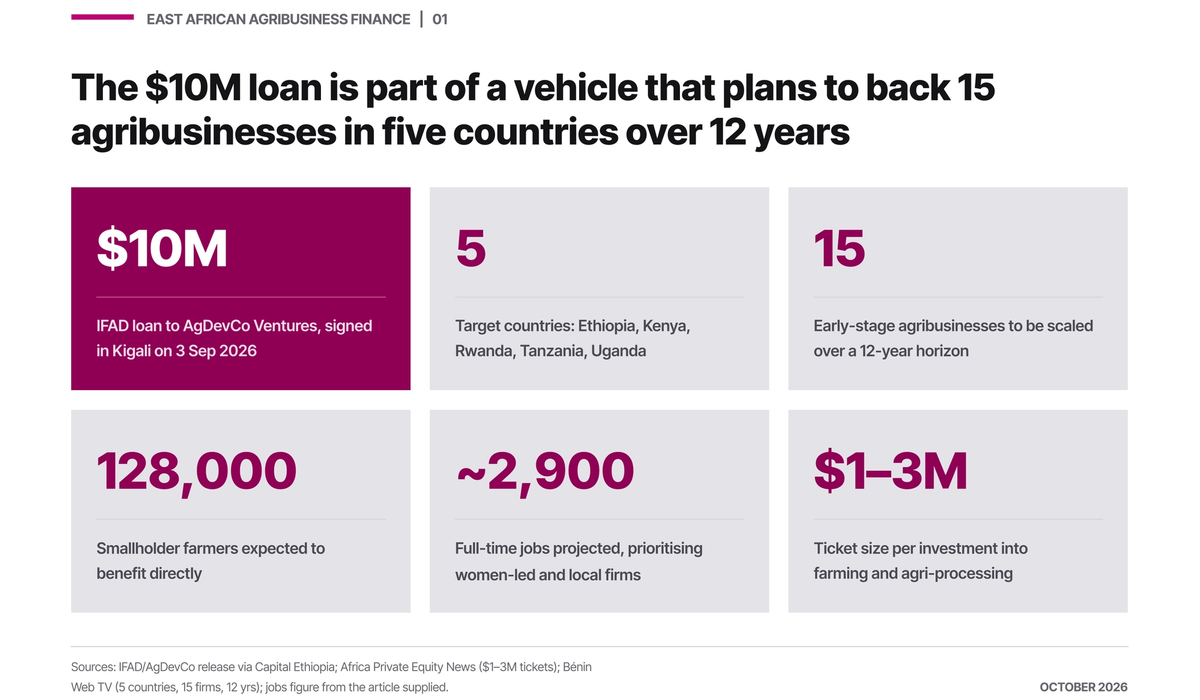
For an agricultural aggregator in Ethiopia or a food processor in Uganda, walking into a local commercial bank usually ends with the same impossible demand: post heavy physical collateral for a short-term loan that ignores the realities of a seasonal harvest. To bypass this structural bottleneck, the International Fund for Agricultural Development (IFAD) and AgDevCo Ventures signed a $10 million loan agreement in Kigali on September 3, 2026. The capital is designed to target early-stage agribusinesses across Ethiopia, Kenya, Rwanda, Tanzania, and Uganda that are too small for major institutional private equity but too complex for traditional local banking.
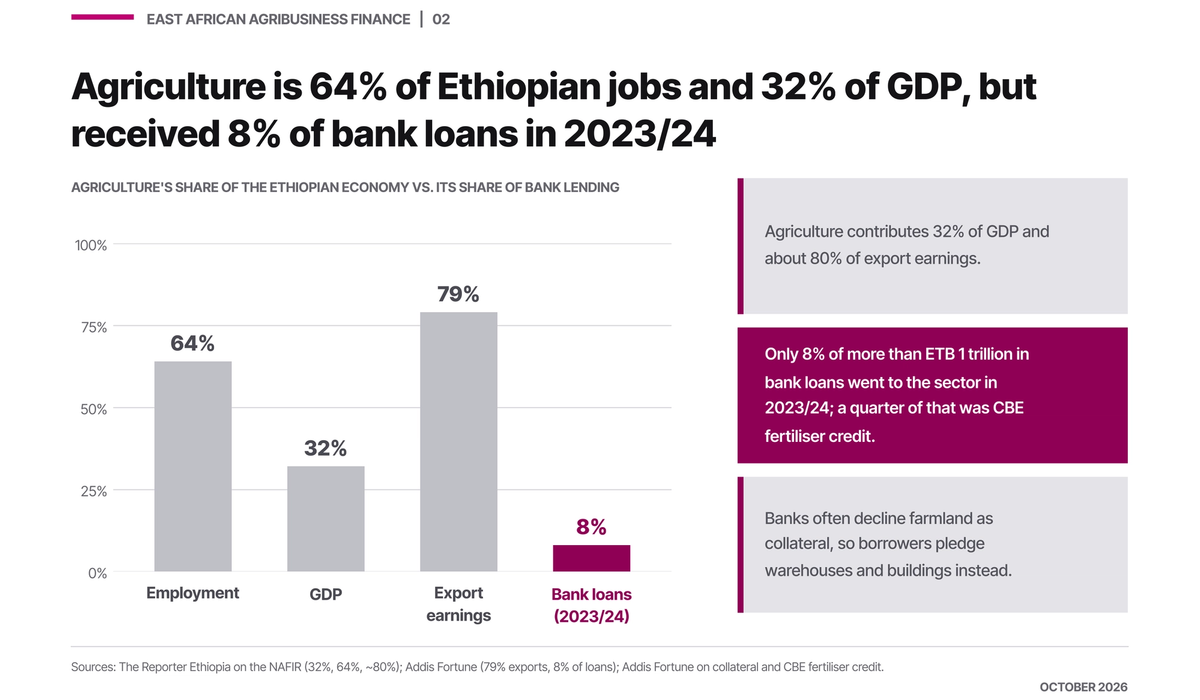
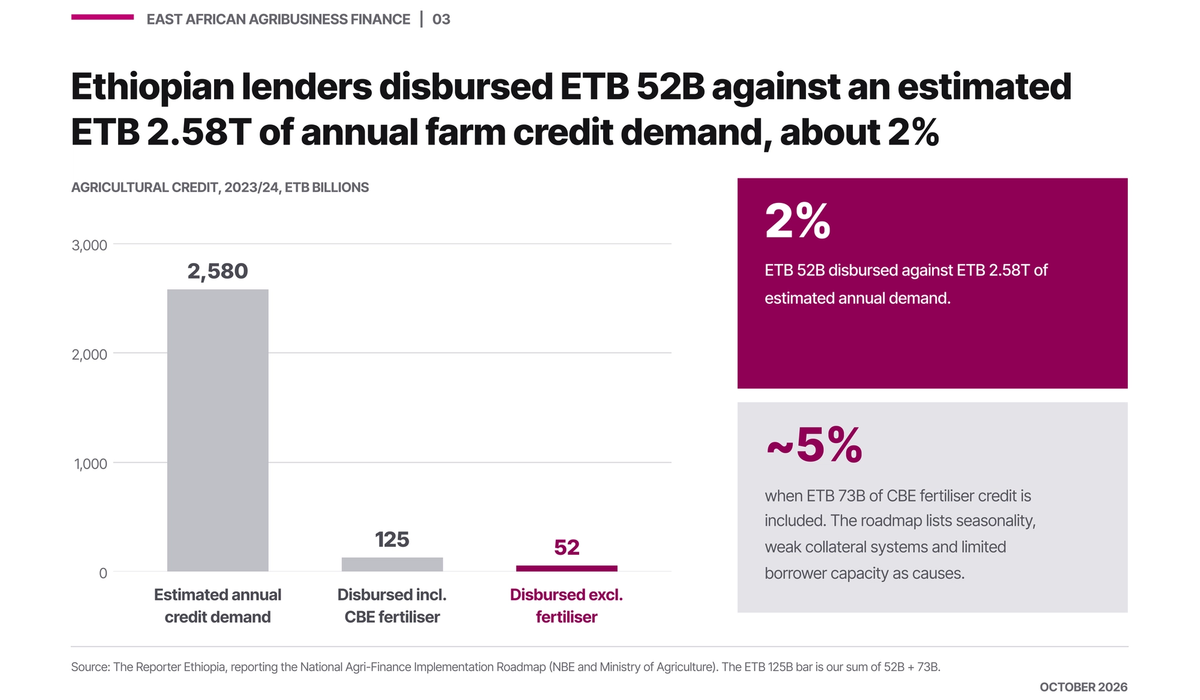
The intervention targets a specific, gaping hole in the market. African agriculture faces an estimated annual financing gap of $180 billion—with $65 billion of that deficit starving small and medium agribusinesses specifically. While a $10 million injection is mathematically tiny against a $65 billion shortfall, the architecture of the deal is what matters. It utilizes "blended finance," an arrangement where development capital absorbs the initial downside risk of an investment by cushioning potential losses. By providing this protective cushion, the facility signals safety to private, commercially-minded investors, crowding them into deals they would typically consider too volatile.
Over a 12-year horizon, the AgDevCo-IFAD facility aims to scale 15 early-stage enterprises operating across production, input supply, aggregation, and processing value chains. The patient, growth-oriented capital is projected to directly benefit 128,000 smallholder farmers and generate roughly 2,900 full-time jobs, heavily prioritizing women-led and locally-owned businesses.
However, bypassing the heavy collateral demands of commercial banks does not mean bypassing corporate discipline. To access this risk-tolerant money, local agribusinesses must demonstrate strict institutional readiness. Investors expect clean, audit-ready financial records, fully compliant payroll systems for farm and processing workers, up-to-date tax filings, and clear corporate governance documentation.