
Ethiopia Plans to Export 26% More Than Last Year
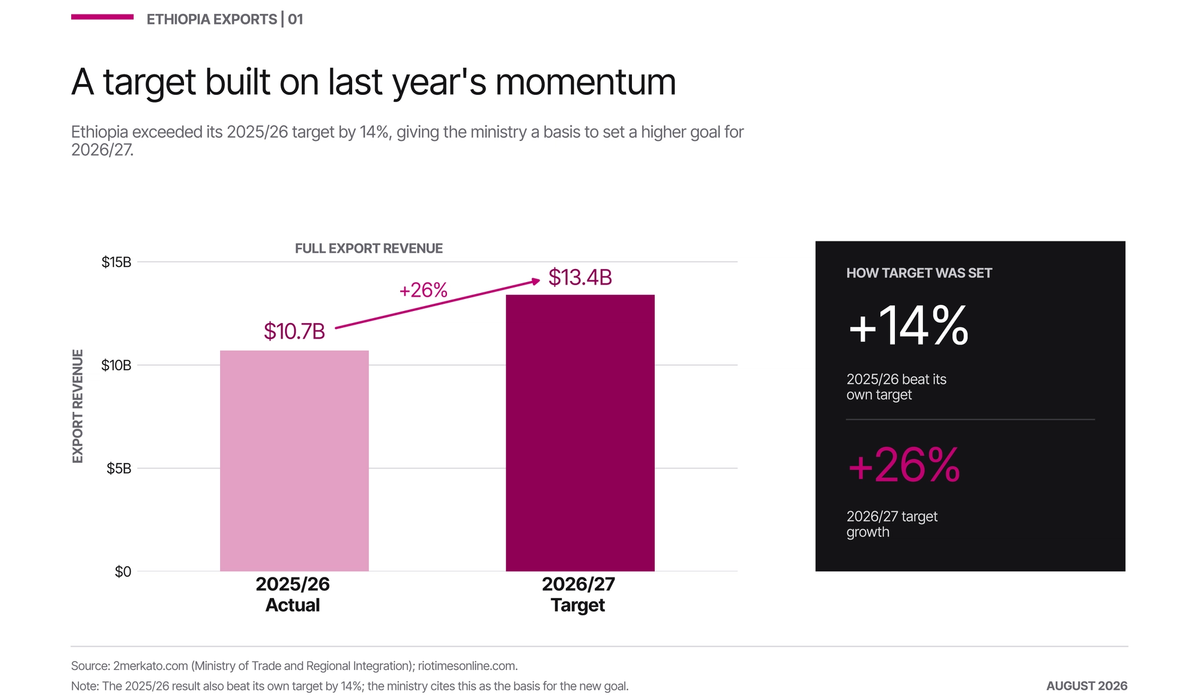
Ethiopia exceeded its 2025/26 export target by 14%, providing the basis for the government’s 26% increase in the 2026/27 target.
Ethiopia's Ministry of Trade and Regional Integration has set an export revenue target of $13.4 billion for the 2026/27 fiscal year, a 26 percent increase over the $10.7 billion recorded in 2025/26. The target was set following a consultation between government officials and exporters reviewing the previous fiscal year's performance.
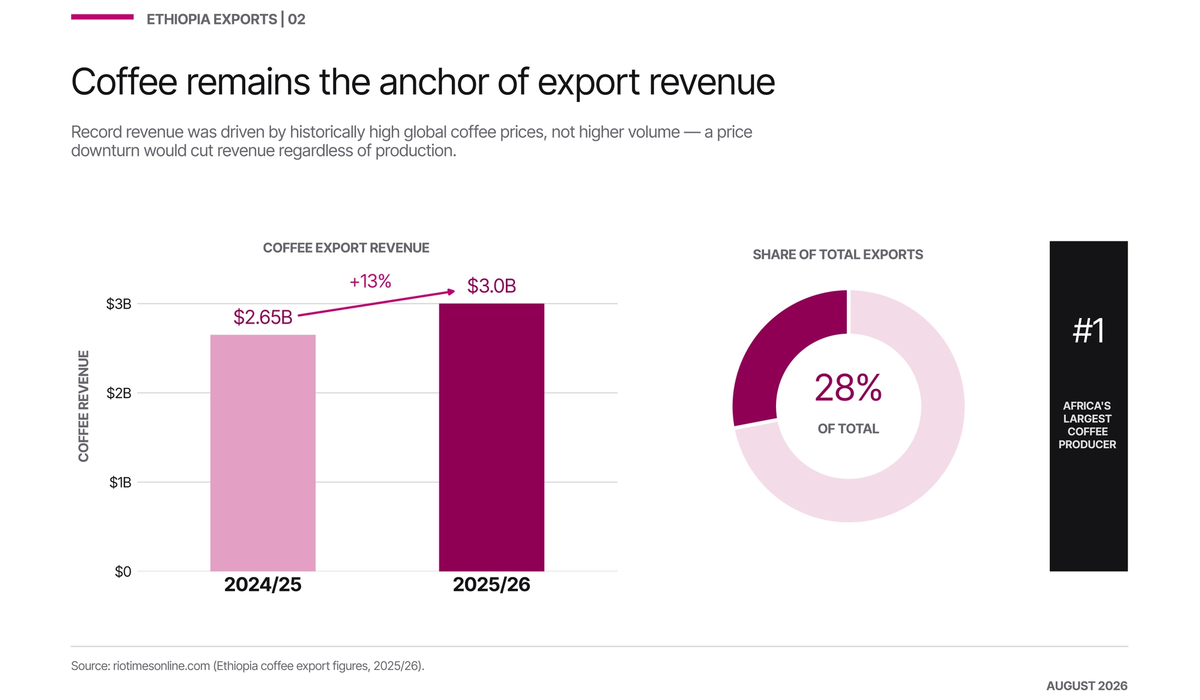
Coffee exports generated a record $3 billion in 2025/26, up from $2.65 billion the prior year, and accounted for approximately 28 percent of total export earnings. Ethiopia is Africa's largest coffee producer. Global coffee prices traded near historic highs through the period, which contributed to the increase in revenue independent of any change in export volume. Coffee prices are subject to cyclical movement based on harvest yields across producing countries, including Brazil and Vietnam, and on shifts in global demand. A decline in global prices would reduce export revenue from the coffee sector regardless of production levels.
Manufacturing exports totaled $607 million in 2025/26, up from $385 million prior to the introduction of the Made in Ethiopia initiative. The manufacturing export target for 2026/27 is $1 billion, requiring growth of approximately 65 percent over the prior year's figure.
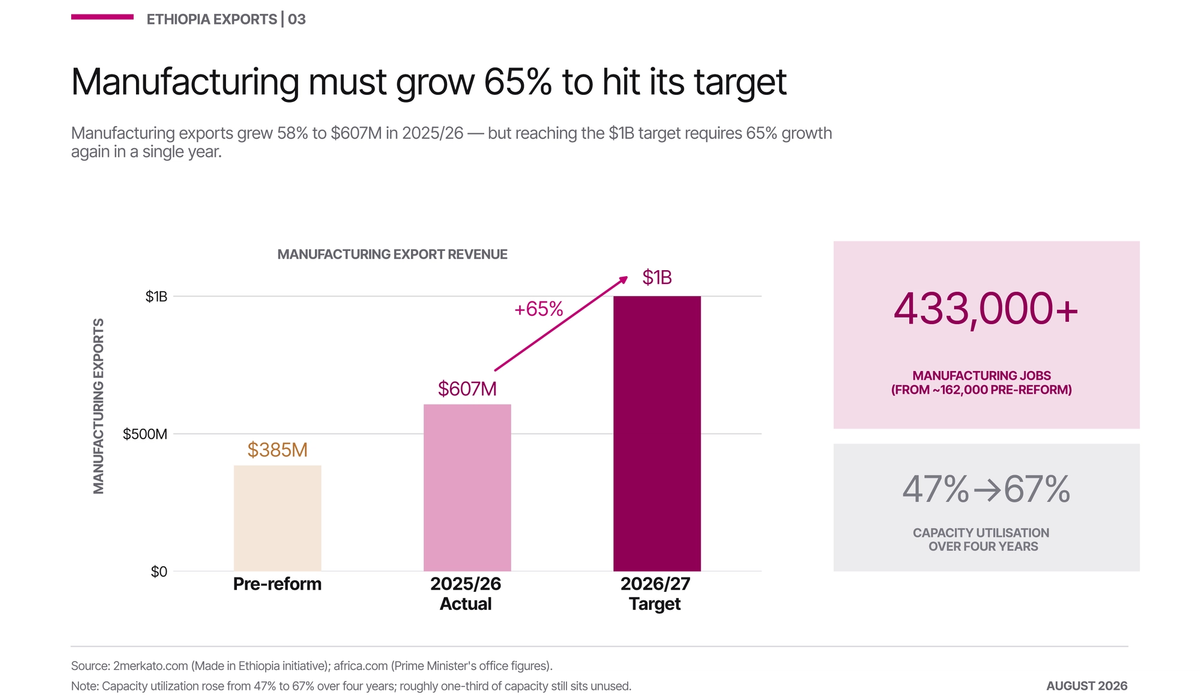
Manufacturing sector employment increased from approximately 162,000 to more than 433,000 workers over the course of the reform program. Industrial capacity utilization rose from 47 percent to 67 percent over a four-year period, according to figures cited by the Prime Minister's office. Approximately one-third of manufacturing capacity remains unused under current conditions.
Export-related responsibilities are currently divided across five government ministries: the Ministry of Trade and Regional Integration oversees oilseeds and pulses, the Ministry of Agriculture oversees coffee and tea, the Ministry of Mines oversees gold and minerals, the Ministry of Industry oversees manufacturing, and the Ministry of Water and Energy oversees electricity exports.
Ethiopia previously operated a single export promotion agency, established under Proclamation No. 132 in 1998, before its functions were distributed across separate ministries in the mid-2000s. A proposal to consolidate these functions into a new export authority has been submitted to the Prime Minister's office. Implementation is expected to follow the formation of a new government after the national election.
The 2026/27 export target depends on three variables: the trajectory of global coffee prices, the rate of increase in manufacturing capacity utilization, and the timeline for establishing the proposed export authority. Ethiopia exceeded its export target by 14 percent in 2025/26, which the ministry has cited as a basis for the new target.