Ethiopia’s National Dialogue Enters Convergence Phase on Day 17 as 4,000 Participants Move Toward Monday’s Full Assembly.
Small groups of 10 have completed their brainstorming and are presenting to groups of 50. From Monday July 28, those 50-person groups consolidate and present to groups of 250.
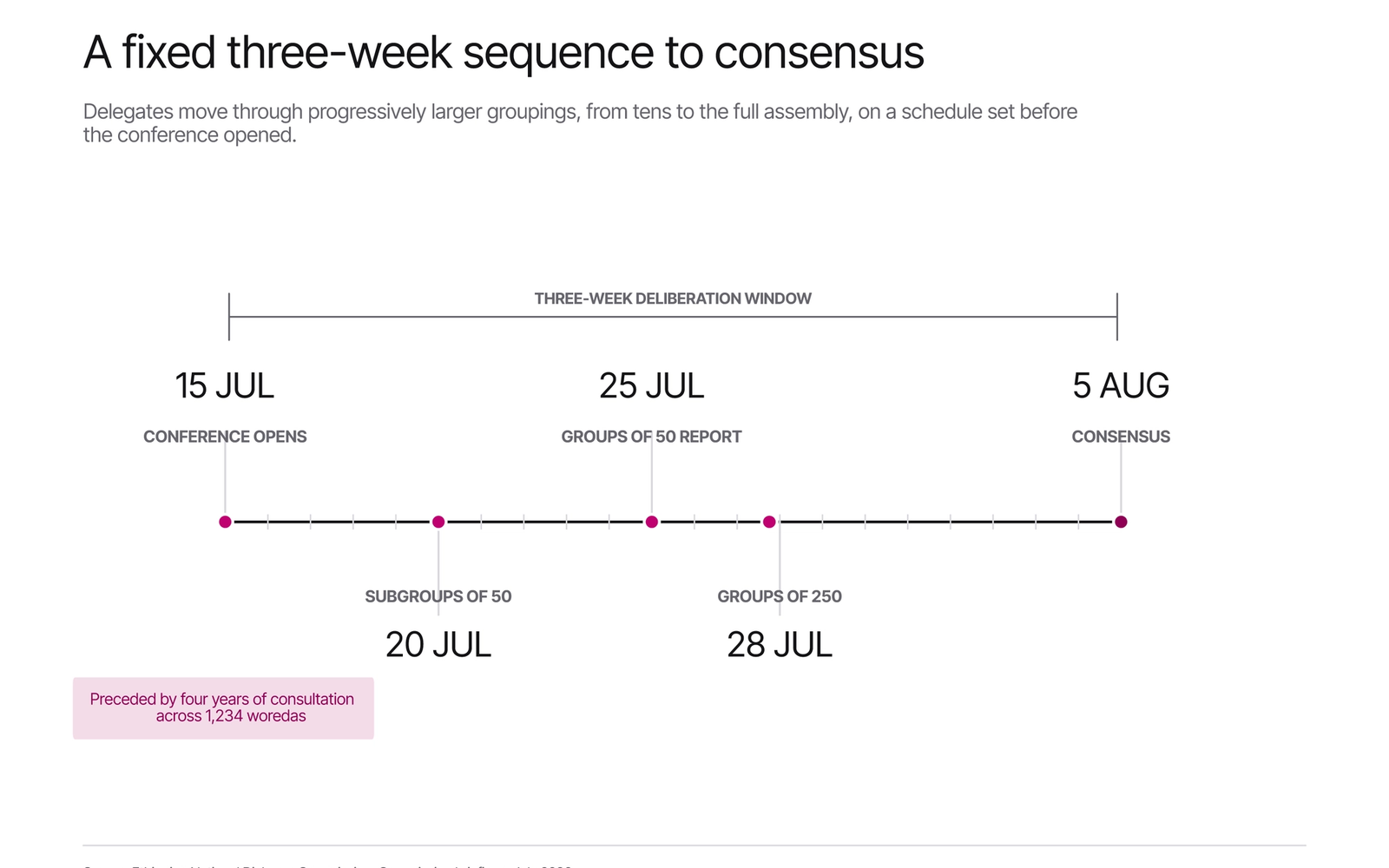
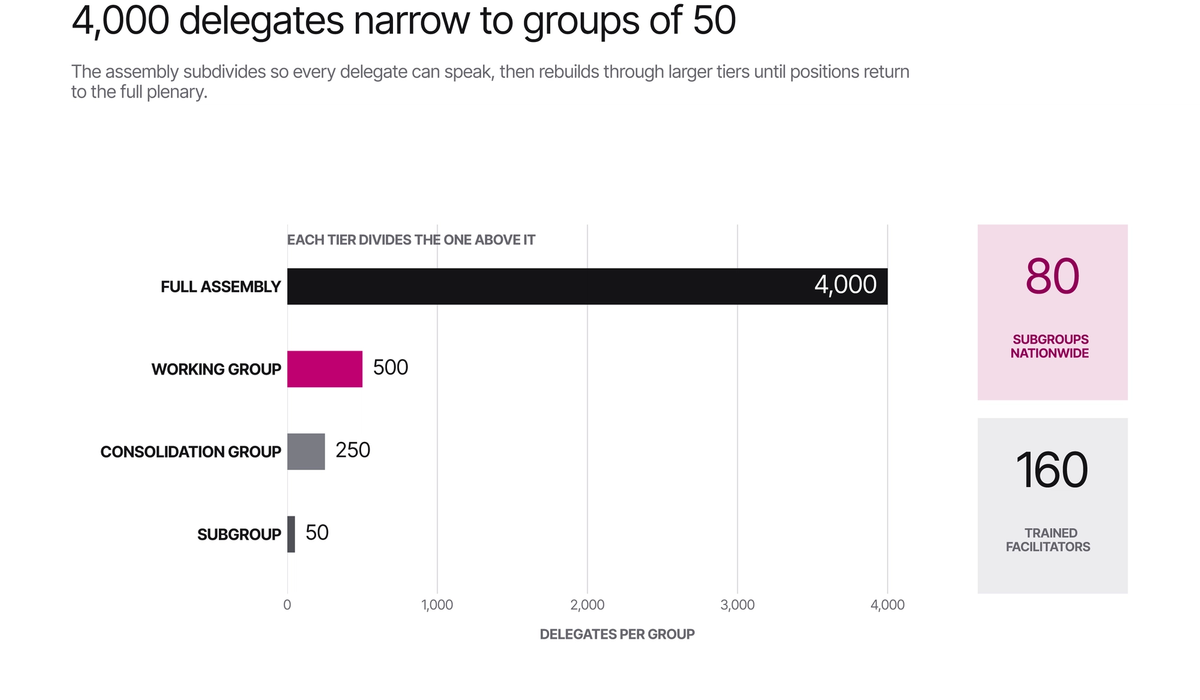
Participants — initially grouped in 500s for orientation — spent the past three days in groups of 10, brainstorming on assigned agenda items across 16 locations. Yesterday, each group of 10 compiled its ideas and began presenting them to its group of 50. As of July 25, some groups had not yet finished those presentations. From Monday July 28, the 16 groups of 50 consolidate and present to groups of 250, who then carry the synthesis forward to the full assembly.
The Commissioner described three phases: the divergent phase, where participants debate and disagree; the convergent phase, where positions begin to align; and the consensus phase, where final recommendations are formed. Debate and disagreement in the divergent phase are by design — the methodology treats conflict as a productive stage rather than a problem to suppress. Participants are moving out of the divergent phase, which the Commissioner described using the international dialogue term “groan zone” — the period of friction before alignment begins. Three days of small-group work have produced compiled idea sets that now move up the structure.
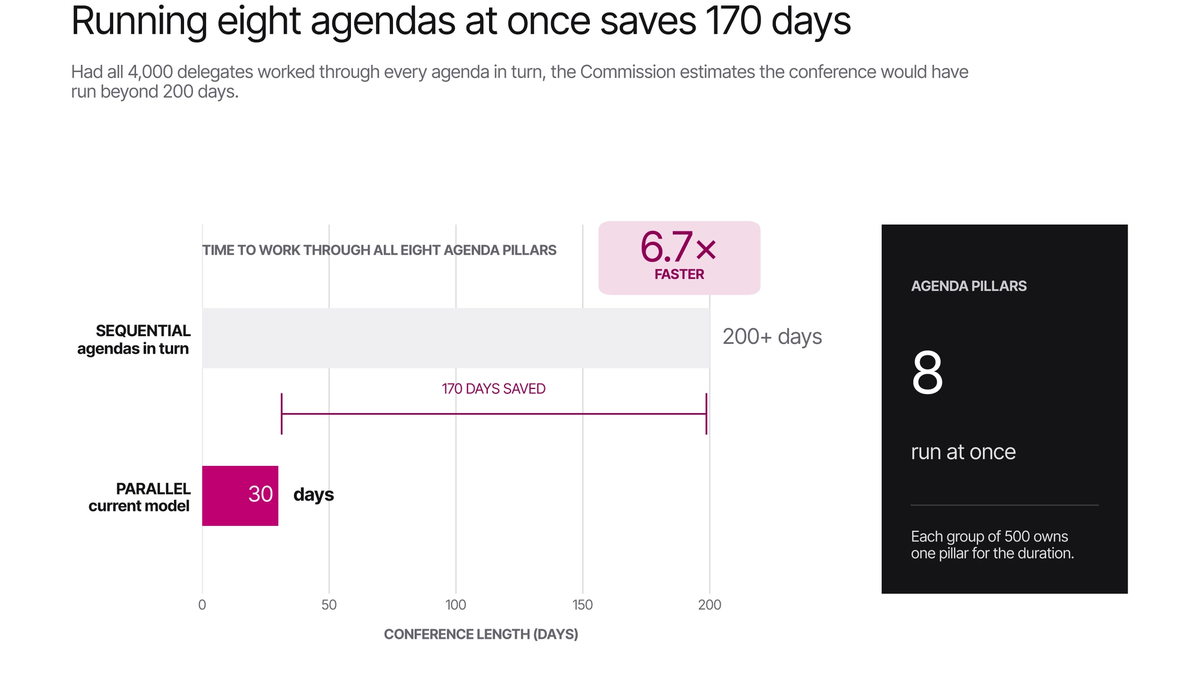
The Commissioner addressed a recurring criticism: why each group of 500 works on only one of the eight agenda items rather than all participants discussing everything. The answer is arithmetical. The Commission collected over 2,000 potential agenda items from nationwide consultations covering 1,234 woredas and consolidated them into eight. If 4,000 participants worked through all eight sequentially and each agenda averaged 25 days, the full process would take more than 200 days. Ethiopia does not have the financial resources for a process of that length, and the Commission tightened its budget to make the current model viable. The parallel model assigns each group of 500 full ownership of one agenda, with elected representatives from all eight groups converging at the end to build cross-agenda consensus before presenting to the full 4,000. The eight agendas overlap in content, so groups naturally address adjacent issues within their assigned topic.
The total on-site population exceeds 4,000 when infants, nannies, disability carers, and support staff are counted. The Commissioner said the official participant count — still being verified against badge and barcode records — will be confirmed within two days. The Minister of Women and Social Affairs visited on July 24, providing crutches, visual aids, and assistive devices. The Mayor of Addis Ababa provided accommodation facilities near the venue for participants with disabilities. The rainy season has added logistical pressure for participants travelling from rural and pastoral areas.
Media have not been permitted inside working rooms while participants are in the divergent phase — a decision the Commissioner described as protective of the process rather than restrictive of coverage. ENA and EPA are documenting sessions and providing material through the Commission’s media team. One complaint logged is that some participants felt facilitators were pushing personal narratives rather than managing discussions neutrally. The Commissioner acknowledged this and said corrections are being made. Broader media access will open as groups move toward convergence. Full thematic sessions at the 250-participant level begin Monday July 28. The Commission targets completing the full dialogue within 30 days of the July 8 opening.