Why Addis Ababa Prioritized a 10-Kilometer River Corridor
Far beyond planting trees, the 351-hectare Riverside Development generated over 56,000 jobs while building an integrated economy to manage floods and ease traffic.
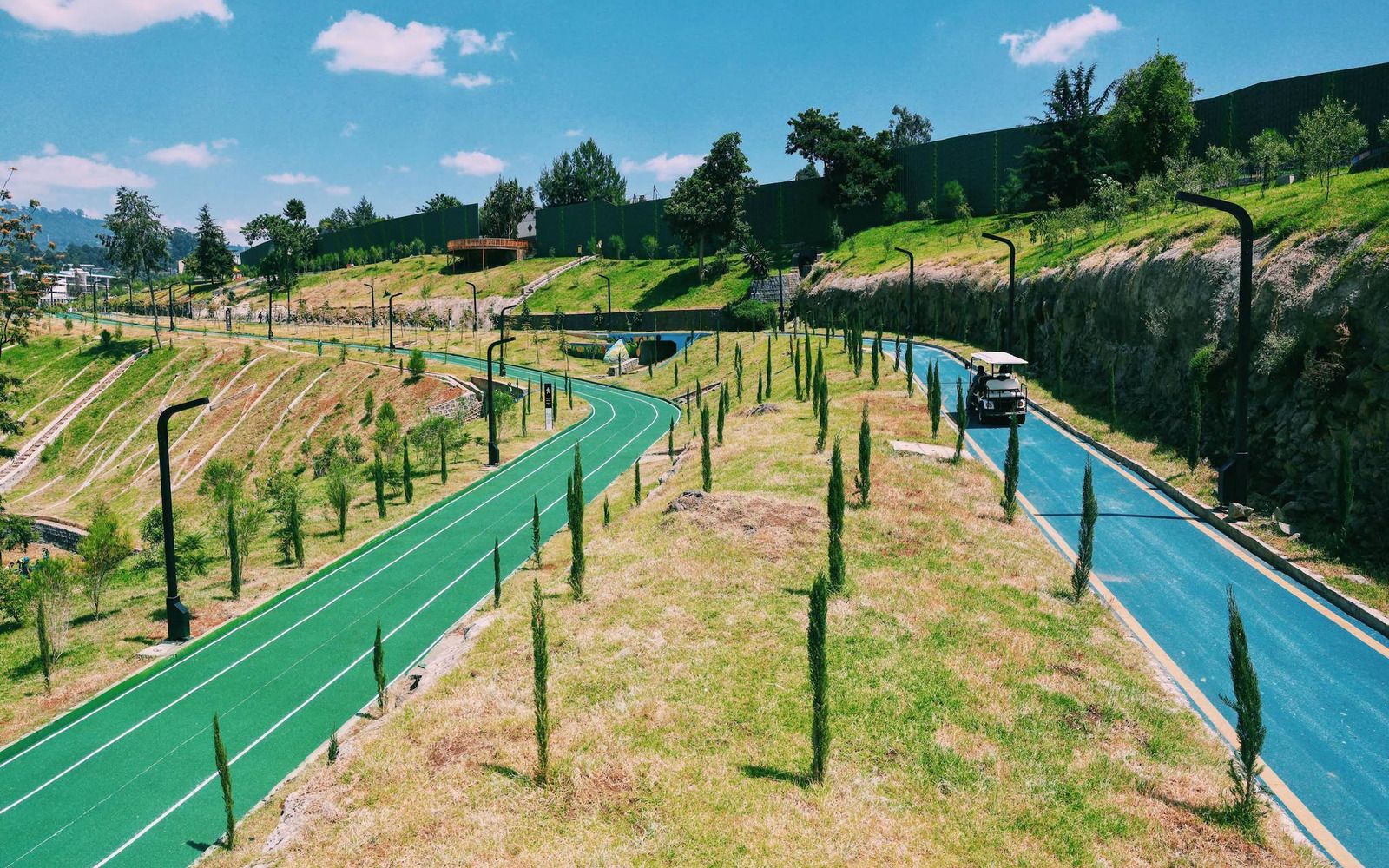
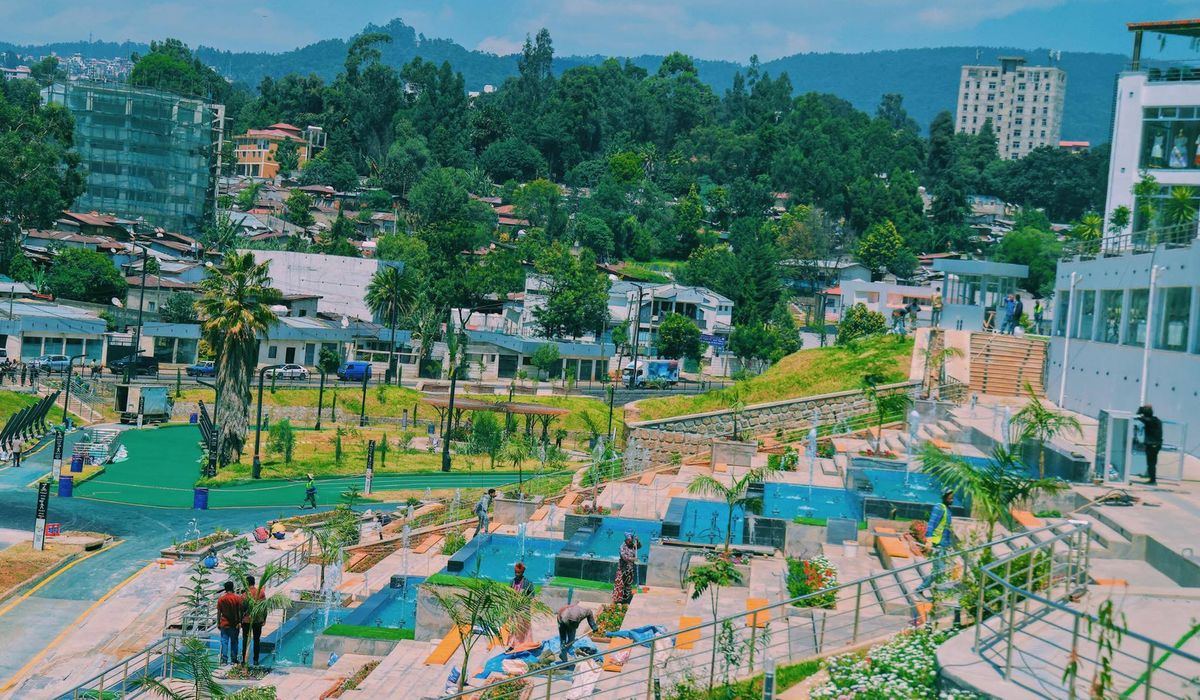
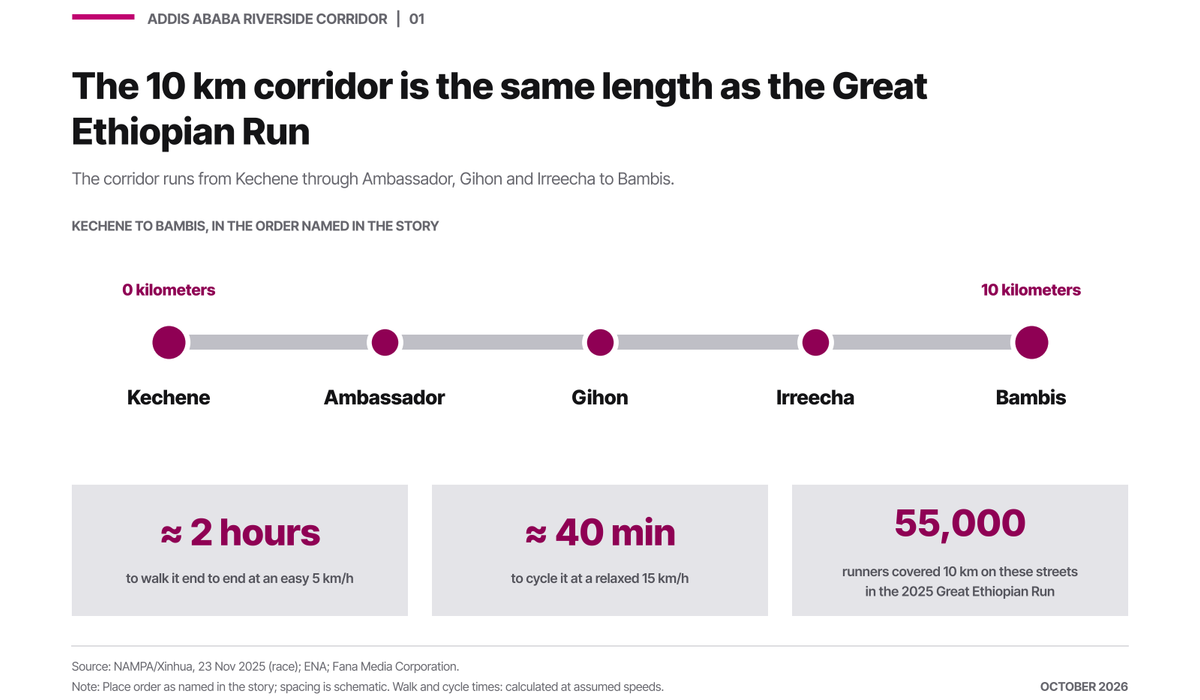
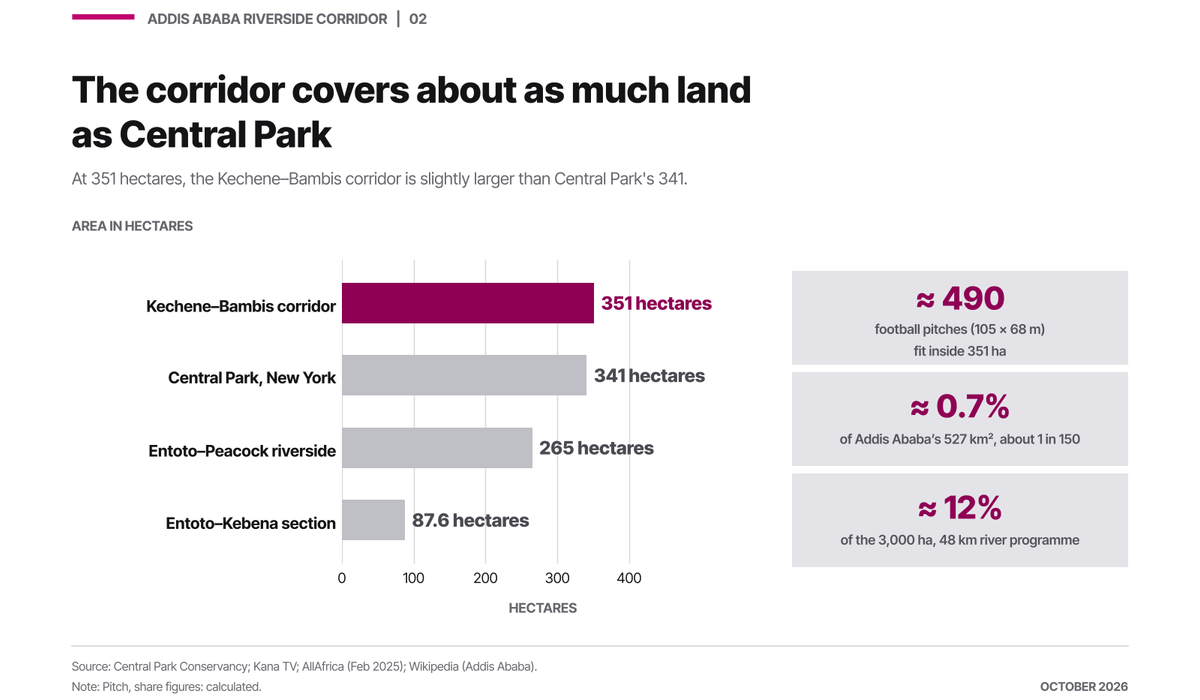
Addis Ababa is currently completing one of the most mathematically ambitious urban engineering projects in East Africa: the Kechene–Ambassador–Gihon–Irreecha–Bambis Riverside Development. Stretching across a massive 351 hectares and snaking 10 kilometers through the heart of the capital, the corridor is packed with eight distinct water fountains and pedestrian cycling lanes. But for city planners and infrastructure engineers, this project is a strict technical priority designed to solve deep-rooted urban crises with hard numbers.
The first and most critical technical goal of the 10-kilometer corridor is structural environmental management. For decades, rapid, unplanned construction along the city’s riverbanks eroded the soil and choked the natural waterways with waste, leading to severe, recurrent flash flooding. By heavily investing in soil and water conservation, retaining walls, and river management systems, the 351-hectare development acts as a massive, engineered sponge. It safely channels millions of liters of floodwaters during the rainy season, protecting downstream roads and businesses from catastrophic water damage.
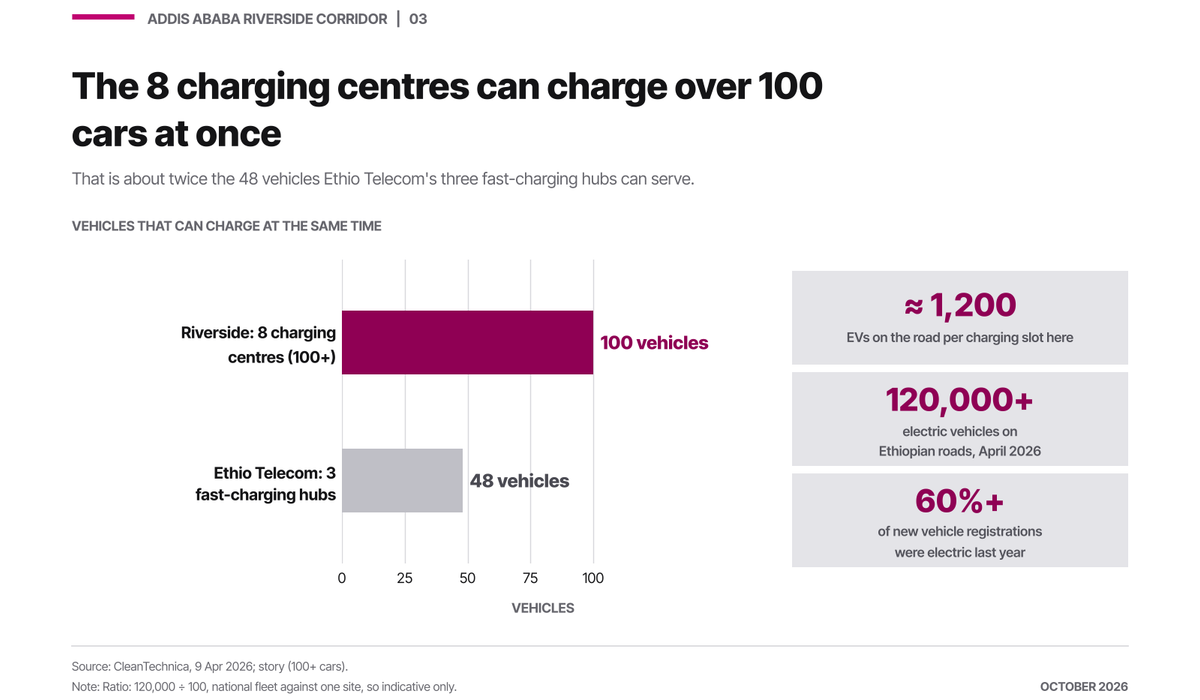
The second priority is untangling Addis Ababa's notorious transport gridlock through strategic energy planning. The riverside project tackles the city's transition to clean energy head-on. The development features integrated parking facilities built alongside eight dedicated electric vehicle (EV) charging centers. Combined, these stations are capable of charging over 100 vehicles simultaneously. This massive injection of charging capacity creates a crucial backbone for Ethiopia's rapidly expanding, duty-free EV market, physically separating pedestrian traffic from heavy vehicle congestion.
Finally, the project serves as a structured economic engine rather than just an aesthetic upgrade. Mega-infrastructure projects often simply push low-income residents out of the way, but this corridor was built to pull the informal river economy into the formal commercial sector. According to the Mayor's office, the development has already created over 56,000 jobs. It includes a dedicated market center specifically built for residents who previously lived along the river, providing them a formal space to produce and sell handicrafts. Alongside it, an agricultural produce mall directly connects farmers to urban buyers, eliminating middleman markups.
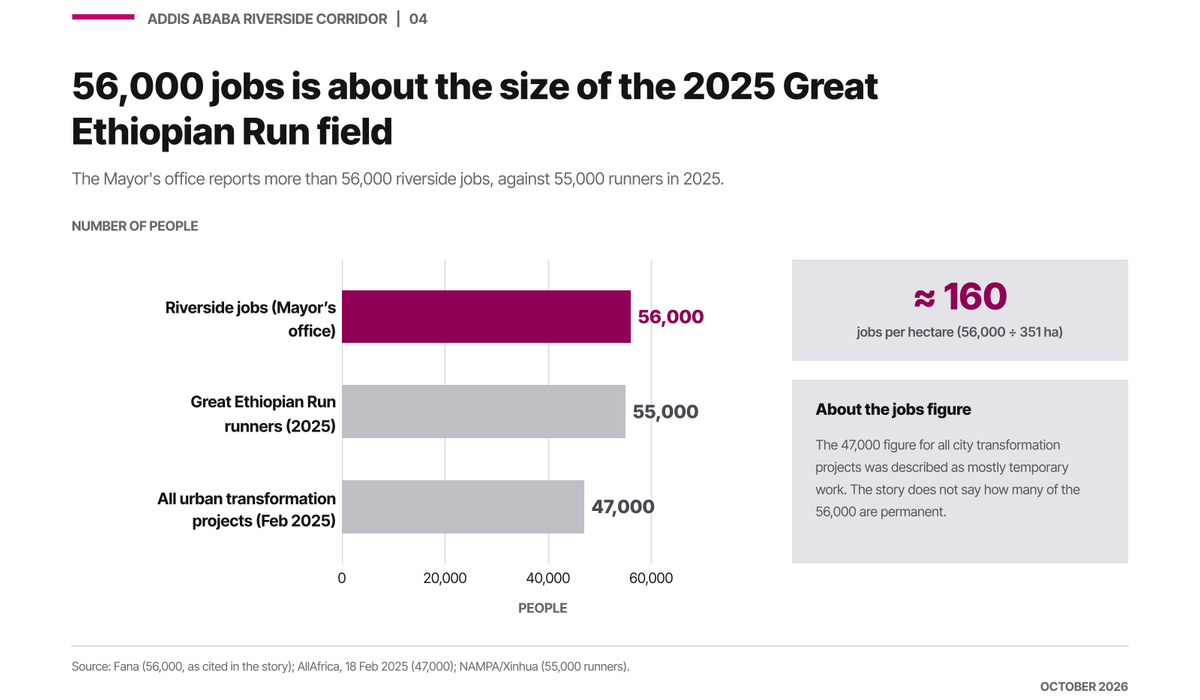
While the amphitheaters and sports facilities offer the city a new social heartbeat, the underlying mechanics of the Kechene–Bambis corridor are entirely utilitarian. With 56,000 new jobs, 351 hectares of managed water flow, and massive EV charging capacity, it is a technical blueprint proving that environmental restoration, traffic management, and economic inclusion can be built into a single, cohesive urban foundation.