
Ethiopia Advances 1.5 Million Housing Target as Addis Ababa Nears Work on 100,000 Units
From its Guba pledge to active sites like Merkato’s Qitel Tera, the government addresses the housing shortage via local material production, bank mortgage funds, and private partnerships.
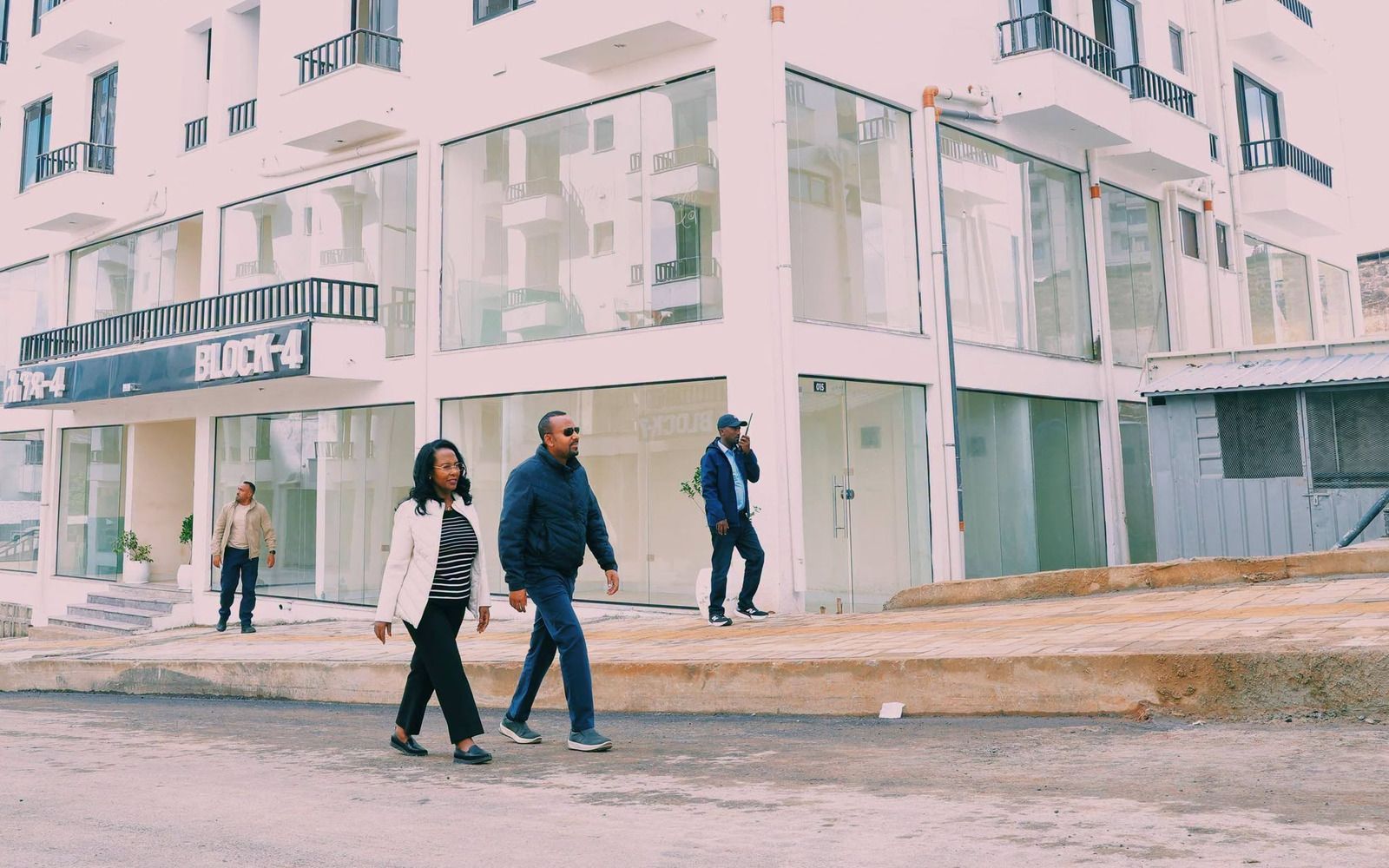
When a country grows fast, demand for basic infrastructure—roads, electricity, clean water, and decent housing—explodes all at once. Speaking during a tour of new residential blocks in Addis Ababa, Prime Minister Abiy Ahmed laid out how Ethiopia is turning one of its biggest promises announced at Guba into reality: a national drive to build 1.5 million homes. Rather than waiting years on paper plans, crews have already started constructing more than 100,000 homes in Addis Ababa alone, with several high-density sites going from foundation to completion in less than a single year.
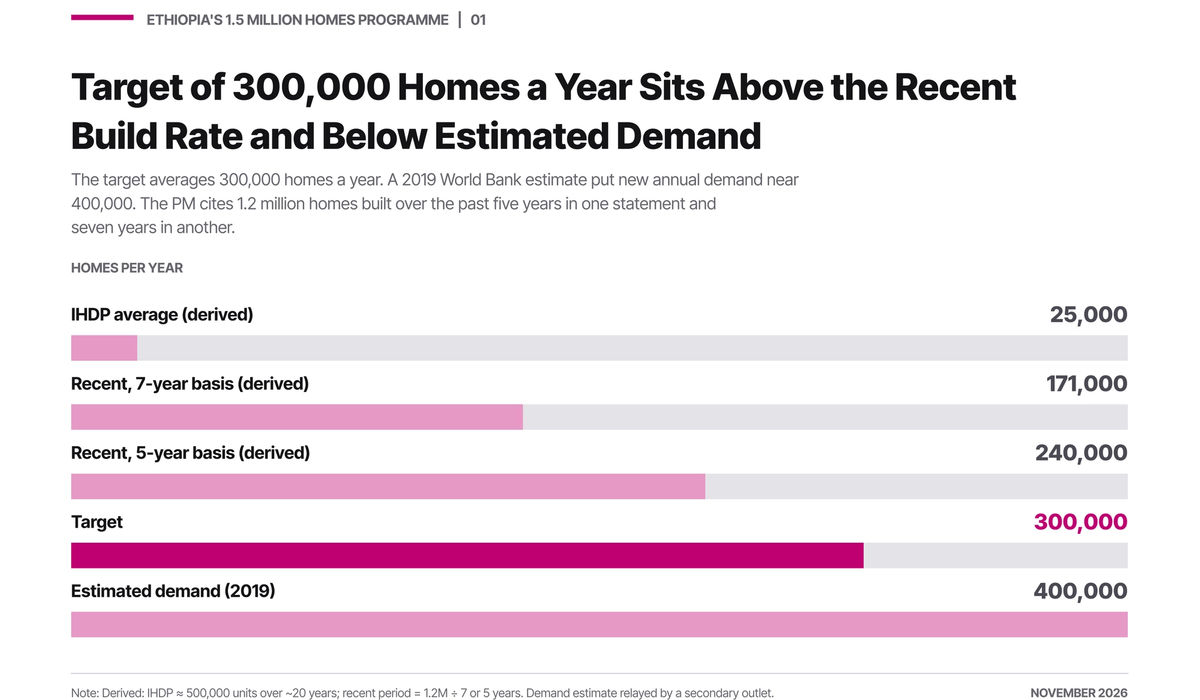
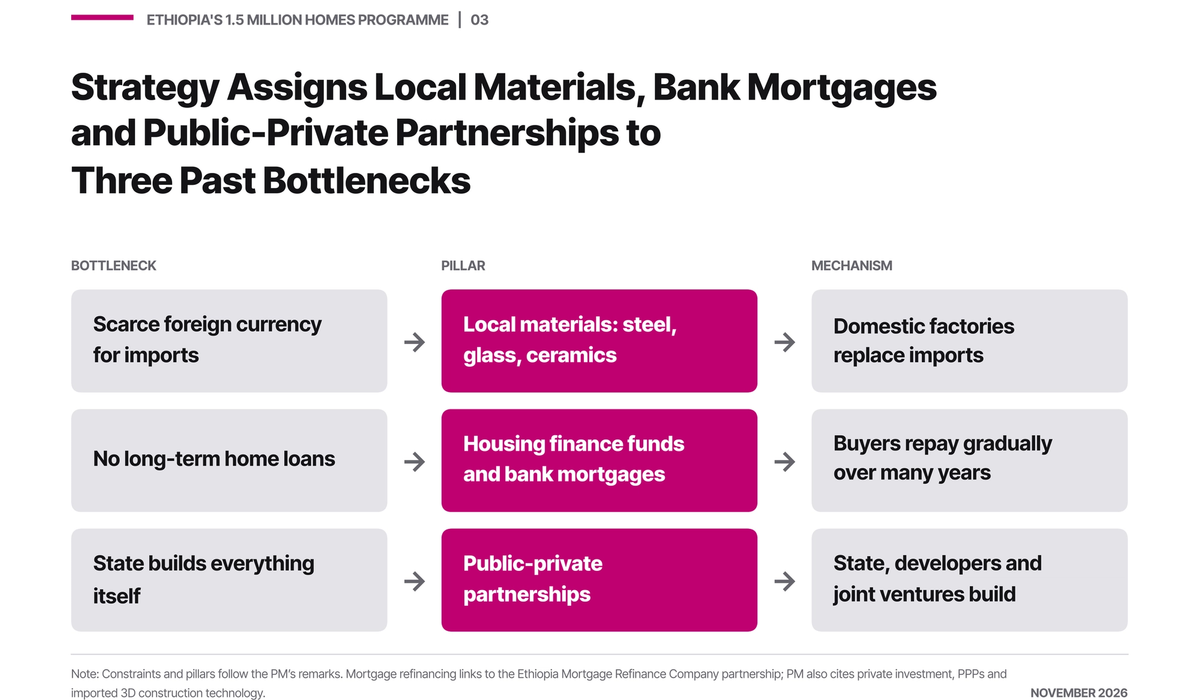
As the Prime Minister explained, a country cannot build 1.5 million houses simply by announcing a target. Previous public condominium schemes slowed down because Ethiopia lacked the foreign currency to import building materials, banks did not offer long-term home loans, and the state tried to build everything by itself. To fix those exact bottlenecks, the new national housing strategy is built on three practical pillars:
· Making Steel, Glass, and Ceramics Locally: Before pouring foundations at scale, the government focused on expanding domestic factories to produce heavy construction inputs—specifically steel, glass, ceramics, marble, and granite—inside Ethiopia. By replacing expensive imported materials with local supply, builders can keep construction moving without draining scarce foreign currency.
· Setting Up Housing Funds and Bank Mortgages: A finished apartment does no good if an ordinary worker cannot afford to buy it upfront. Alongside physical construction, the government is organizing dedicated housing finance funds and working directly with commercial banks—backed by initiatives like the Ethiopia Mortgage Refinance Company partnership—so citizens can move into a home and pay for it gradually over many years while living in it.
· Building Through Public-Private Partnerships (PPP): Instead of relying solely on slow government contractors, the 1.5 million target combines state projects, private real estate developers, and joint Public-Private Partnerships. The Prime Minister stressed that while speed is urgent, these new structures must be engineered for long-term durability rather than repeating the fragile, fast-decaying quality of older condominium blocks.
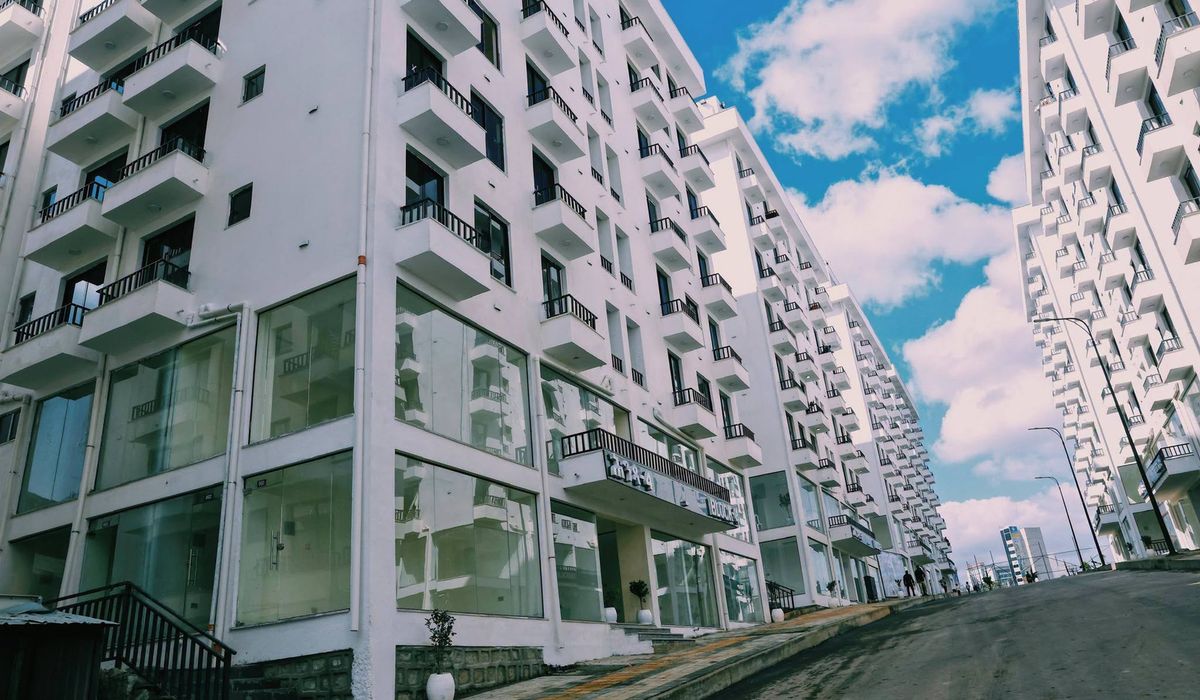
The clearest proof of how this model works on the ground sits right inside Merkato, Africa’s largest open-air market, in a neighborhood known as Qitel Tera (Kitel Tera). Just a year ago, the area was packed with overcrowded, crumbling shelters where families lived without proper toilets, running water, or safe electricity—patching their roofs with plastic sheets every rainy season. In less than a year, city crews transformed Qitel Tera into modern multi-story residential apartments. Crucially, the Prime Minister noted that the majority of the people moving into these new apartments are the exact same low-income residents who were raised in those dilapidated shanties.
Looking beyond the capital, the speech offered a candid assessment of Ethiopia’s wider housing deficit. In many cities, thousands of families still live in houses that fall far below basic human standards, lacking sanitation and clean water. In the countryside, the gap is even wider, with millions of smallholder farmers still sleeping under the same roof as their cattle—a reality the government is now addressing through its new Rural Corridor village housing pilots.
Once the initial wave of 100,000 homes in Addis Ababa is completed, authorities plan to scale the blueprint aggressively across regional towns and rural districts. As the Prime Minister put it, national economic growth and private wealth creation only have real meaning when that prosperity reaches down to change the daily life, dignity, and shelter of the poorest citizen.