
Happening Now: Ethiopia’s Economy Jumps 59.2% to $201.4 Billion After Historic GDP Rebasing
By applying strict international standards to count its telecom, digital economy, and informal businesses, a newly trained team of Ethiopian accountants has officially updated the nation’s economic size.
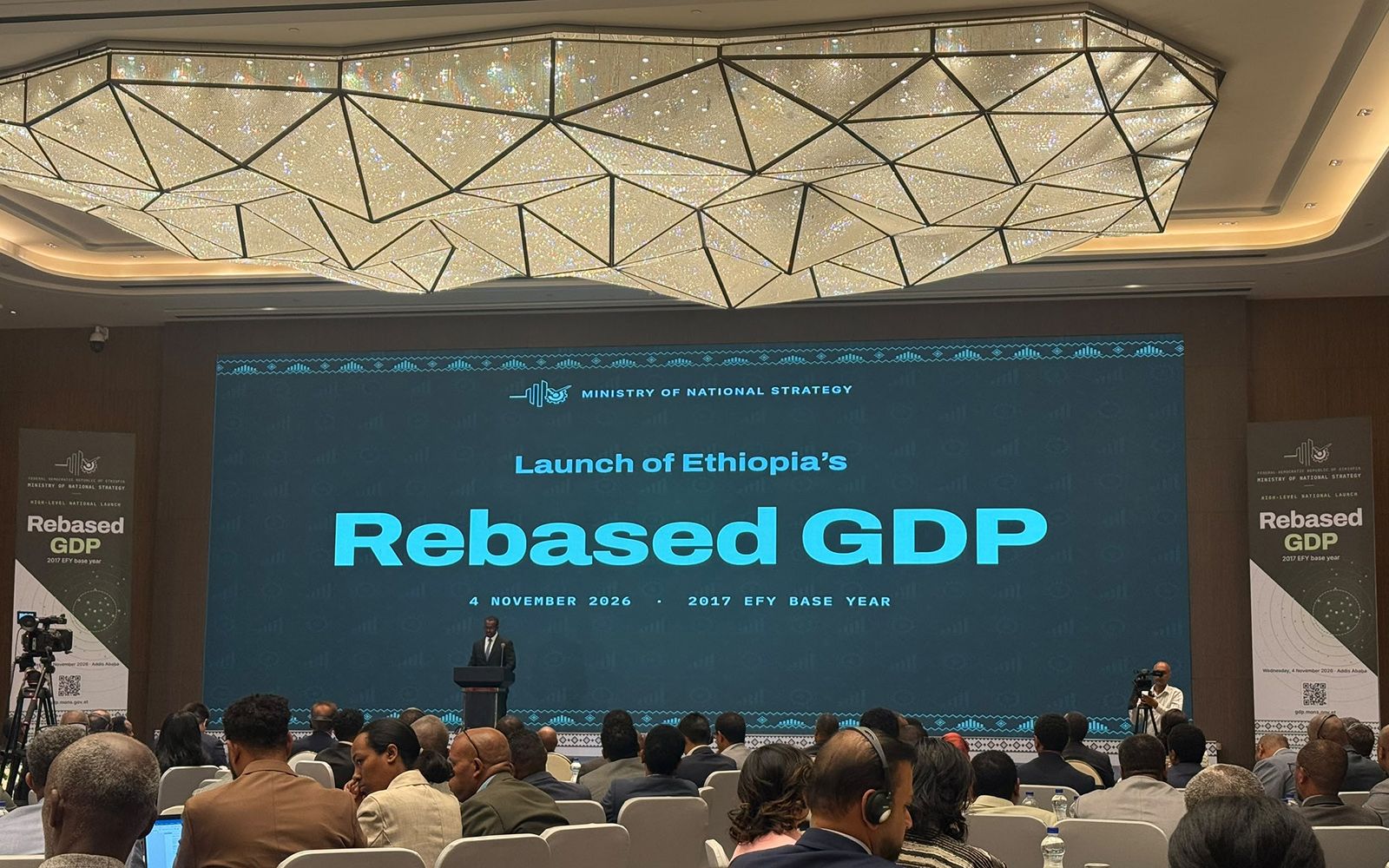
Ethiopia’s economy is officially nearly 60 percent larger than previously reported. At a high-level national launch today, the government unveiled its long-awaited rebased Gross Domestic Product (GDP) anchored to the 2017 Ethiopian Fiscal Year (2024/2025), replacing an outdated statistical benchmark from a decade ago. With the updated calculation, Ethiopia’s economic output has surged by +59.2 percent to reach 24.03 trillion Birr—equivalent to $201.4 billion. The massive upward revision immediately positions Ethiopia as the 5th-largest economy in all of Africa and the 3rd-largest in Sub-Saharan Africa.
In simple terms, rebasing does not mean Ethiopia suddenly produced more goods overnight; it means the country’s economic measuring tape has finally caught up with real life. Because the previous base year had not been updated in a long time, billions of Birr in modern business activity were going uncounted. The new 2017 EFY benchmark brings major new driving factors into the official numbers—most notably the explosive growth of the liberalized telecommunications sector, mobile money, and the broader digital economy. Under the updated national accounts, Services account for 31.57 percent of GDP, while Industry makes up 30.2 percent (with Agriculture contributing the remaining 38.23 percent), giving a much clearer picture of how urban trade, finance, construction, and manufacturing are reshaping the nation.
Crucially, the new numbers carry strong international credibility. The entire overhaul strictly follows the 2008 System of National Accounts (SNA 2008), the global gold-standard rulebook for measuring national economies, and was completed with direct technical support from the International Monetary Fund (IMF). Even more important for Ethiopia’s long-term data sovereignty is who actually did the math.
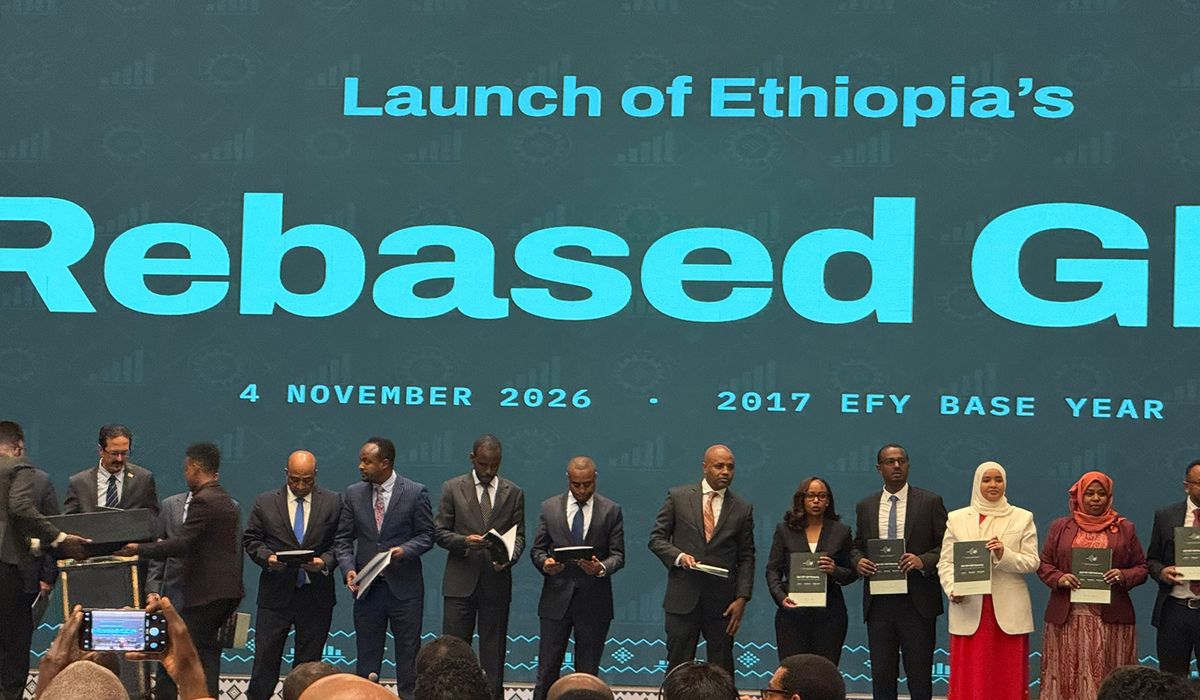
Rather than outsourcing the work to foreign consultants, the rebasing was carried out entirely by Ethiopians. Senior statisticians and high-level professionals trained a wave of "new blood," creating a deep domestic bench of skilled national accountants at the Ministry of Planning and Development and the Ethiopian Statistical Service who can manage complex economic modeling for decades to come.
For everyday businesses, banks, and policymakers, the government emphasized that this overhaul brings unprecedented clarity to the informal economy—capturing the millions of small traders, workshops, and unregistered enterprises that keep Ethiopia moving but were previously invisible in official spreadsheets. A $201.4 billion baseline also automatically resets key macroeconomic ratios, from debt-to-GDP to tax-to-GDP, giving authorities a much more accurate dashboard of the nation's financial health. Officials are now advising all government ministries, private investors, commercial banks, and development partners to retire the old estimates and immediately use this newly rebased data to plan ahead.