
Ethiopia's Grade 12 Pass Rate Is Four Times Higher Than Four Years ago.
Zero-scoring schools halved, perfect scores rose, and most candidates now test digitally — the clearest signs that a bruising four-year reform of Ethiopia's university entrance exam is showing results.
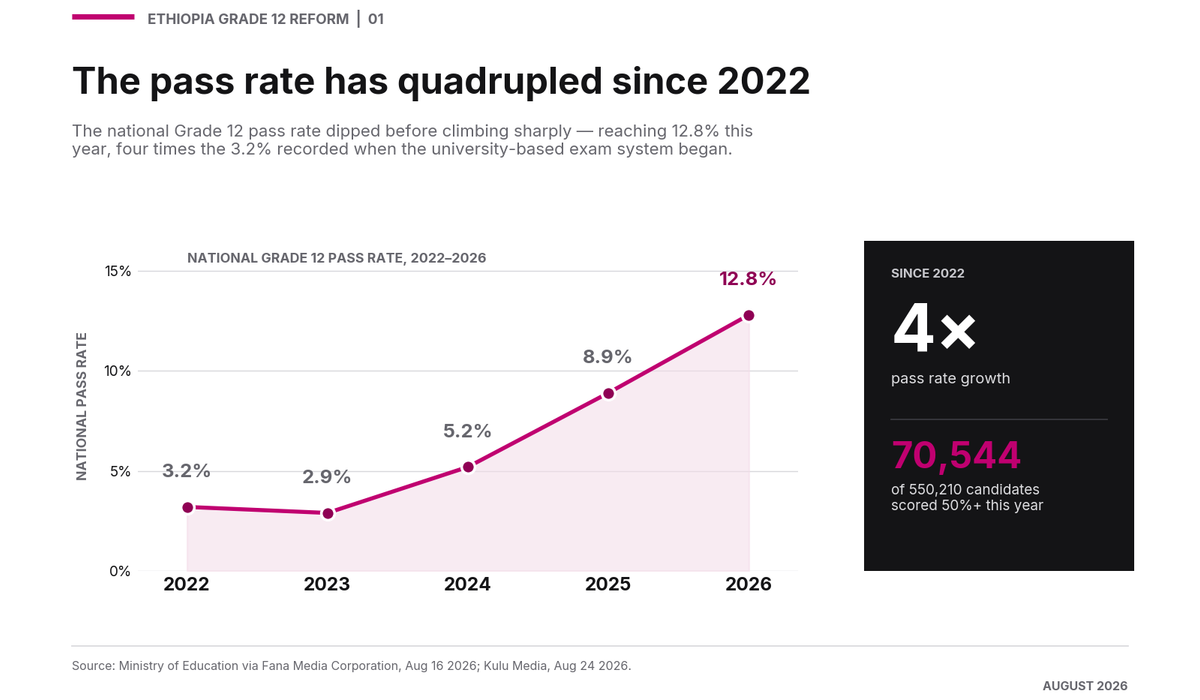
Education Minister Professor Berhanu Nega told reporters that 70,544 of the 550,210 students who sat the exam this year scored 50 percent or higher, the threshold for direct university admission — a national pass rate that has climbed steadily from 3.2 percent, to 2.9 percent, to 5.2 percent, to 8.9 percent last year, to this year's 12.8 percent. He described the improvement as "incredibly" better than previous years.
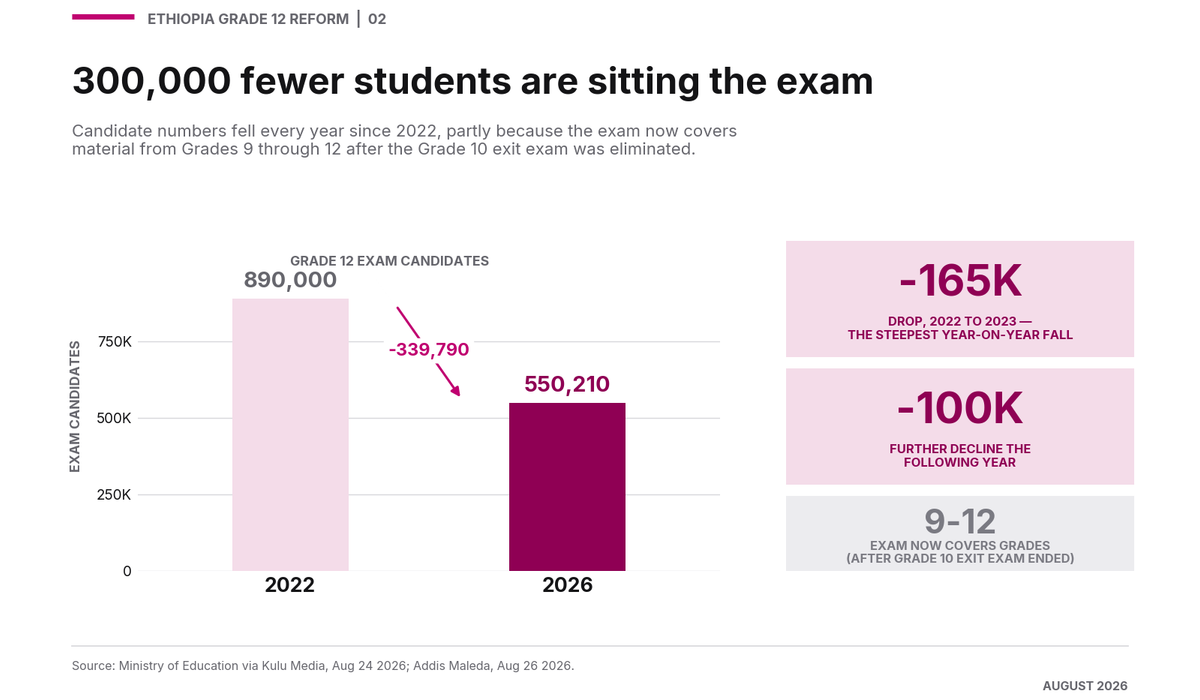
The candidate pool has shrunk just as steadily. More than 890,000 students sat the exam in 2022, a number that has fallen every year since, dropping by more than 165,000 between the 2022 and 2023 exam cycles alone and by roughly 100,000 more the year after, to this year's 550,210. Part of the decline traces back to a separate policy change: after Ethiopia eliminated its Grade 10 exit exam, the Grade 12 exam was expanded to cover material from Grades 9 through 12, raising the bar for who reaches exam day at all.
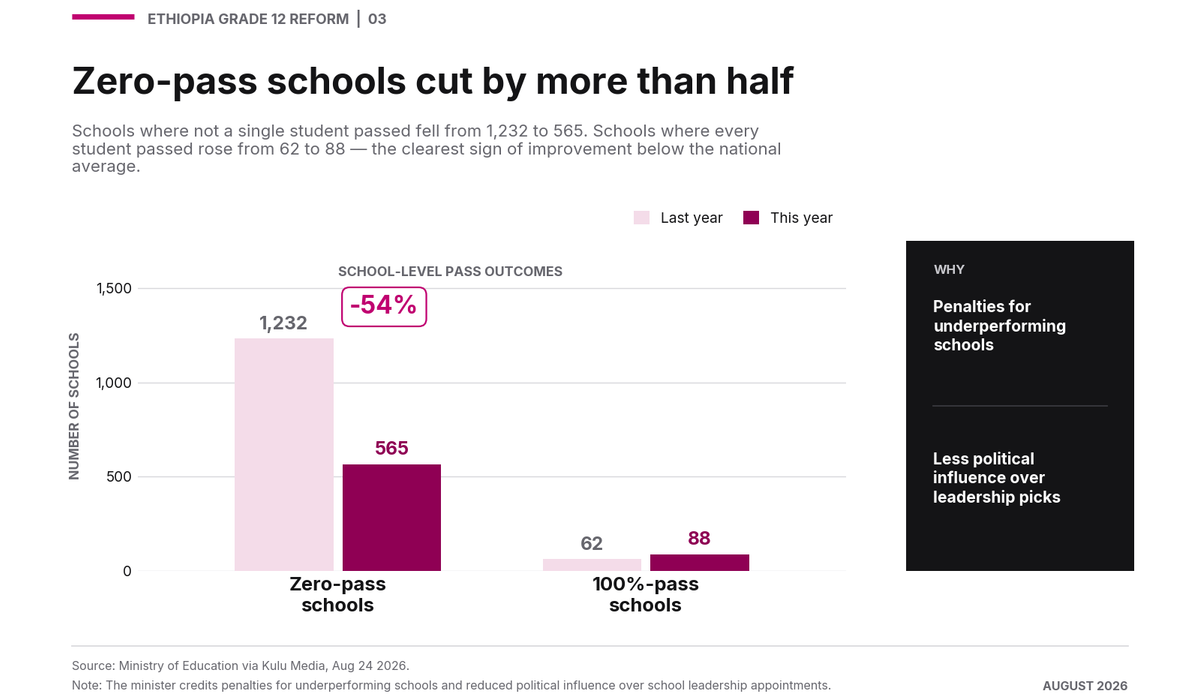
The clearest sign of improvement sits at the school level rather than the national average. The number of schools where not a single student passed fell to 565 this year, down from 1,232 the year before — more than a fifty percent drop — while schools where every candidate passed rose to 88, up from 62. Professor Berhanu credited part of that shift to consequences imposed on chronically underperforming schools and to reduced political influence over who gets appointed to run them.
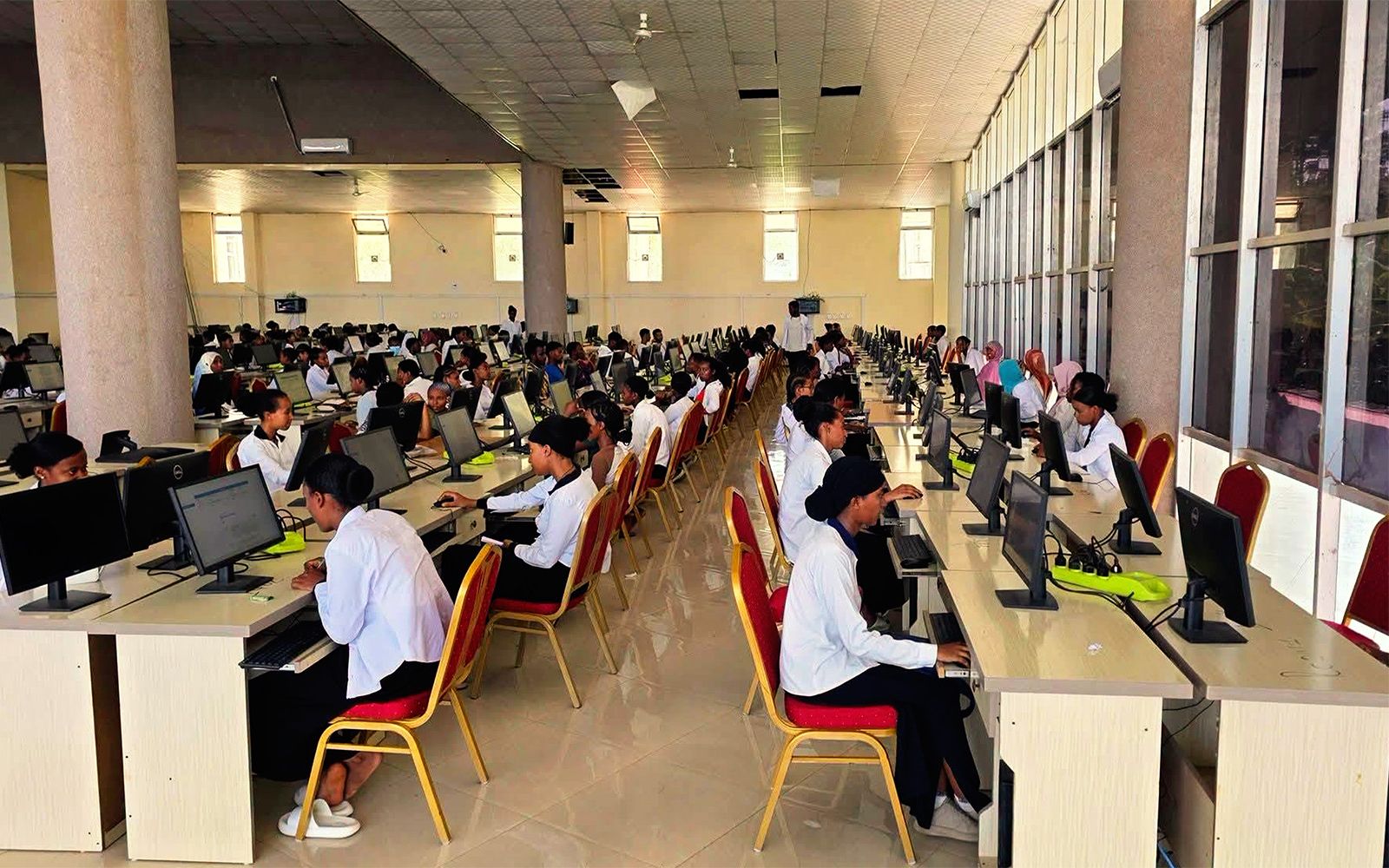
Where students tested mattered almost as much as how they performed. Roughly 60 to 62 percent of candidates sat the exam on computers rather than paper, and the ministry reported stronger performance among digital test-takers — enough that it now plans to move the exam fully online next year. Regional results varied sharply: Addis Ababa recorded the country's highest regional pass rate, at 32.4 percent, ahead of Harari and Amhara. Boarding schools also stood out for strong performance, which the ministry said would inform plans to expand boarding capacity.
The improvement also reaches into a program most students never see. Up to 100,000 conditional-pass candidates a year enter a one-semester university bridging program known as Remediation before their admission is finalized; with more students clearing the bar outright this year, the ministry expects fewer students will need it. The exam system driving these numbers was itself once one of Prof. Berhanu's most contested reforms.