
Ethiopia’s 18-month-old Stock Exchange Has Four Listed Companies, 19,000 New Investors
The Ethiopian Securities Exchange is 18 months old. It has moved faster than most new exchanges on the continent.
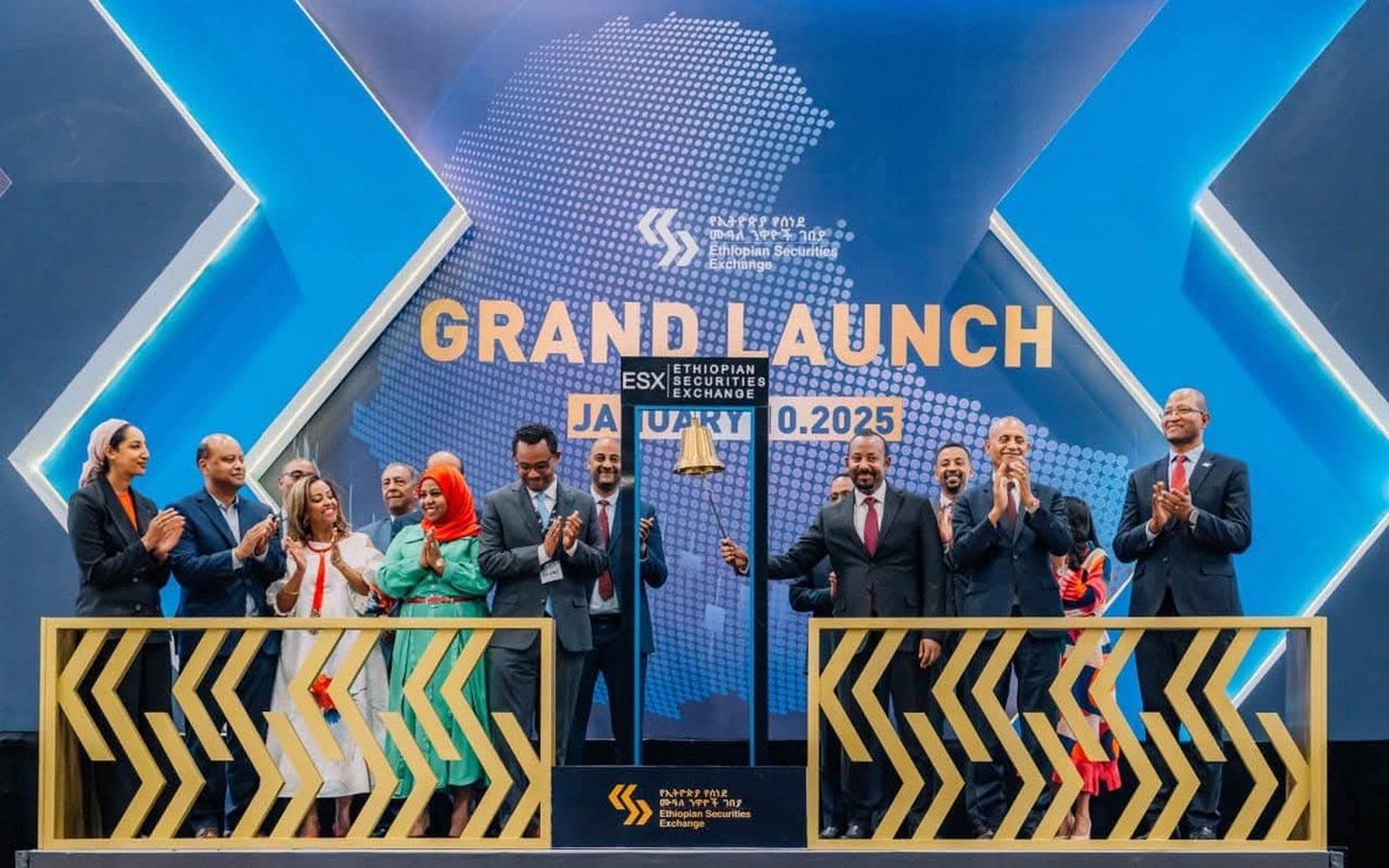
In January 2025, Wegagen Bank became the first company to list on the Ethiopian Securities Exchange — a 6.2 million-share offering at 1,000 Birr per share, bought by 14,549 shareholders who had never owned a publicly traded stock in their country before, because until that month, there was no place to buy one. Eighteen months later, the ESX has four listed companies, 19,400 registered investor accounts, and an interbank money market that has processed more than 2 trillion Birr ($12.7 billion) in transactions. It also has 45,000 Ethio Telecom shareholders who bought shares in a state-owned company, watched it post record revenues, and did not receive a single Birr of the 12 billion Birr dividend that was declared. That is the full picture of Ethiopia’s stock exchange in mid-2026.
Ethiopia last had an organised share market in 1965, when six institutions traded stocks between themselves through open bidding. That arrangement ended, the economy went through decades of state control, and private equity capital had nowhere formal to go. The Capital Markets Proclamation of 2021 created the legal foundation, and the ESX opened in January 2025 with Wegagen Bank as its first listing. For context: Nigeria’s stock exchange was founded in 1960. Kenya’s opened in 1954. Ethiopia is building from scratch what its neighbours built over half a century ago, and it is doing so during an IMF reform programme, a post-devaluation economy, and a cost-of-living squeeze. The pace matters less than the architecture it is laying down.

Four companies are currently listed for trading. Wegagen Bank (ticker WGBX) was first, in January 2025, with 6.2 million shares and 14,549 shareholders. Its share price has risen from the 1,000 Birr listing price to around 1,183 Birr, a 18 percent gain in 18 months. Gadaa Bank (ticker GDAB) listed in June 2025 with 1.2 million shares, 31,136 shareholders, and a share price that has climbed to around 1,165 Birr. Awash Bank, the country’s largest private lender, came to market in early 2026 with 37.9 million shares — six times Wegagen’s volume — and first traded at 4,000 Birr before settling around 2,800 Birr. And on May 26, 2026, Ethio Telecom (ticker TELE) listed as the exchange’s first state-owned enterprise and first non-financial company, bringing the most recognisable brand in the country onto the board.
Trading activity on the ESX is real but thin. In the week of May 18–22, the three banks then trading recorded a total of 84 trades with a combined value of 15.9 million Birr, roughly $100,000. Awash Bank’s arrival changed the scale significantly — its one-month trading volume was described by the ESX as larger than the entire market’s cumulative volume before it listed. But on any given day, the other counters often record no trades at all. Ethio Telecom held at 380 Birr without a single trade on one recent session, with buyers in the market but no sellers willing to part with their shares at that price. That is not unusual for an 18-month-old exchange. It is the normal early state of a market finding its price.
What comes next is more important than what is currently listed. More than 70 companies have prospectuses under review at the Ethiopian Capital Market Authority, with the ESX targeting nine listings before the Ethiopian fiscal year closes on July 7, 2026. Dashen Bank, Bank of Abyssinia, Zemen Bank, Abay Bank and Addis International Convention Centre have completed securities registration and are next in line. The government has also introduced a tax incentive — a cut in corporate income tax from 30 percent to 25 percent for three years from the date of listing — designed specifically to pull private companies that have been sitting on the fence. The list of companies reviewing their options is not just banks: IE Networks and Liyana Healthcare have been named as non-financial candidates working toward listing requirements.
Across Africa, young stock exchanges follow a recognisable pattern. Rwanda’s exchange opened in 2011 and had four listings in its first three years before gradually broadening. Ghana’s exchange, founded in 1990, spent its first decade dominated by financial stocks before manufacturing and consumer goods companies joined the board. The ESX is on a similar trajectory, with the interbank money market — launched alongside the exchange — already trading ten times its first-year forecast, a sign that institutional appetite for formalised market infrastructure is real. The ECMA has finalised a legal framework to allow foreign investors to participate, which has not yet been released for public consultation. When it is, the capital available to listed Ethiopian companies changes in scale.