
Africa's Green Economy Summit Connects 500 Investors to 140 Projects in First Impact Report.
Africa needs between $144 billion and $250 billion a year in climate financing to meet its energy transition and adaptation targets by 2030.
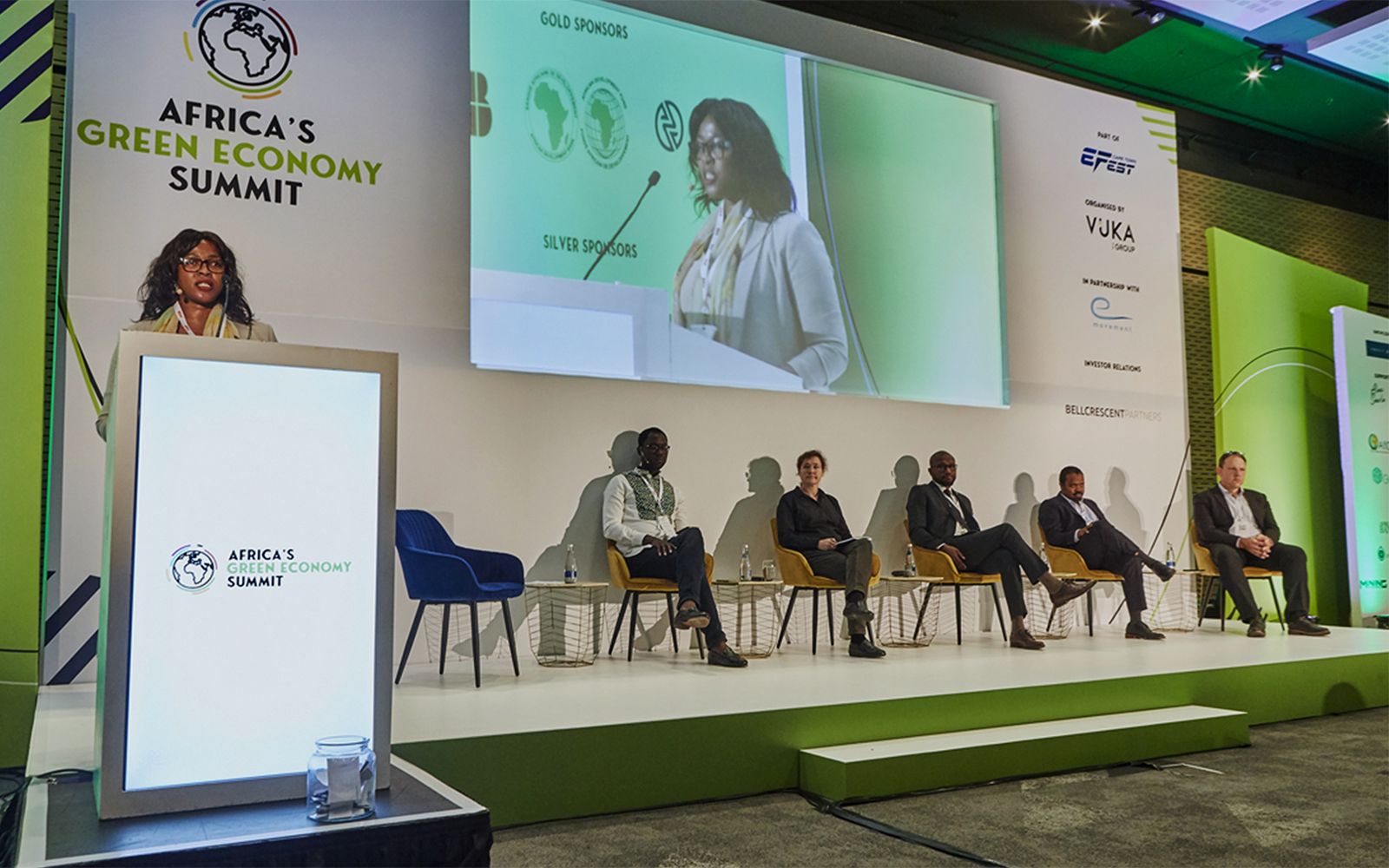
Africa needs between $144 billion and $250 billion a year in climate financing to meet its energy transition and adaptation targets by 2030. Sub-Saharan Africa alone needs renewable power investment to reach $36 billion annually by 2026, up from $16 billion in 2024. Current flows cover less than half of that. Against that backdrop, Africa’s Green Economy Summit published its first impact report on June 24, documenting four years of activity: 1,500 stakeholders from 34 countries, 500 investors, 1,500 curated meetings, 140 projects showcased, 20 deals initiated, and $25 million in financing outcomes.
AGES is organised by VUKA Group, a South African events and advisory business that runs sector-focused conferences across African industries. Four editions have taken place since the summit launched, held in Cape Town, drawing attendees from across the continent and international investment community. The format is structured matchmaking: project developers and investors are paired in curated one-to-one meetings rather than left to find each other across a generic conference floor. The pitch is that proximity and structure produce outcomes that general networking does not. The impact report exists to verify that claim with evidence. It shows 20 deals initiated, a $12 billion project pipeline represented across the four editions, and several named partnerships that moved from introduction to implementation through the platform.
Uber Sub-Saharan Africa and vALTERNATIVE Energy met at AGES and subsequently launched Uber Package, an electric last-mile delivery service operating in South African cities. PAM Africa’s Net Zero Village initiative, which builds off-grid solar and clean cooking infrastructure for rural communities, grew its investor base through AGES introductions. STROOM, a clean energy company, secured a strategic partnership with P4G — Partnering for Green Growth and the Global Goals — a Danish government-backed initiative that co-finances green business solutions with public funds. Each of these is a named outcome with named parties. They are also, in scale, small. The Uber Package service operates in urban South Africa. Net Zero Village is a community-level project. STROOM is an early-stage company. AGES produced them, which is more than most conferences can say, and they fall well short of the infrastructure-scale deals that Africa’s $250 billion annual financing requirement demands.
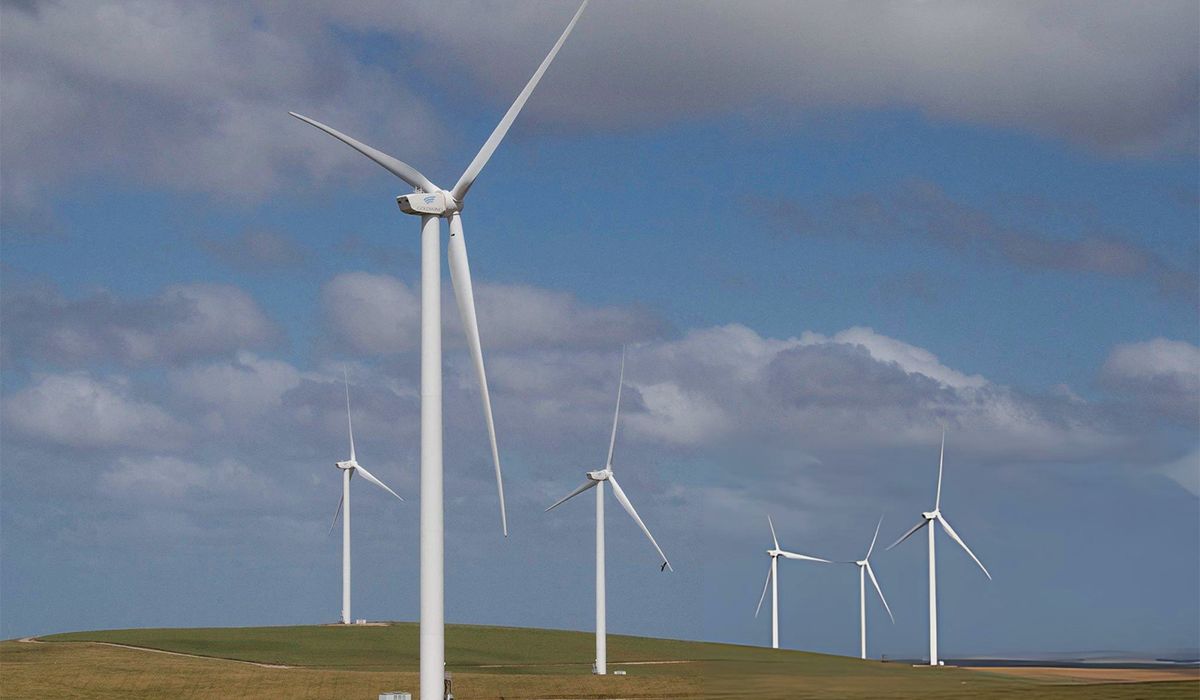
Africa’s climate finance shortfall is a mismatch between where the projects are and where the capital decision-makers sit, combined with the cost of capital on the continent running far above what renewable energy projects can absorb. African institutional investors hold $1.1 trillion in assets, potentially growing to $1.6 trillion by 2035 when remittances are included, but pension funds and insurers in Nairobi, Lagos, and Johannesburg face regulatory requirements that restrict their allocation to infrastructure assets and local currency projects. International capital faces a different constraint: perceived risk in African markets pushes the cost of debt to 12 to 15 percent annually, while a solar project in Kenya or Senegal, which would qualify for 4 to 6 percent financing in Europe, cannot generate the returns to service that cost. The matchmaking that AGES provides addresses the first problem — getting the right people in the same room — but it does not change the risk premium or the regulatory constraints that keep domestic capital away from infrastructure. Those require policy changes that a conference cannot deliver.
The World Economic Forum has operated for 50 years, hosts heads of state and the largest financial institutions on earth, and has not solved global inequality or climate change — but it has produced specific partnerships, policy commitments, and business deals that would not have happened otherwise. The value of convening is real and bounded. AGES has been running for four years and produced 20 initiated deals from 1,500 curated meetings — a conversion rate of about 1.3 percent. For a matchmaking platform, that is not unusual. Emmanuelle Nicholls, Portfolio Director at VUKA Group, said the challenge is creating the conditions for partnerships, investment and implementation, and that when connections happen, real outcomes follow. The next iteration of the question is whether the summit can facilitate larger transactions, or whether its current format is optimised for early-stage matchmaking rather than the multi-hundred-million-dollar project financings that move the continent’s energy dial.
The $12 billion project pipeline figure in the report deserves scrutiny alongside the $25 million in completed financing. Pipeline in the context of green economy summits typically means projects that have been presented, registered interest from potential investors, and entered some stage of diligence or discussion. It does not mean committed capital or signed term sheets. Africa added only four gigawatts of new renewable capacity in 2024, against a stated target of 300 gigawatts by 2030. At that pace, the continent reaches 300 gigawatts in 2099. The $12 billion pipeline that AGES has cultivated across four editions needs to convert from discussion to construction at a rate that has not yet been established. The report marks the starting point for tracking that conversion. The fifth edition will show whether the ratio of pipeline to closed deals improves.
Africa’s green economy financing problem is not a shortage of ideas, projects, or even willing investors. The continent holds the world’s largest untapped renewable energy potential, from the Sahara’s solar resource to the East African Rift Valley’s geothermal reserves to the Congo Basin’s hydropower.