
Ethiopia Spent $525 Million Subsidizing Fertilizer Imports This Year. A $4 Billion Plant Under Construction Could Change That.
The Ministry of Agriculture has distributed 10.7 million quintals of fertilizer this Meher season, more than any year before.
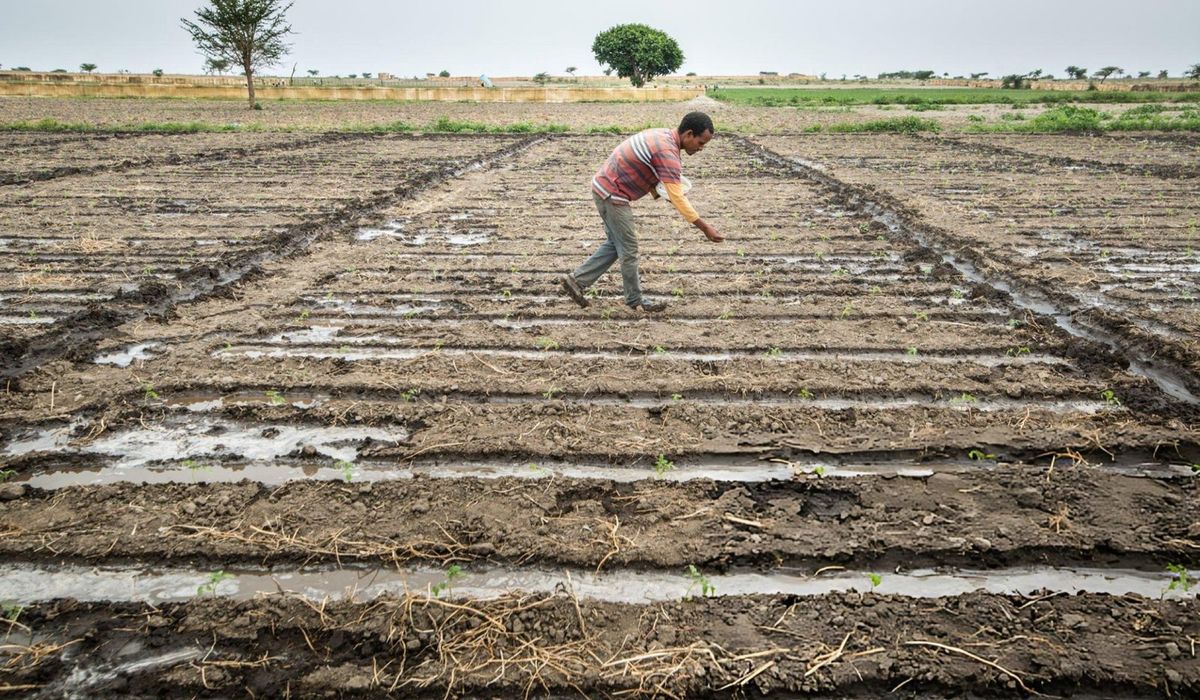
Ethiopia has 14 million smallholder farmers. Nearly all of them depend on imported fertilizer to grow their food. The government buys that fertilizer in dollars from international suppliers, ships it through Djibouti, trucks it across the country, and sells it to farmers at a price set by a committee that reports to the Prime Minister — subsidising every quintal by 4,972 Birr to keep it affordable. This year, that subsidy costs the government 84 billion Birr, the single largest subsidy line in the federal budget. At a press briefing on June 25, the Ministry of Agriculture announced the season’s distribution figures.
The distribution numbers are better than last year. Of the 22.9 million quintals planned for the 2018/19 Ethiopian fiscal year, 20.9 million have been purchased, 13.4 million have arrived at the Port of Djibouti, and 10.7 million have reached farmers — compared to 9.66 million quintals distributed at the same point last year. That is a meaningful increase, and State Minister Sofia Kassa (PhD) presented it to journalists as evidence that the supply chain is working. The stockpile for the rest of the Meher season, she added, is adequate. Seed distribution is also ahead of the previous year, with around 1.5 million quintals of improved seeds delivered against a 2 million quintal target.
The subsidy is a transfer from the government to farmers that keeps food production viable but puts real pressure on a budget already running a large deficit. Fertilizer headlined government subsidy expenditures last year, ahead of 70.5 billion Birr on fuel, 60 billion on food security, 15 billion on medicine, and nine billion on edible oil. The total subsidy bill is one of the reasons Ethiopia carries a public debt of $52.7 billion and is under IMF programme conditions that specifically require reducing this kind of recurrent expenditure. The IMF’s Extended Credit Facility document states that fertilizer subsidies “will need to be unwound gradually over time”. The 84 billion Birr cap for 2025/26 is the first formal limit ever placed on the line. Unwinding it means either raising the price farmers pay for fertilizer, or finding a way to produce it at lower cost domestically. Only one of those options keeps smallholder agriculture viable.
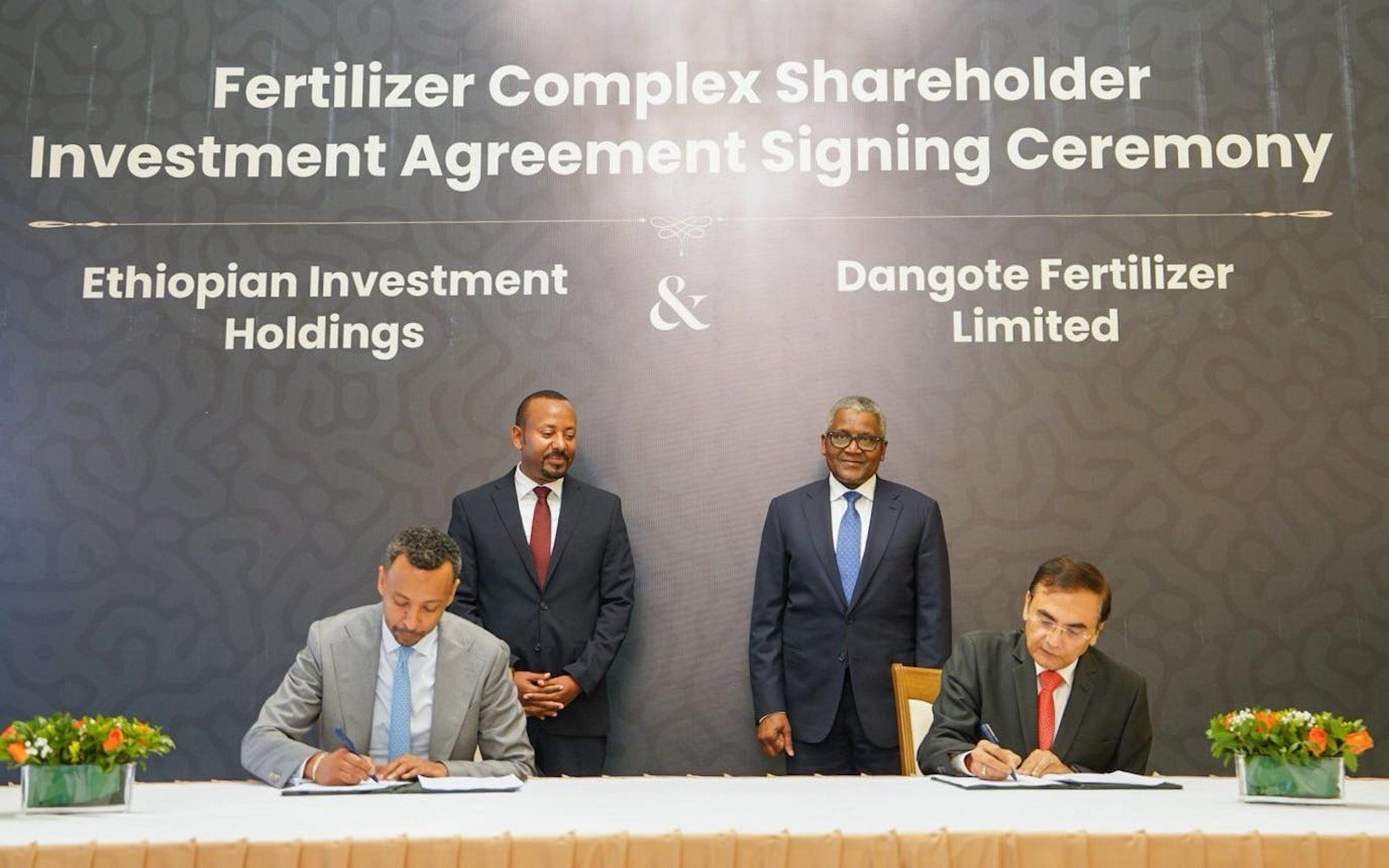
In August 2025, Ethiopia signed a $2.5 billion agreement with Nigeria’s Dangote Group to build a urea fertilizer complex in Gode, Somali Regional State, with construction officially launched on October 5. Ethiopian Investment Holdings holds 40 percent and Dangote holds 60 percent. The plant, fed by a pipeline from the Calub and Hilala natural gas fields, will produce 3 million metric tons of urea per year when complete — more than double Ethiopia’s current annual fertilizer demand of 1.2 million tonnes. The excess is for export. Dangote has since expanded the project scope, with total investment now reported at over $4 billion, making it one of the largest industrial investments in Africa. The plant is scheduled for completion within 40 months of the October 2025 groundbreaking — meaning first production in early 2029.
For the smallholder farmer in Arsi or Bale buying fertilizer this Meher season, none of this year’s supply chain or subsidy debate changes what they pay at the distribution point. The government subsidy holds the price at a level most can afford. But the structural arithmetic is not in the farmer’s favour for the long term. Fertilizer constitutes roughly 50 percent of input costs for Ethiopian smallholders. A quintal that costs the government 4,972 Birr in subsidy on top of the market price is a quintal whose real cost the farmer does not see. When the IMF’s gradual unwinding eventually reaches the farm gate — whether in two years or five — the price shock will land on households already spending most of their income on food production inputs. The Dangote plant is the government’s answer to that problem: domestically produced urea, from domestic gas, at a cost that does not depend on a dollar exchange rate at 157 Birr and rising.