
Canal+ Wins Exclusive Rights to Broadcast European Football in 40 African Countries Until 2031.
In the Ethiopian market nothing changes hands: SuperSport, the sports channel under Canal+'s own MultiChoice subsidiary, simply keeps rights it already held.
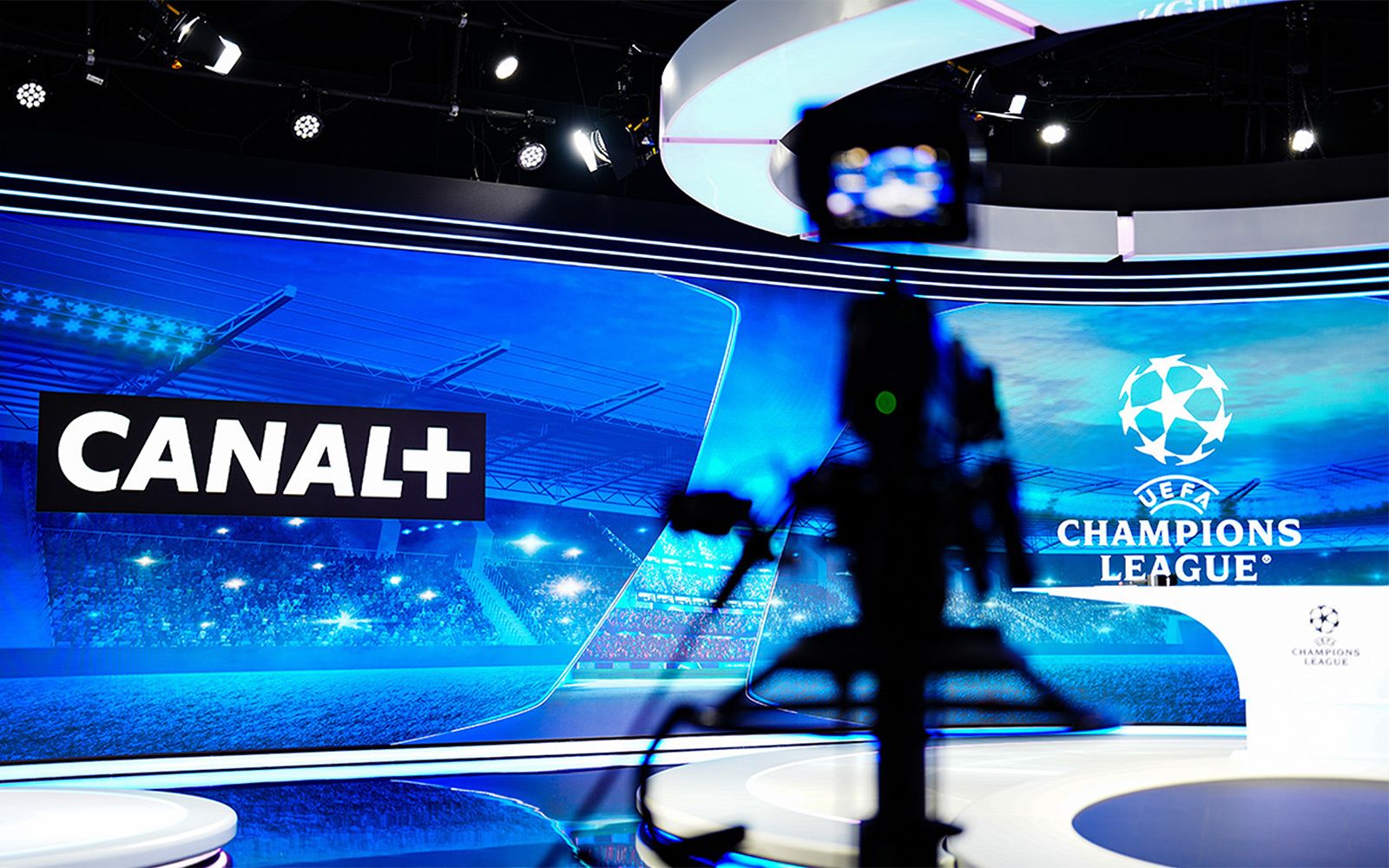
Canal+ has locked up exclusive broadcast rights to European club football's three biggest competitions across more than 40 African countries, including Ethiopia, through 2031 — a deal struck less than a month after the French group finished paying $3.17 billion to take full control of the continent's largest pay-TV operator.
Under the agreement, Canal+ secured rights in every language to the UEFA Champions League, Europa League and Conference League, plus the Youth League and Super Cup, for four seasons running from mid-2027 through 2030/31, beating out more than 20 rival bidders in some markets. The rights split by language rather than by country. In French-speaking Africa, CANAL+ Sport becomes the exclusive home of all three competitions for the first time — Europa League and Conference League matches have never before aired in French there. In English- and Portuguese-speaking markets nothing changes hands: SuperSport, the sports channel under Canal+'s own MultiChoice subsidiary, simply keeps rights it already held. No financial value was disclosed for the rights themselves. The acquisition adds to a Canal+ sports portfolio across the region that already carries the Premier League, LaLiga and Ligue 1. It also lands six weeks after Canal+ completed its $3.17 billion buyout of MultiChoice on July 10, 2026, paying roughly $1.9 billion for the roughly 55 percent of shares it did not already own after building a stake since 2023. The combined company now operates pay-TV and streaming in nearly 70 countries with more than 40 million subscribers across DStv, GOtv, Showmax, SuperSport and Canal+'s own Francophone African channels.
The timing answers a question the announcement itself does not: why commit four seasons of exclusivity to a subscriber base that has been shrinking for years. MultiChoice's linear pay-TV subscribers fell from a peak of 17.3 million in March 2023 to roughly 14.5 million within two years, a loss of about 2.8 million customers, with the South African base alone dropping from 8.18 million in 2021 to 7.02 million by 2025. Since MultiChoice delisted from the Johannesburg Stock Exchange in December 2025, Canal+ has stopped publishing DStv-specific subscriber counts altogether, folding the business into a combined Africa-and-Asia segment reported at 22.6 million subscribers in June 2026 — a total that also includes a fibre unit and a Myanmar pay-TV joint venture with no connection to DStv. Within MultiChoice's own countries, Canal+ described the base as merely holding broadly flat, crediting the Africa Cup of Nations and the FIFA World Cup for offsetting the years-long decline. The company has flagged a further €140 million earnings hit for 2026 from what it calls subscriber base inertia.
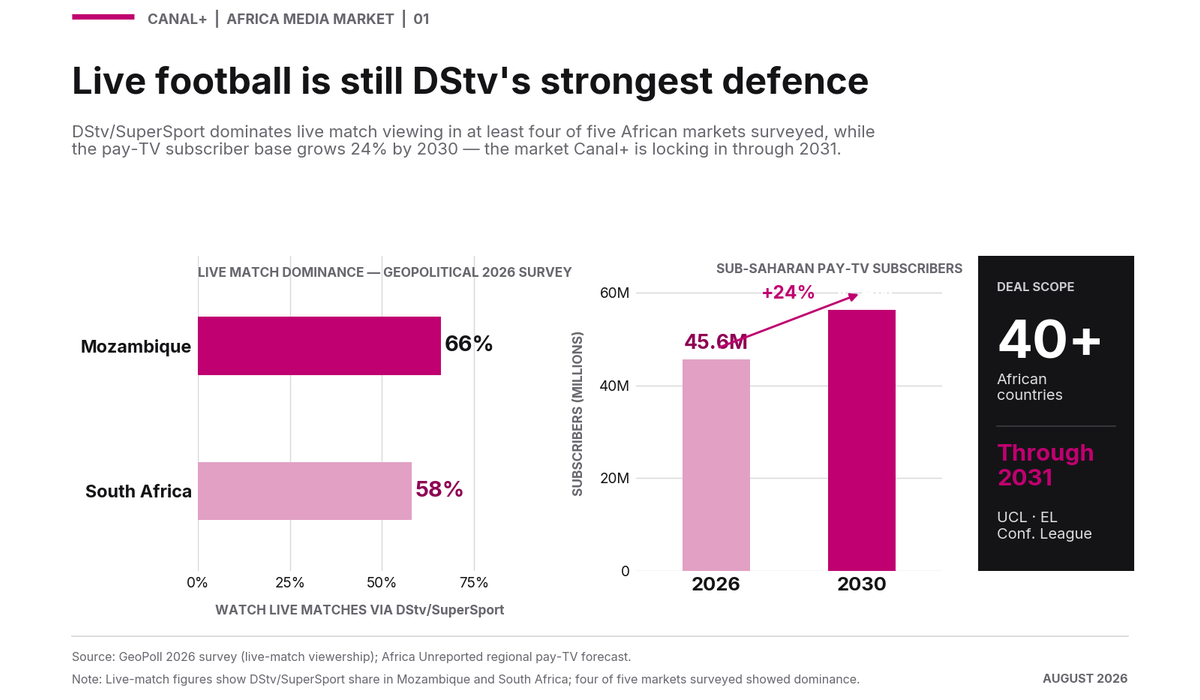
The forces pulling subscribers away are familiar ones: currency depreciation and inflation across markets including Nigeria, and a shift toward Netflix, YouTube and piracy — five African countries alone generated 17.4 million visits to the ten most-used piracy sites in 2025, by MultiChoice's own count. Exclusive live football is the direct countermeasure. A five-country survey of African football fans in 2026 found DStv and SuperSport still the dominant channel for watching live matches in four of the five markets studied, with penetration reaching 66 percent in Mozambique and 58 percent in South Africa. General entertainment can be replaced by a free stream; a live Champions League match, for four more seasons, cannot.
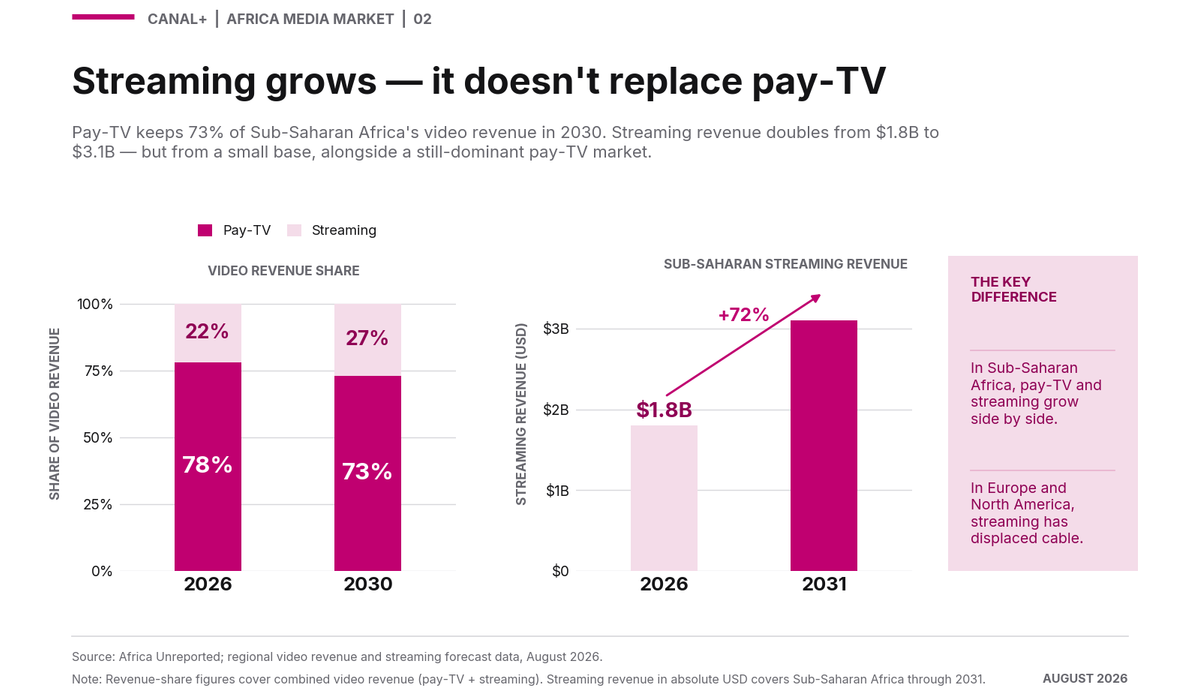
The African market is worth defending because it is still expanding rather than contracting. Pay-TV subscriptions across Sub-Saharan Africa are forecast to grow from 45.6 million in 2026 to 56.4 million by 2030, and pay television is projected to still hold 73 percent of the region's combined video revenue that year, down only modestly from 78 percent today. Streaming revenue across the same region is set to grow from $1.8 billion in 2026 to $3.1 billion by 2031 — a fraction of what pay television still earns, and unlike in Europe or North America, the two are growing side by side rather than one consuming the other. Locking exclusive sport across more than 40 countries protects the larger, still-growing pool rather than a shrinking one.
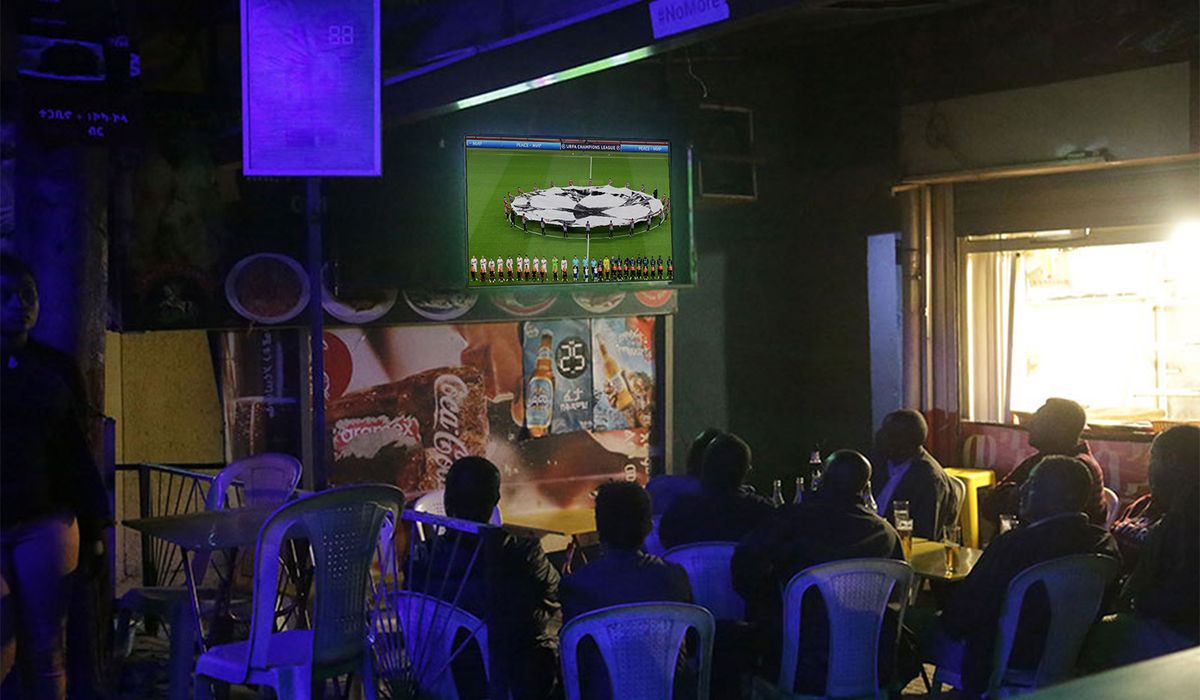
Football is Ethiopia's most followed sport by a wide margin, and roughly 30 percent of the population — around 39 million people out of some 130 million, more than seven times the population of Addis Ababa — counts as football fans. European leagues fill Addis Ababa's showhouses more reliably than Ethiopia's own top flight, a dominance DStv built over nearly two decades: the operator has held uninterrupted English Premier League rights since a rival service, GTV, briefly outbid DStv for the league in 2007 and then collapsed into liquidation by January 2009. Arsenal alone claims 52 percent of Ethiopian Premier League fans, with Manchester United at 22 percent and Chelsea at 8 percent — brand loyalties that keep showhouse owners and satellite dealers in business on match days. The new UEFA agreement changes nothing about that arrangement for Ethiopian viewers. SuperSport already carried the Champions League here; the deal simply extends that exclusivity through 2031 rather than leaving it open to renegotiation at the next rights cycle.