
Ethiopia is planting 8 trees for every person on earth before it hosts the Global Climate Summit
Green Legacy 2026 — and the road to COP32 in Addis Ababa
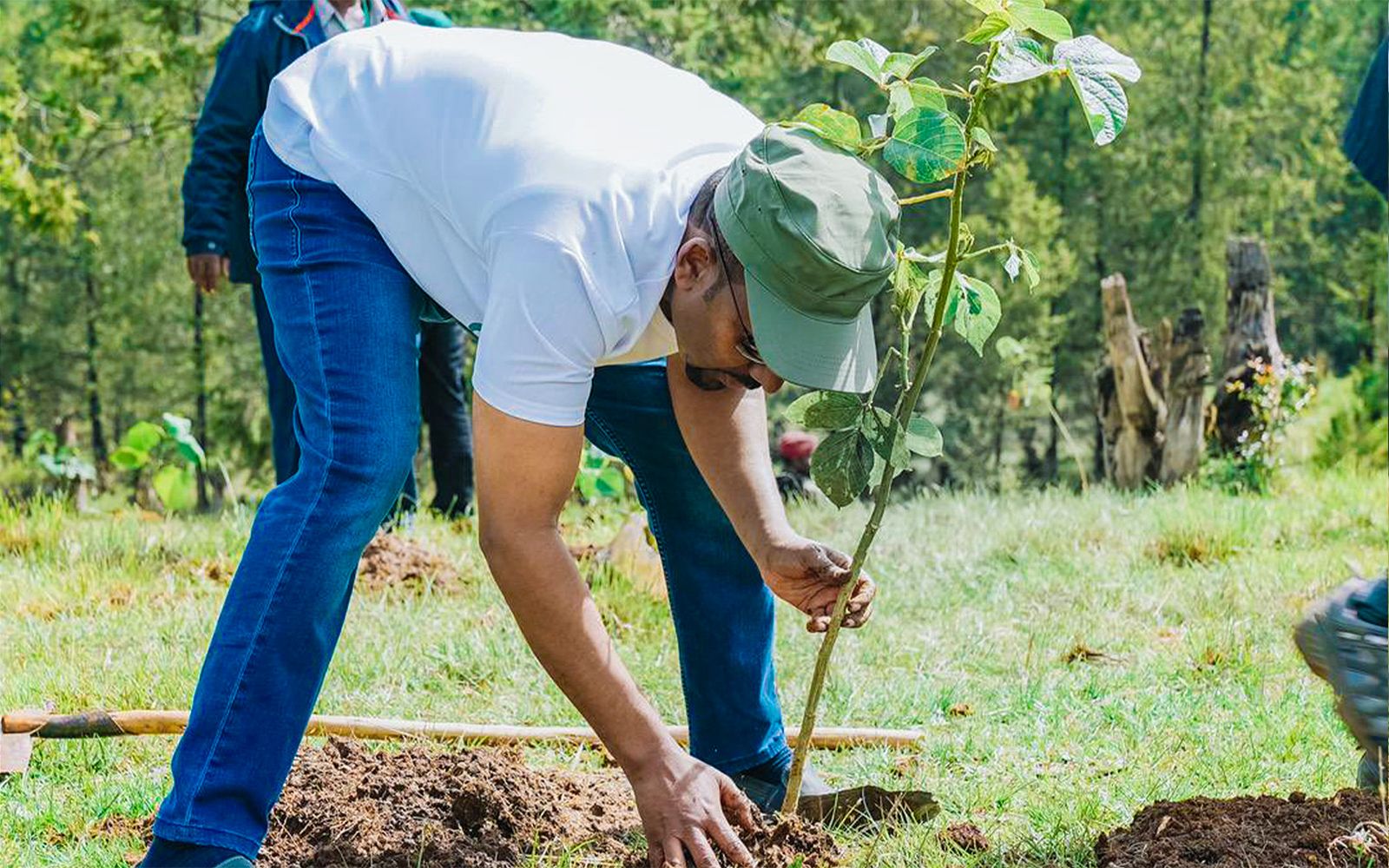
On June 15, Prime Minister Abiy Ahmed walked into a field and started a planting season. Across Ethiopia, millions of people will spend days digging holes, carrying seedlings up hillsides, and pressing roots into soil — adding eight billion new plants to a running total that now sits above 40 billion and is climbing toward 65 billion. That is roughly eight trees for every person alive on earth today, planted by one country.
Ethiopia will host COP32 in Addis Ababa in 2027 — the annual global climate summit, and the first time a Sub-Saharan African city has held it since 2011. African nations chose Ethiopia over Nigeria at last year's summit in Brazil, and the reason given was the Green Legacy Initiative's record: 40 billion seedlings planted since 2019 across 22 million hectares of degraded land. That land area is roughly the size of the United Kingdom, restored from bare and eroded ground.
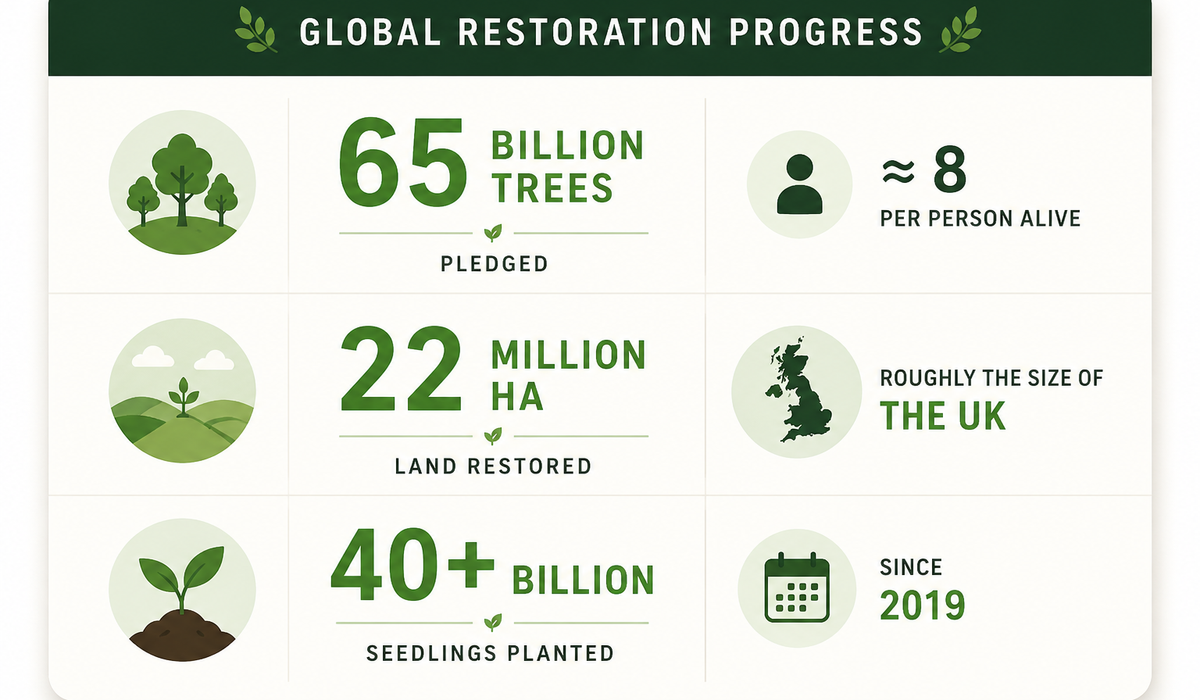
Each year's planting target has been set one step higher than the last — 47.5 billion by end of 2024, 54 billion by end of 2025, 65 billion by the time world leaders arrive in Addis Ababa. The country's electricity grid already runs on more than 90 percent clean energy, mostly hydropower. Ethiopia is not arriving at the climate summit with a plan and a request for money. It is arriving with a completed scoreboard — forests measurable from a satellite — and a grid that most wealthy countries have not matched.
The climate summit's agenda has two recurring problems that the host country is quietly pointing at. Rich nations have repeatedly promised money to help poorer countries manage the effects of climate change. Most of that money has not arrived where it was needed — it stalls in institutions, comes as loans that must be repaid, or disappears in administrative costs. A country that planted 65 billion trees without waiting for a single dollar of that promised aid makes a different kind of argument in the room.
What is already visible is six consecutive planting seasons, each one larger than the last, run by a government that set a 2027 deadline and built the entire programme around it. COP32 will produce agreements, commitments, and communiqués. Ethiopia will walk in already holding something most conference rooms cannot manufacture: a thing that was done.