
Uganda Airlines Tells Parliament 80% of Its Fleet Was Grounded This Year — But Revenue Still Grew 22%.
The Ethiopian Airlines veteran hired to steady Uganda's carrier told lawmakers how close it came to collapse — and how cleared engine bills, new routes, and ticketing issues now steer its recovery.
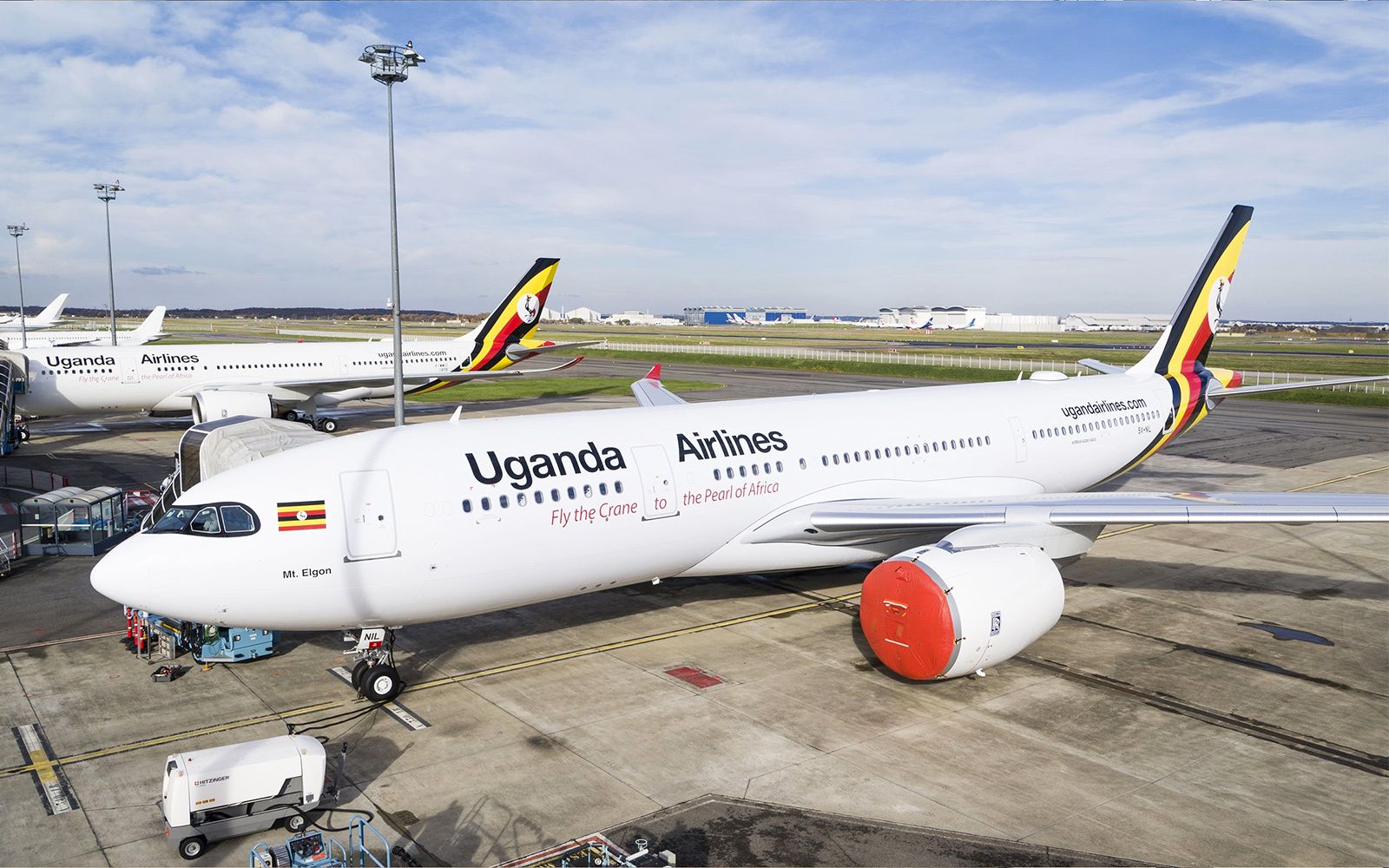
Wake, the 82-year-old former Ethiopian Airlines chief executive credited with building that airline into a continental powerhouse, appeared before the committee, known as COSASE, after police summonses were issued when airline officials failed to show up for an earlier session without explanation. He was appointed acting CEO of Uganda Airlines in February 2026 by President Yoweri Museveni, after Jennifer Bamuturaki departed amid parliamentary scrutiny of the carrier's losses. The committee, chaired by Muwada Nkunyingi, was reviewing the Auditor General's report for the 2024/25 financial year.
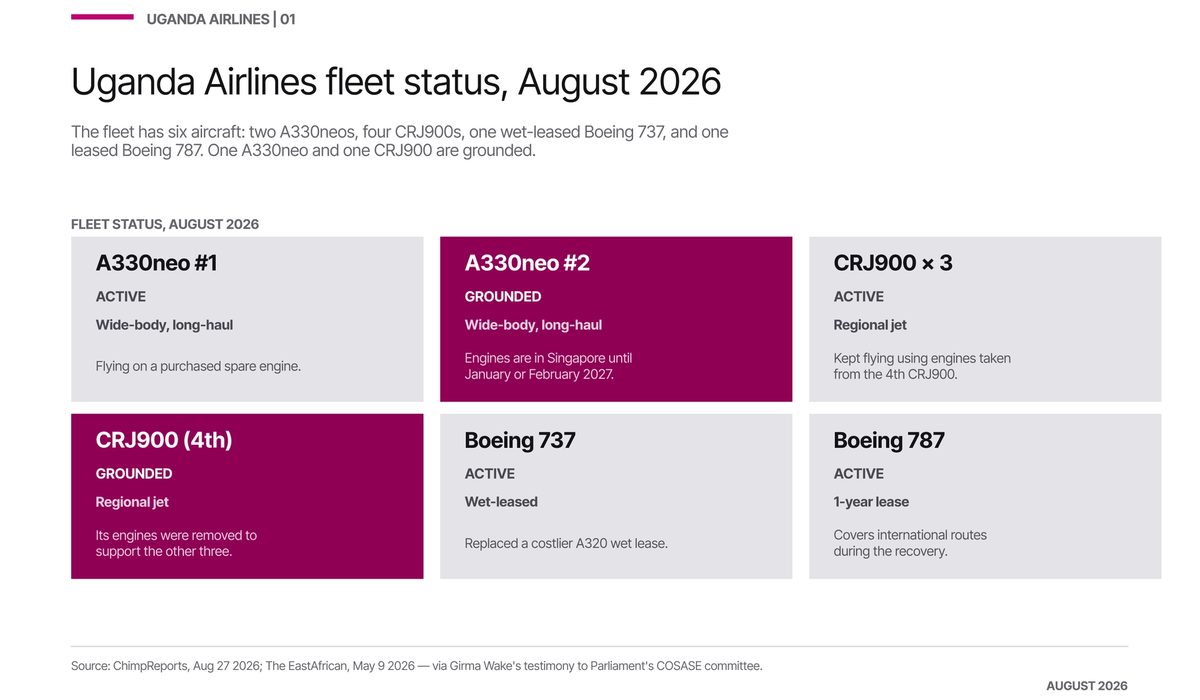
Two of the airline's six aircraft were already out of service before the crisis deepened: a Bombardier CRJ900 grounded for an engine problem since November 2025, and one of the airline's two Airbus A330neos grounded for lack of an engine. Rolls-Royce, which maintains the A330's Trent 7000 engines under a TotalCare contract, voided that agreement in October 2025 over unpaid bills, after monthly payments had climbed from roughly $400,000 to about $1.1 million by January 2026. To keep a minimum schedule running, management swapped working engines between aircraft while it negotiated a way back into the contract.
Uganda Airlines settled $9 million in arrears to reinstate the Rolls-Royce contract, bought a spare engine to return one A330neo to service, and sent the grounded aircraft's original engines to Singapore for repairs expected to take 120 days, with the plane due back in service around January or February 2027. The other grounded aircraft, a CRJ900, has been kept out of service while its engines were cannibalized to keep the remaining three CRJ900s flying pending repairs in the United States.
The fleet Wake described to lawmakers is a mix of owned, leased and stopgap aircraft: two owned A330neos, one flying and one grounded until early 2027; four owned CRJ900s, three active; a wet-leased Boeing 737 brought in to replace a costlier Airbus A320 wet lease; and a Boeing 787 on a one-year lease to preserve the airline's long-haul international presence while the fleet stabilizes.
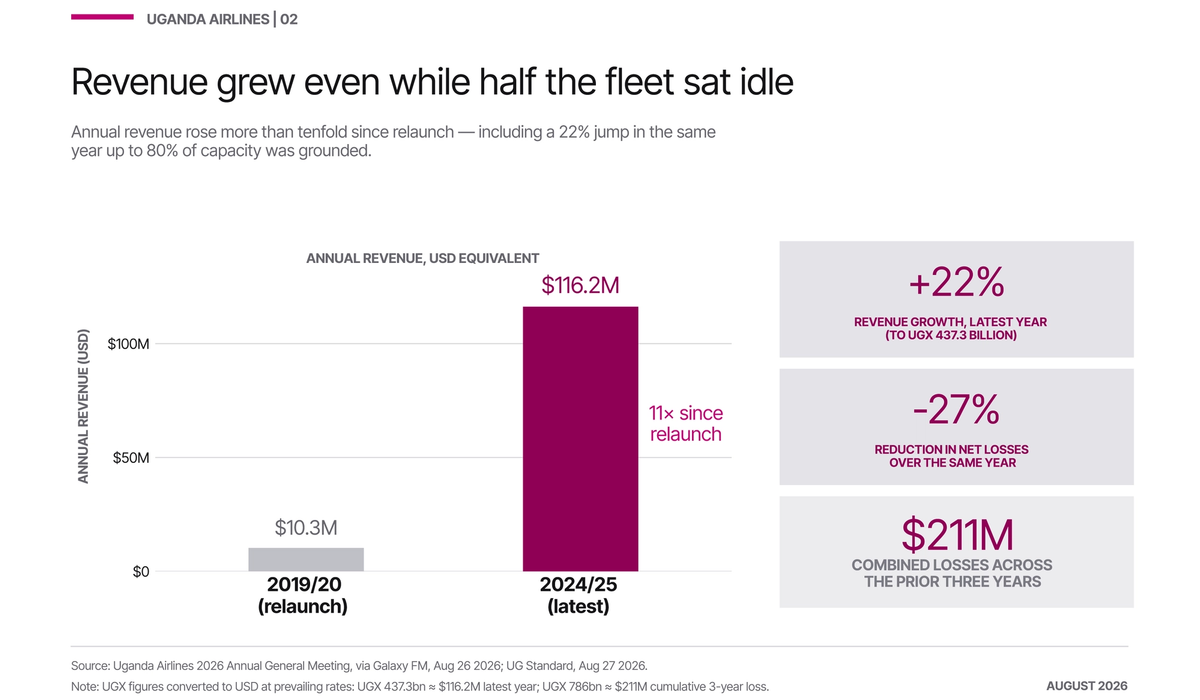
The airline's combined losses over the past three financial years reached UGX 786 billion, roughly $211 million. Even so, Uganda Airlines reported a 22 percent rise in revenue to UGX 437.3 billion at its 2026 annual general meeting, alongside a 27 percent reduction in net losses. Annual revenue has grown from about $10.3 million in the 2019/20 financial year, shortly after the airline's relaunch, to $116.2 million in 2024/25, and the carrier has carried more than 1.7 million passengers since it returned to the skies in 2019.
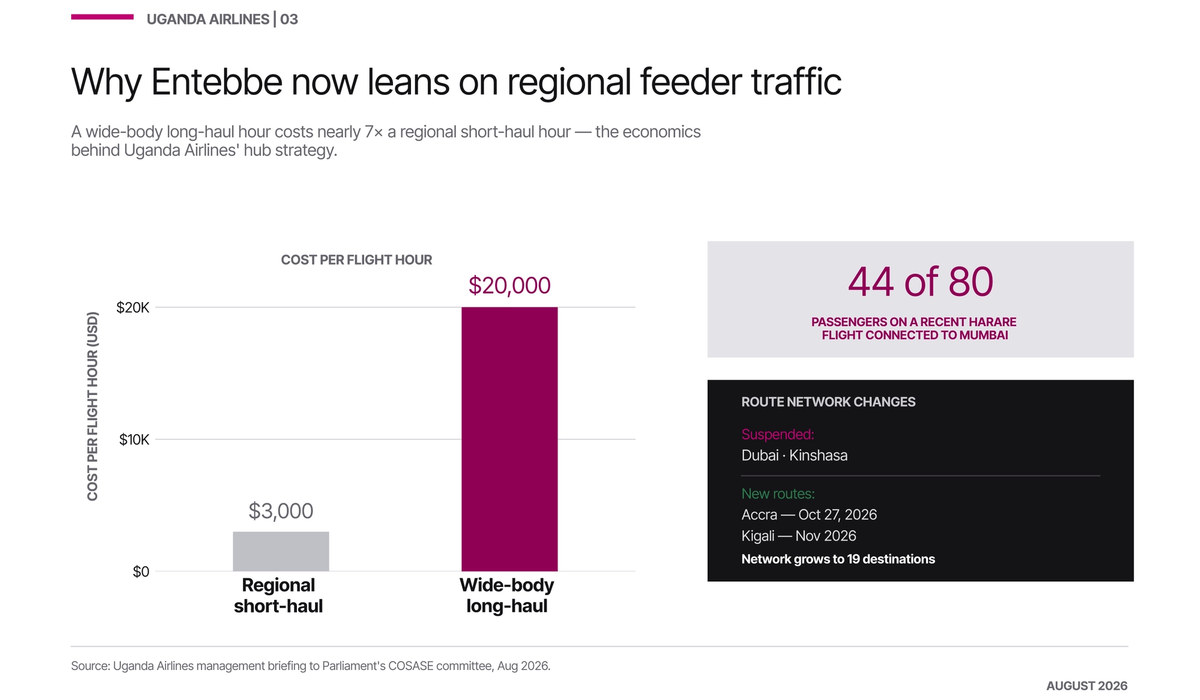
External shocks forced route changes alongside the mechanical ones. Dubai flights were suspended over Middle East conflicts and UAE visa restrictions tied to an Ebola outbreak, which also halted flights to Kinshasa. In response, the airline is investing in building Entebbe into a regional connecting hub: wide-body long-haul flying costs upward of $20,000 an hour against roughly $3,000 for short regional hops, so the airline's recovery leans on feeding international routes with regional traffic. On a recent flight from Harare, 44 of 80 passengers connected onward to Mumbai — the kind of transfer traffic the hub strategy depends on. New routes to Accra launch October 27, followed by Kigali in November, extending the network to 19 destinations.
Uganda Airlines has placed advance orders with Boeing for four 737 MAX jets, due in 2032, and four 787-9s, due in 2033. In the nearer term, management wants to move off costly wet leases — where the lessor supplies crew, maintenance and insurance — and onto self-operated dry leases by November, a shift that requires new aircraft-type certification from the Uganda Civil Aviation Authority, with Boeing helping train local inspectors and airline staff to get there. Wake has ruled out mass layoffs, telling MPs the airline's restructuring is meant to fix staffing gaps rather than cut headcount, and that Uganda Airlines is targeting break-even by 2030.
Not every question lawmakers raised got an answer. Airline management could not explain to the committee how it intends to recover roughly $100,000 lost through irregularities in ticketing, and auditors separately flagged delays in banking cash collected at the airline's Juba office. The Rolls-Royce contract is reinstated and the fleet is flying again, but the November deadline for dry leases and the early-2027 return of the second A330neo are the next dates that will show whether this week's testimony marked a turning point or simply a pause between crises.