
Tony Blair Visits Ethiopia's AI Institute as IMF Report Says Artificial Intelligence Could Add 4 Percent to Sub-Saharan Africa's Economy.
IMF says that with the right power, internet, and skills infrastructure, Ethiopia can create an additional 4 out of every 100 birr in economic growth over the next ten years.
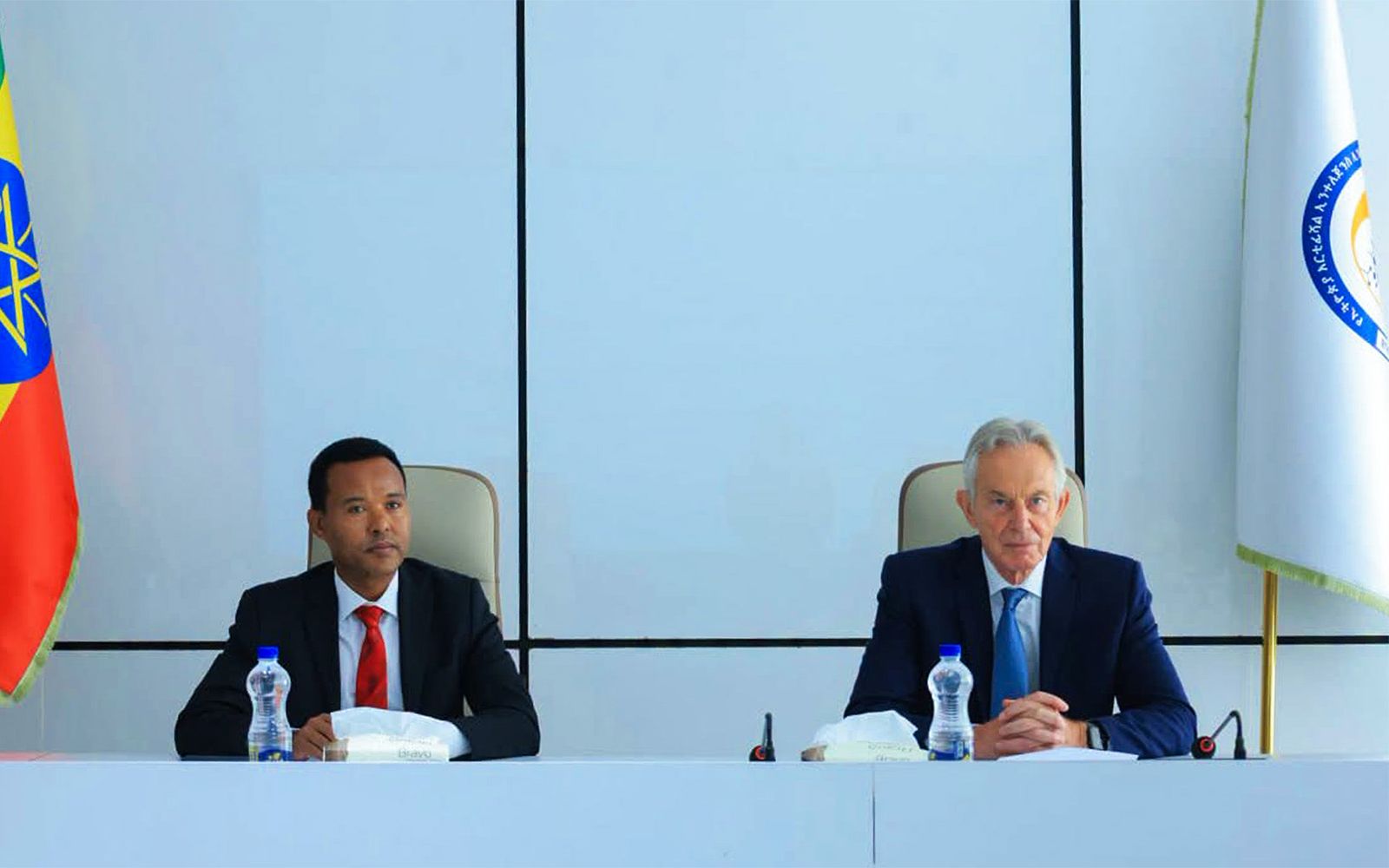
An IMF paper published on July 21, 2026, authored by Martin Schindler, Nikola Spatafora and Andrew Tiffin of the Fund’s African Department, puts a number on what artificial intelligence could mean for sub-Saharan Africa: 4 percent of GDP over the next decade, adding roughly half a percentage point to annual growth. The paper is titled Africa Can Grow Faster With AI—If It Moves Now. The headline number comes with a conditional. At the region’s current level of AI preparedness, the IMF estimates AI will contribute only 0.2 percent to GDP over the same period. Sub-Saharan Africa ranks lowest on the IMF’s AI Preparedness Index of any region in the world. The 4 percent scenario requires better electricity, faster internet, and a trained workforce. The 0.2 percent scenario is what happens if those things do not arrive.
Sub-Saharan Africa’s combined GDP is approximately $2 trillion. Four percent of that is $80 billion in additional economic output — more than Ethiopia’s entire annual GDP today. Spread across 46 countries and a billion people, the gains would flow primarily through agriculture, healthcare, education, and small business productivity. The IMF paper notes that the largest gains in Africa may come not from coding, consulting, and call centres — the sectors where AI has most visibly transformed rich-world economies — but from farms, schools, clinics, and tax offices. A smallholder farmer in Oromia using an AI-powered extension service on a feature phone, receiving real-time advice on soil conditions and weather risk, is a more realistic near-term AI use case for sub-Saharan Africa than a Lagos startup building enterprise software. The IMF is asking whether the infrastructure to support that farmer exists. In most of the region it does not. In Ethiopia, it is being built.
Ethiopia established the Ethiopian Artificial Intelligence Institute in 2020, the first dedicated government AI research and policy institution in sub-Saharan Africa. The Council of Ministers approved the Medemer Artificial Intelligence University in March 2026 under Proclamation 1294/2015 — only the second dedicated AI university in the world, after the UAE’s. The AI UniPod at Addis Ababa University, established by the EAII in partnership with UNDP’s Timbuktoo Initiative, is already incubating AI startups and connecting research to applied commercial use. The Fayda national digital ID, now covering over 40 million Ethiopians, provides the identity layer that AI-powered government services require to function at national scale. MESOB’s 130-service digital government platform sits on top of Fayda. The 5 Million Coders Initiative has enrolled over 5 million participants, now expanding to 7 million, building the foundational digital literacy the IMF identifies as a prerequisite for AI adoption beyond the formally educated minority. These are not pilot programmes. They are national-scale deployments.

The Tony Blair Institute for Global Change has been an active adviser on Ethiopia’s digital transformation since at least 2024. In October 2024, Ethiopia’s Minister of Innovation and Technology led a delegation including the Director General of the EAII and the head of the Fayda programme to meet Blair and his team, covering progress on Fayda, AI governance, and digital revenue administration. TBI’s published position, in a 2025 paper titled , is that digital public infrastructure — national ID systems, payment platforms, and interoperable data networks — is the precondition for AI-powered government services to work. Ethiopia’s Fayda, Telebirr, and MESOB are exactly the architecture TBI describes as foundational. The Institute maintains active programming on Ethiopia’s Ministry of Revenue digitisation, supported separately by the Gates Foundation.
The IMF’s 0.2 to 4 percent range is a description of two scenarios, one in which Africa’s infrastructure constraints are addressed and one in which they are not. Only 10.8 percent of Ethiopian lower-secondary schools have internet access for educational purposes, even as 61.7 percent have computers. The national grid reaches 45 percent of the population. Mobile data penetration outside Addis Ababa is growing but uneven. These are the specific constraints the IMF paper is measuring when it puts the unimproved scenario at 0.2 percent. Ethiopia has done more than any other sub-Saharan country to build the institutional and regulatory architecture for AI. PM Abiy Ahmed holds the African Union Champion role for Artificial Intelligence and Digital Health. The institutions are in place. The electricity and connectivity that determine which of the two IMF scenarios materialises are still being built.
The IMF’s July 21 paper sets conditions for this to materialize as AI needs energy, Sub-Saharan Africa’s annual electricity investment needs to reach $36 billion to close the power deficit the paper identifies as the primary constraint. Current investment runs at roughly $16 billion. Ethiopia’s GERD adds 6,000 megawatts, the Corbetti geothermal deal adds 1,000 megawatts, and the nuclear programme targets 2,400 megawatts by the mid-2030s.