
Gold Has Overtaken US Treasuries as the World's Top Reserve Asset, the ECB Says.
Central banks now hold more gold, as a share of reserves, than US government debt for the first time since the dollar era began — and Ethiopia's own gold boom is riding the same price rally that helped get them there.
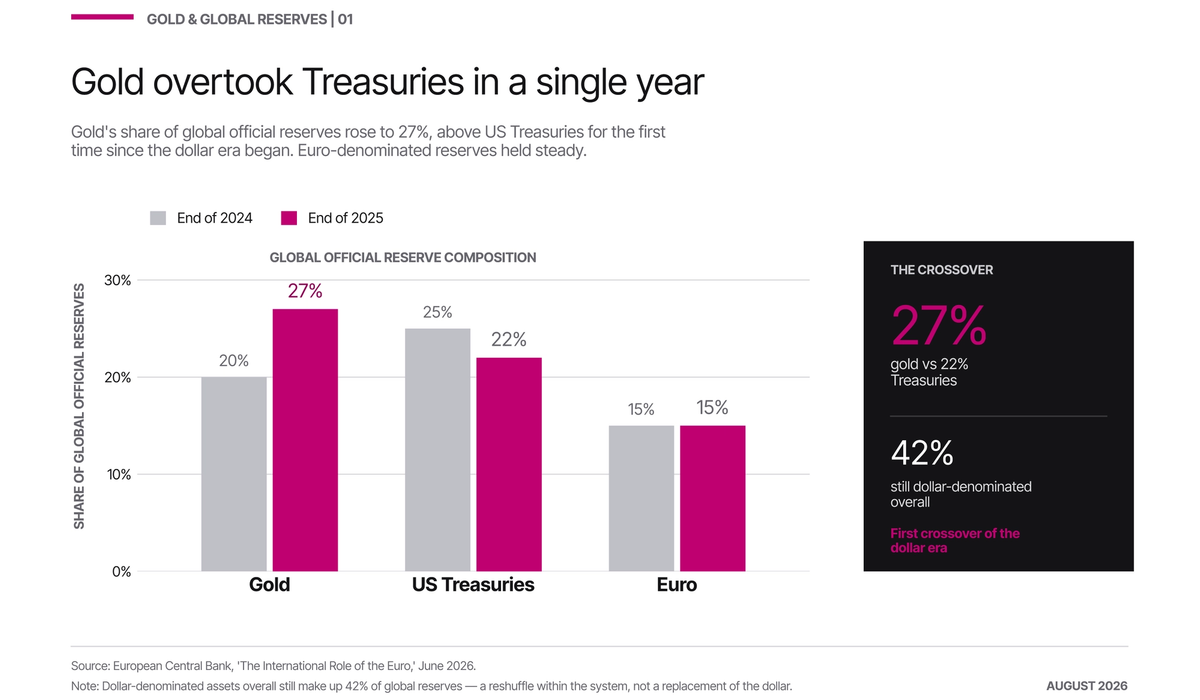
Euro-denominated reserves held steady at 15 percent. Much of gold's jump reflects price, not just buying: bullion touched more than $5,500 a troy ounce in January, and the ECB was explicit that dollar-denominated assets still make up the largest overall share of global reserves, at 42 percent — this is a reshuffling of the reserve mix, not the end of the dollar's dominance. "Geopolitical tensions continue to drive strong central bank demand for gold," ECB President Christine Lagarde wrote in the report.
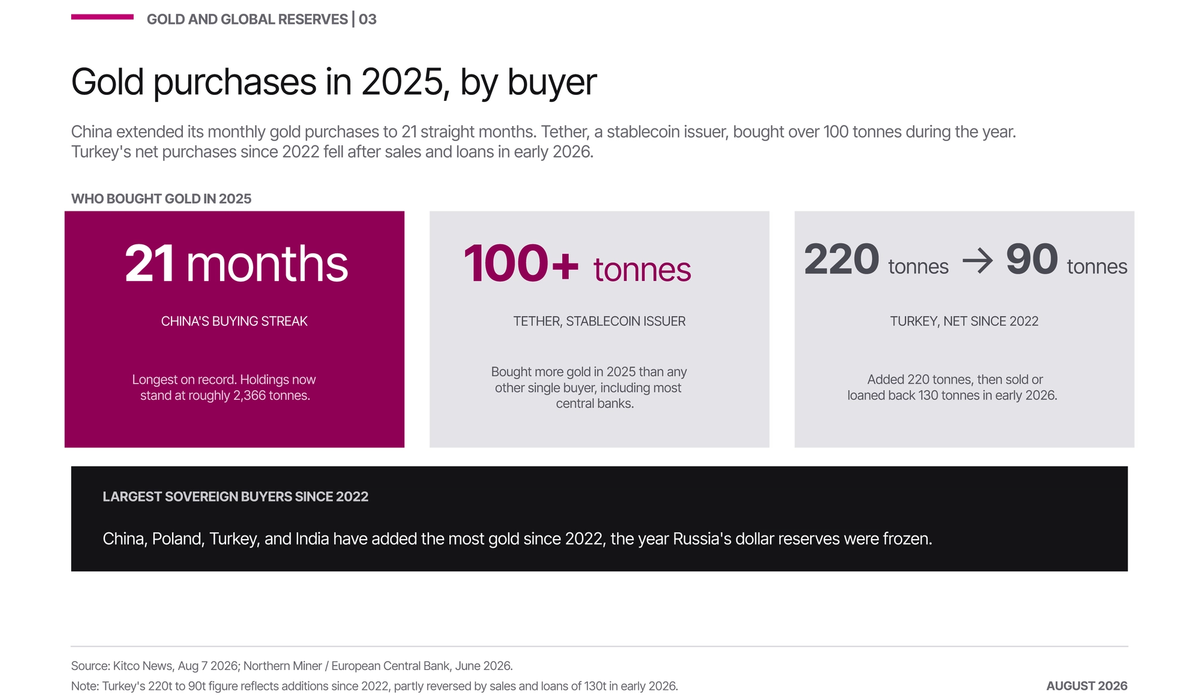
The turning point, in the ECB's telling, was 2022, when the United States and its allies froze Russia's dollar reserves after the invasion of Ukraine — a demonstration to every other central bank that dollar assets could be frozen by political decision, not just market forces. China, Poland, Turkey and India have made the largest additions to gold reserves since then. China's central bank alone has now bought gold for 21 consecutive months, the longest streak on record, pushing its official holdings to roughly 2,366 tonnes.
The buying has not been one-directional even among the biggest accumulators — Turkey added 220 tonnes since 2022 before selling or loaning 130 tonnes of it back in early 2026, one of the largest reserve drawdowns of the period, and net central bank purchases overall eased to 850 tonnes in 2025 after three straight years above 1,000 tonnes. The single largest buyer of 2025, by the ECB's count, was not a country at all: Tether, the stablecoin issuer, purchased more than 100 tonnes of gold — more than most sovereign central banks added in the same period.
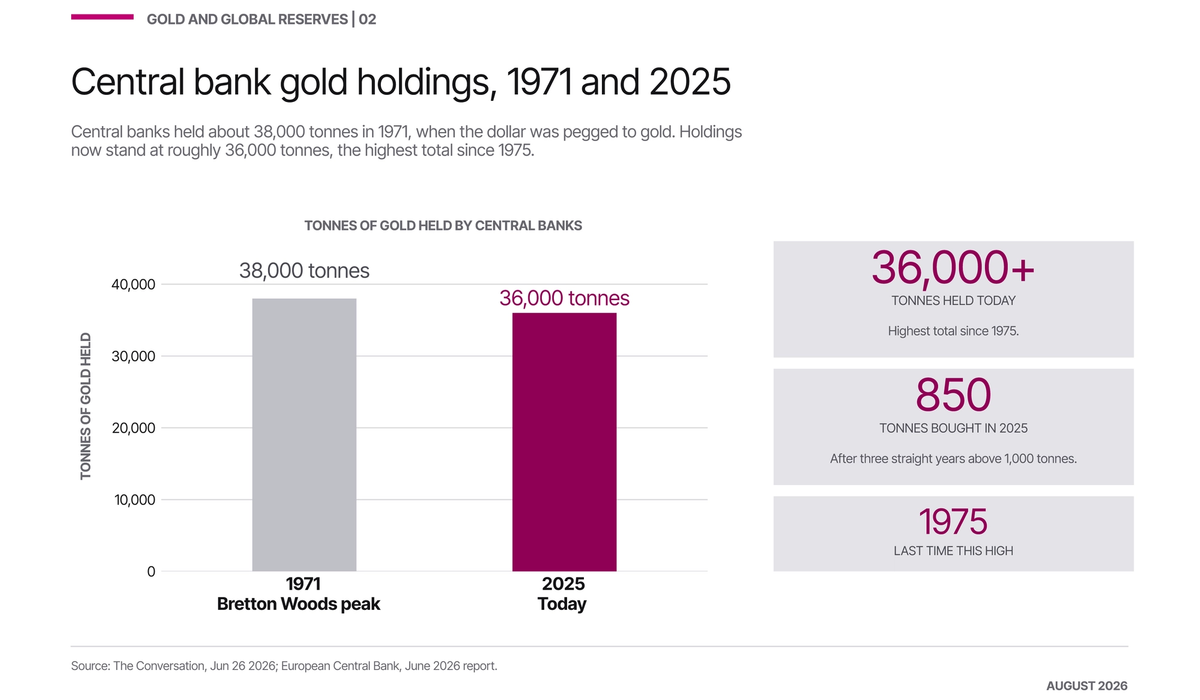
The cumulative effect is a return to territory not seen in half a century. Central banks now hold more than 36,000 tonnes of gold, the highest total since 1975 and within reach of the roughly 38,000 tonnes they held at the end of the Bretton Woods era in the early 1970s, when the dollar itself was still pegged to bullion.
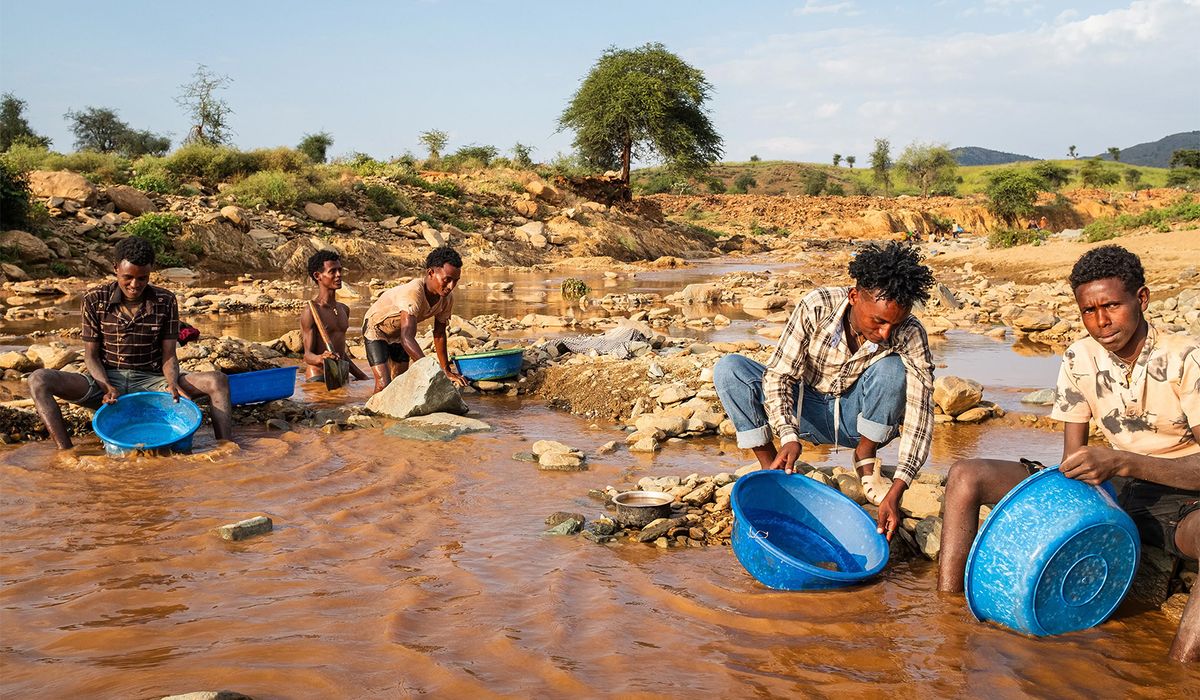
Ethiopia is not among the sovereign buyers driving this shift, but its economy is riding the same price cycle. Gold exports reached an estimated $3.5 billion this year as prices paid through the National Bank of Ethiopia surged more than fourfold in under two years, part of a broader push to formalize artisanal mining and channel more output through official reserves. The IMF has credited the gold boom with narrowing Ethiopia's current account deficit to 1.1 percent of GDP in 2024/25, down from 2.9 percent the year before, while adding directly to the country's gross international reserves.
None of this amounts to gold replacing the dollar. At 42 percent of global reserves, dollar assets still outweigh gold's 27 percent by a wide margin, and the ECB's report describes a diversification under way rather than a currency succession.