
EU and Germany Put €31 Million Through Ethiopia’s Development Bank to Reach Businesses in Afar, Amhara and Tigray
The loan is channelled through four commercial banks and one microfinance institution at a subsidised interest rate. Businesses in conflict-affected regions are commercially unfinanceable under standard terms.
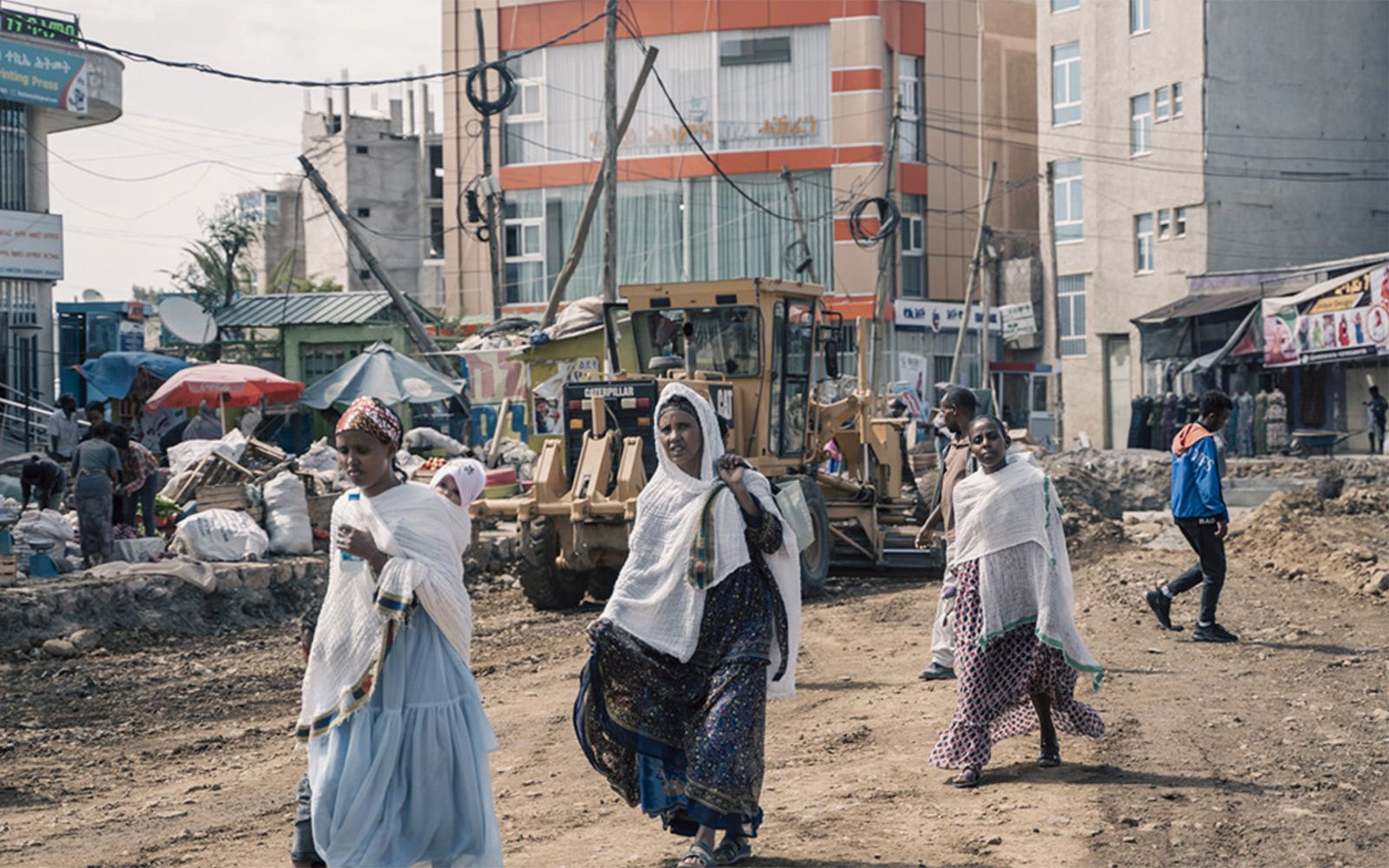
A workshop held at the Development Bank of Ethiopia on July 27 marks the operational start of a €31 million low-interest loan facility for micro, small, and medium enterprises in Afar, Amhara, and Tigray. The facility is funded by the European Union and Germany’s KfW Development Bank, channelled through DBE to four selected commercial banks and one microfinance institution, which then lend to businesses at a subsidised rate. The agreement enabling it was signed in May 2024. The pilot audit evaluation verification workshop on July 27 is the checkpoint before first disbursement. €31 million at today’s exchange rate is approximately 4.7 billion Birr. In a country where the average commercial lending rate runs above 20 percent, the subsidised rate on offer from this facility is the difference between a business in Mekelle or Abala being able to borrow and not being able to borrow at all.
Commercial banks in Ethiopia operate on collateral-based lending. A business in Tigray, Afar, or Amhara that experienced the conflict of 2020–2022 has likely lost its collateral — equipment destroyed, land title documents lost, livestock killed, premises damaged. Its credit history reflects pre-conflict activity that bears no relationship to its current position. The result is that the businesses most in need of capital to rebuild are the ones least accessible to the formal credit system. A weaver in Mekelle, a trader in Dessie, a contractor in Semera: each faces the same answer from a commercial bank — no collateral, no loan. Only a small fraction of Ethiopian commercial bank lending portfolios currently reaches MSMEs even in stable regions. In conflict-affected regions, that fraction approaches zero under standard terms.
The €31 million facility works through a wholesale architecture: DBE borrows from the EU-KfW pool at concessional rates and on-lends to four commercial banks and one microfinance institution at a rate that allows them to service the facility while offering end-borrowers affordable terms. Women and youth entrepreneurs receive priority in loan allocation across all sectors: manufacturing, services, trade, construction, and agro-processing. The facility covers Afar, Amhara, and Tigray. This is the second EU-KfW facility of this type through DBE. A 2024 programme under the same architecture channelled 2.2 billion Birr to conflict-affected MSMEs in the same three regions. The €31 million in the current facility is roughly double that amount in Birr terms, reflecting both the scale expansion and the depreciation of the Birr since the July 2024 float.
KfW has committed over €1 billion to Ethiopia to date, covering reforestation, agricultural mechanisation, vocational education, and financial inclusion. The MSME conflict-recovery facility sits within a broader architecture of European development finance flowing into Ethiopia’s post-conflict reconstruction. In February 2026, the European Investment Bank signed a €110 million loan agreement with Ethiopia for rural development finance, channelled through DBE to microfinance institutions and cooperatives nationwide. A separate EU-funded programme through UNCDF is supporting digital financial services for MSMEs in the same conflict-affected regions, with €5 million to build out mobile money and agent banking networks. FC Africa and Lion International Bank launched Ethiopia’s first blended finance partnership for conflict-affected areas in December 2025, piloting uncollateralised digital loans in Mekelle and Abala through Lion’s Alegnta platform. The €31 million DBE-KfW facility, the EIB’s €110 million rural finance programme, and the Lion-FC Africa pilot are three separate instruments addressing the same structural problem through different channels simultaneously.
The facility’s effectiveness depends on the intermediaries. DBE sets the wholesale rate. Commercial banks and microfinance institutions set the retail rate. The pass-through problem — where development finance institutions lower the wholesale rate but intermediaries absorb the margin rather than passing it to borrowers — has been identified as a systemic weakness in Ethiopia’s financial inclusion architecture by the National Bank of Ethiopia’s own assessment. The July 27 pilot audit evaluation verification workshop is the mechanism built into this facility to check whether the rate benefit is reaching the end borrower, not disappearing at the bank counter. The five participating institutions were selected through a screening process. Their disbursement practices will be audited against the facility’s terms. Whether that audit function is enforced consistently across all five channels, and across all three regions, is what determines whether the €31 million reaches a weaver in Shire or stays in a bank’s net interest margin.
The World Bank estimated in 2023 that the Tigray conflict alone caused $28 billion in economic damage, with private sector assets among the most severely affected. €31 million — around 4.7 billion Birr — is a significant facility by the standards of Ethiopia’s development finance market. Measured against $28 billion in one region’s estimated damage, it covers less than 0.2 percent of the assessed loss.