
Ethiopia Signs Its 10th WTO Trade Deal in Five Months — This One With the UK.
The agreement caps the fastest run of bilateral deals in Ethiopia's 23-year bid to join the WTO, and lands as UK-Ethiopia trade grew nearly a third in a single year.
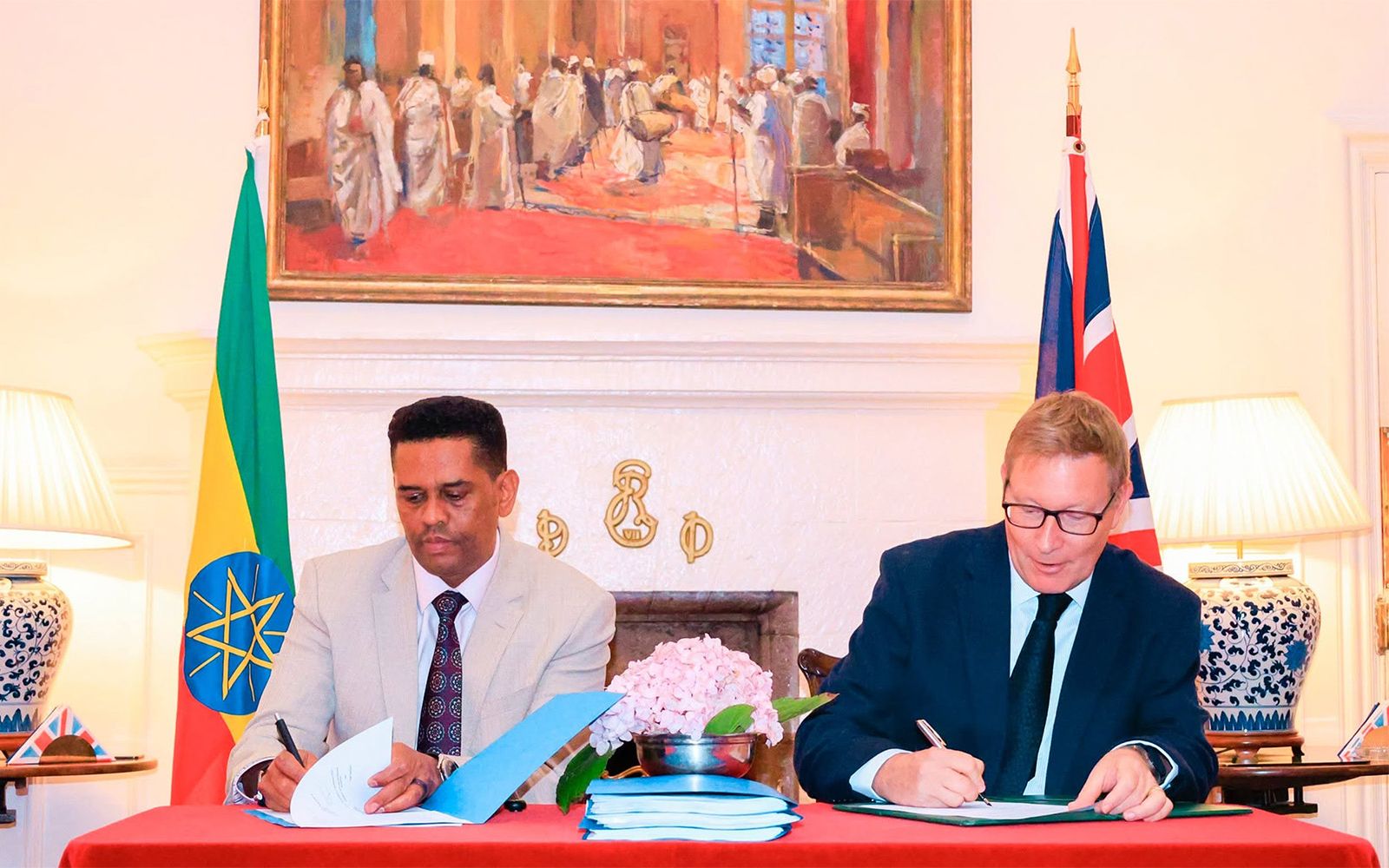
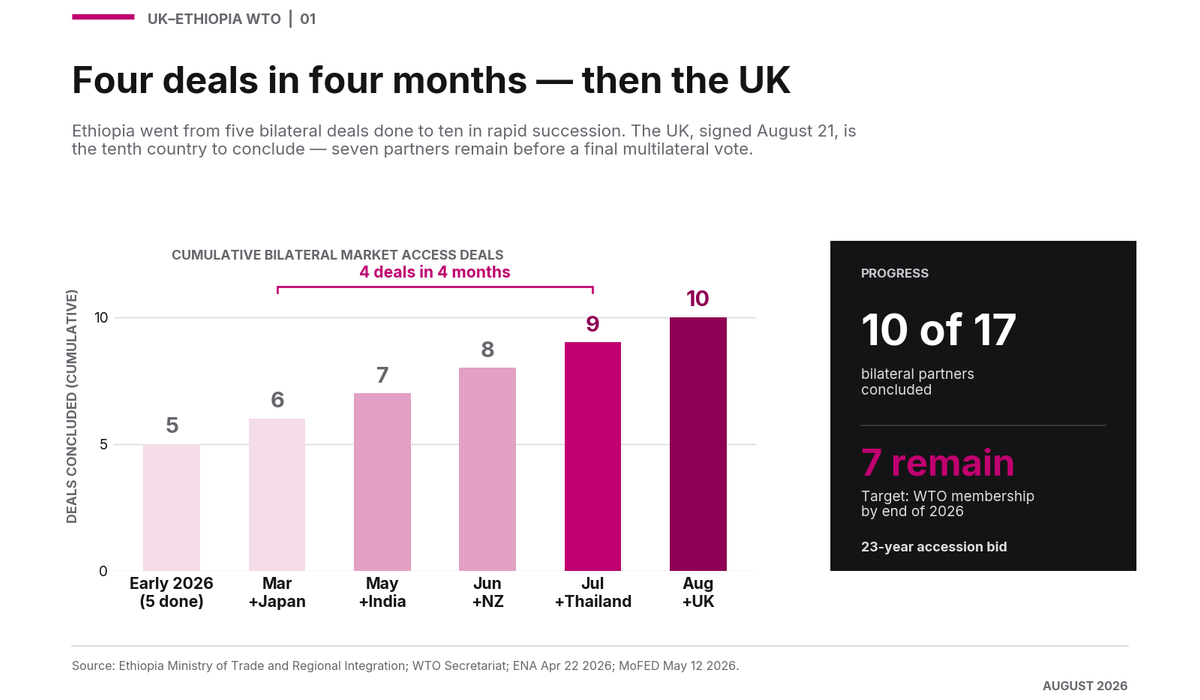
Ethiopia and the United Kingdom signed a bilateral market access agreement this week, making the UK the tenth WTO member to sign and the eleventh to conclude negotiations with Addis Ababa since the country restarted its accession push. Trade Minister and chief negotiator Dr. Kassahun Gofe signed for Ethiopia; UK Ambassador Darren Welch signed for Britain.
The UK joins China, Russia, Argentina, Türkiye, Brazil, Japan, India, New Zealand and Thailand on the list of countries that have already concluded their own bilateral market access talks with Ethiopia — the country-by-country negotiations every WTO applicant must clear before its full membership package can move to a final multilateral vote. Four of those nine deals were signed in the four months before this one, with India, New Zealand and Thailand all concluding in May, June and July. Ethiopia's WTO bid has run for 23 years; at the seventh Working Party meeting in Geneva in April, Kassahun told members the government had submitted more than 226 detailed responses to outstanding questions and folded 32 new commitments into its draft accession report, with membership targeted by the end of 2026. Ethiopia's own count put nine of seventeen required bilateral partners done as of May — the UK agreement makes ten.
What the deal does not do is open a market that was closed. The UK has granted Ethiopia duty-free, quota-free access on nearly everything except arms since August 2022, under the Developing Countries Trading Scheme, and Ethiopia sits in the scheme's top "comprehensive preference" tier alongside Madagascar and Bangladesh, covering 99 percent of tariff lines. That access already predates this agreement and does not depend on it.
What the deal buys instead is a seat inside the rules. Bilateral market access protocols like this one lock in the tariff and services commitments Ethiopia is offering the whole WTO membership, not just the UK — the two-way promises that let the UK, in turn, support Ethiopia's accession package when it comes up for a multilateral vote. It is a vote of confidence with a paper trail attached, arriving as the underlying trade relationship is already accelerating on its own.
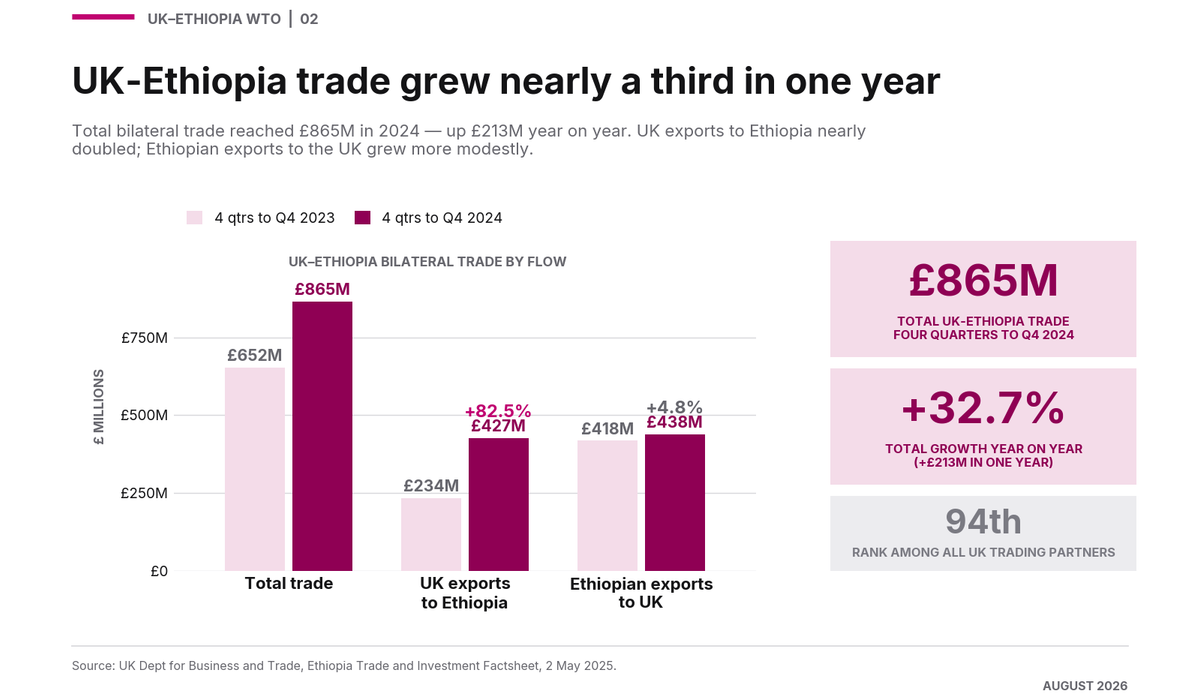
Total UK-Ethiopia trade in goods and services reached £865 million in the four quarters to the end of 2024, up 32.7 percent — about £213 million — from the year before. UK exports to Ethiopia rose even faster, up 82.5 percent to £427 million, while Ethiopian exports to the UK grew a more modest 4.8 percent to £438 million. Britain is still a small partner in absolute terms — Ethiopia ranked 94th among all UK trading partners that year — but the growth rate outpaces most of Ethiopia's larger markets.
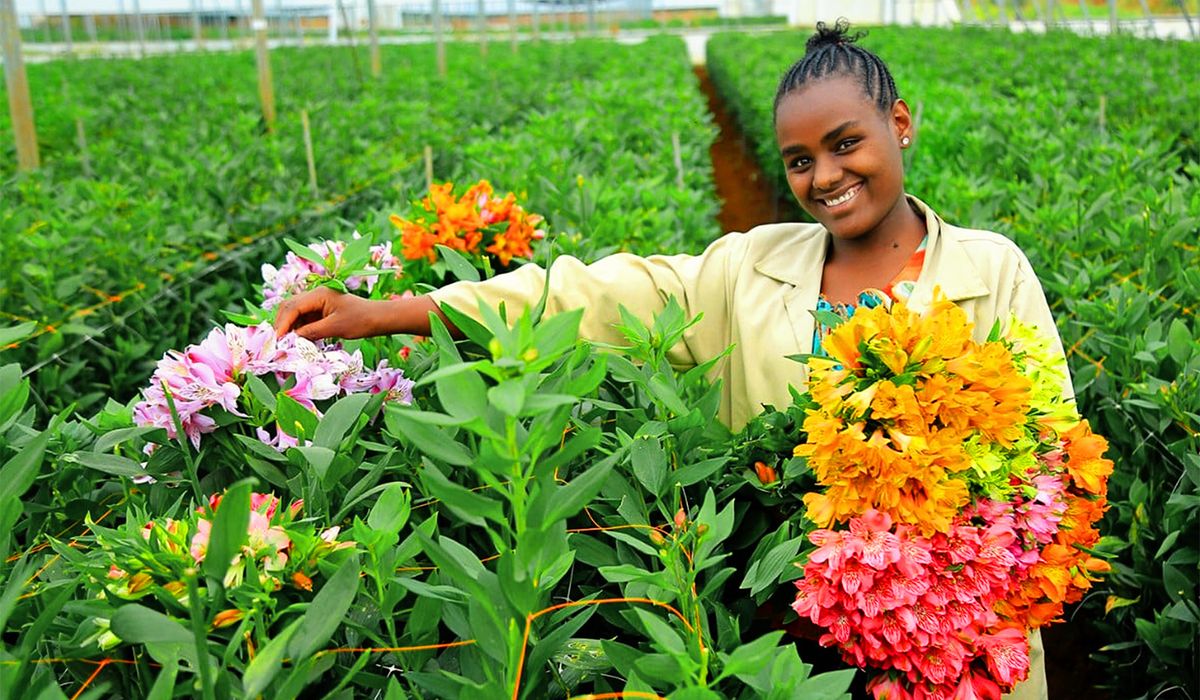
Coffee remains the backbone of what actually moves: it was Ethiopia's single largest export category to the UK, worth $18.3 million in the most recent full year of customs data. Flowers add more than £13 million a year, part of a duty-free arrangement that also covers Kenya, Rwanda, Tanzania and Uganda. Both sit inside a bigger export boom: Ethiopia earned roughly $11 billion in export revenue this fiscal year, driven mainly by coffee and gold. Ethiopia's ambassador to London, Biruk Mekonnen, has told exporters the opportunity in coffee, agriculture and textiles is real but not automatic — preferential access alone will not sell a product members still have to make competitive.
Seven bilateral partners, by Ethiopia's own count, still stand between this agreement and the finish line the government has set for itself.