
Ethiopia's Industrial Parks Export a Record $266.9 Million, 2.5 Percent of National Total
IPDC's record year traces to a 2014 developmental-state model, a 2022 AGOA suspension, and an economy that has since reformed around it
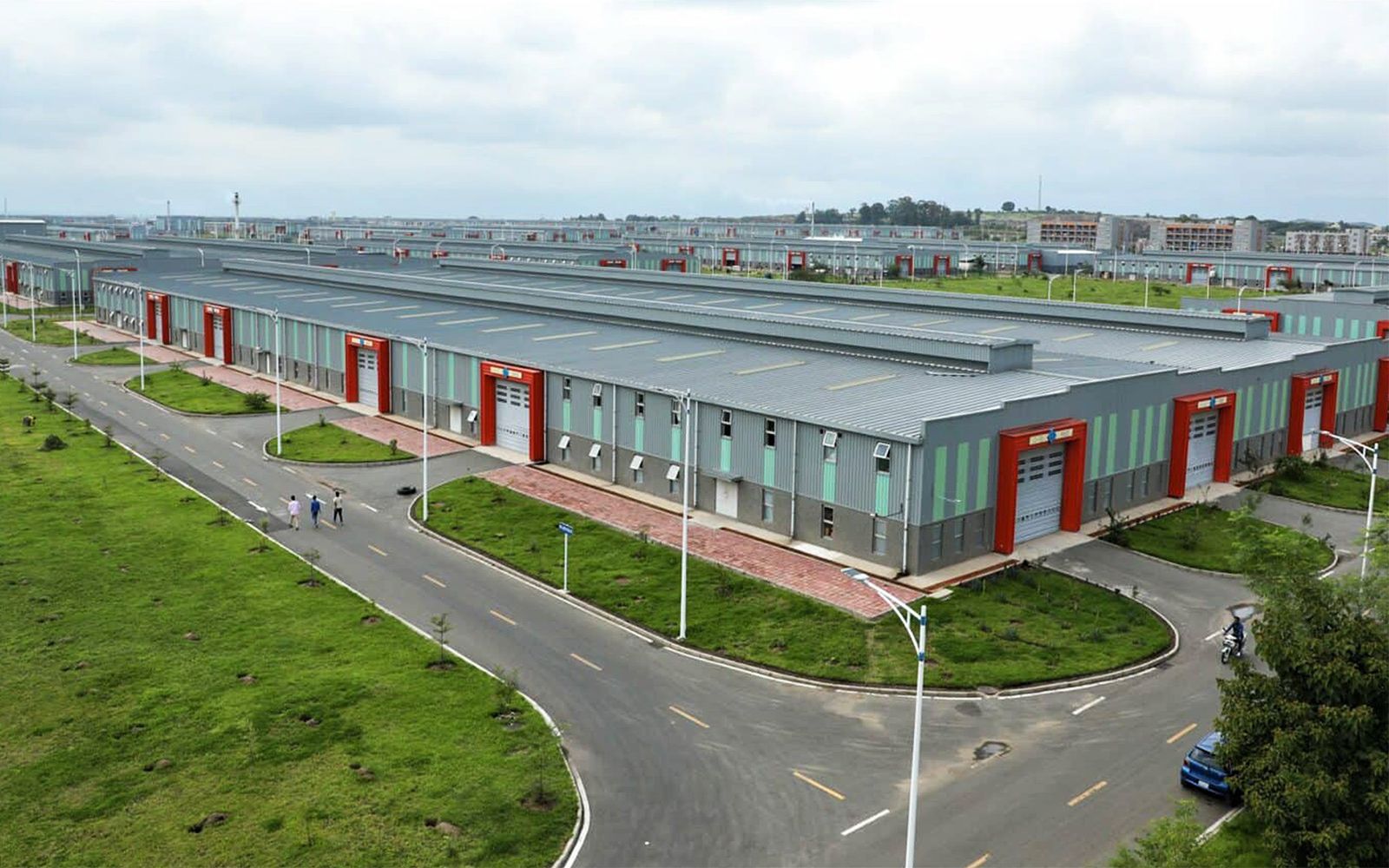
Ethiopia's Industrial Parks Development Corporation, established in 2014 as a state-owned enterprise , reported USD 266.9 million in export earnings for the fiscal year ended July 7, 2026 — the highest annual figure recorded since the corporation was formed. The result was disclosed during IPDC's annual performance review in Hawassa, roughly 275 kilometres south of Addis Ababa, where the corporation built its flagship park a decade earlier.
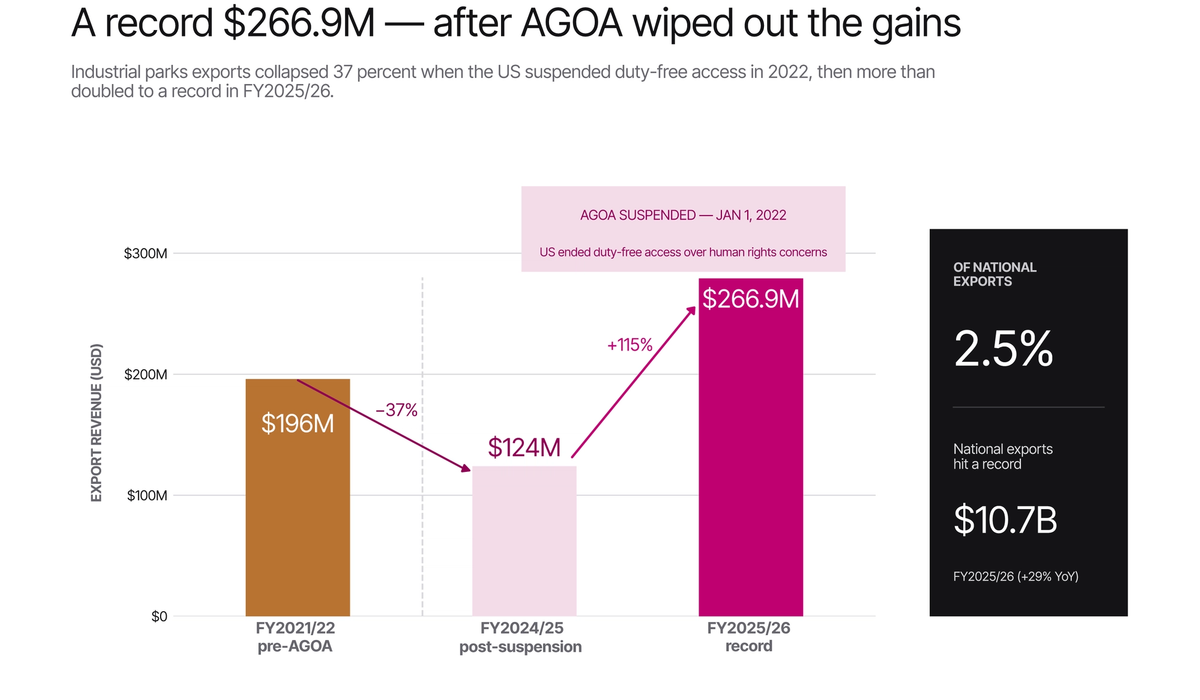
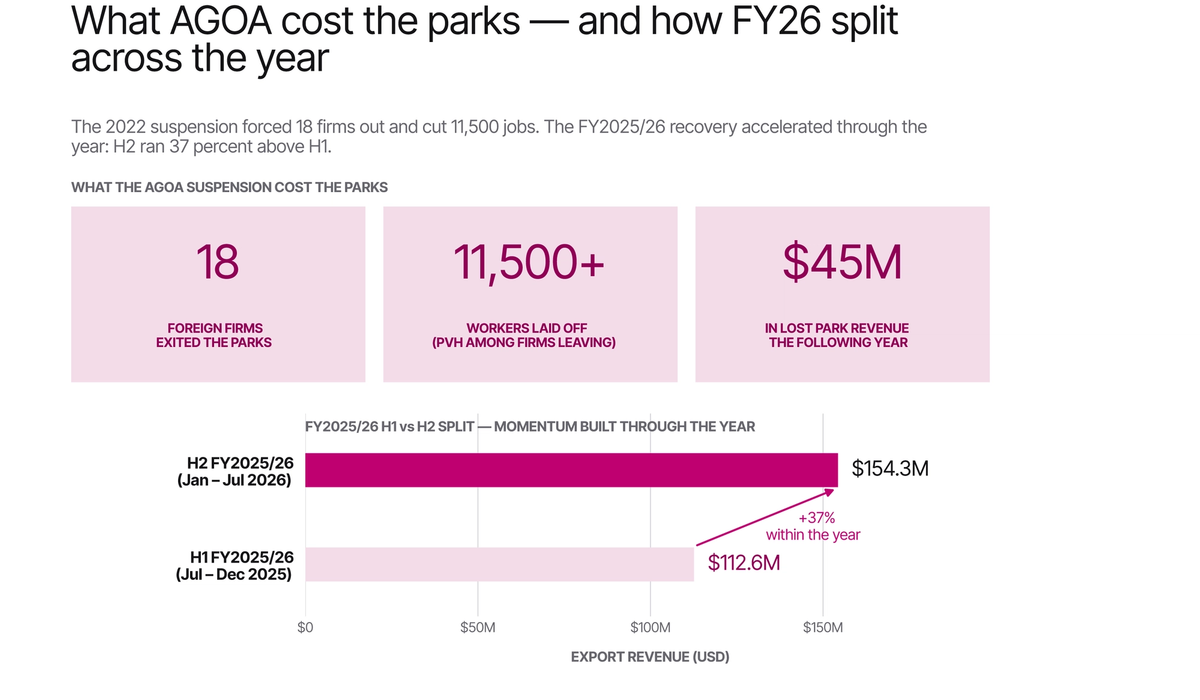
Export revenue rose 115 percent from the $124 million recorded in the 2024/25 fiscal year, an increase of $142.9 million. The gain was not distributed evenly across the twelve months. Companies inside the parks generated $112.6 million in the first six months of the fiscal year, leaving approximately $154.3 million for the second half of the year — 37 percent above the first-half total, calculated from the two disclosed figures.
IPDC's model traces to a Chinese-built precedent. The Eastern Industrial Park, developed by Chinese investors from 2010, was Ethiopia's first special economic zone of this kind The approach was formalized as national policy under the Developmental State framework that guided Ethiopian economic planning from the mid-2000s, an ideology rooted in the ruling coalition's doctrine of Revolutionary Democracy, under which the state selected priority sectors and directed credit and land toward chosen investors rather than relying on market allocation.
The clearest expression of that model was Hawassa Industrial Park, inaugurated in June 2017 by then Prime Minister Hailemariam Desalegn. Built in nine months by the China Civil Engineering Construction Corporation at a cost of roughly $250 million, the park was designed around a zero-liquid-discharge water treatment system marketed to international apparel buyers as an environmental credential. Hawassa anchored a parks strategy built largely around garments, textiles and leather — sectors selected in part for their reliance on duty-free access to the United States market under the African Growth and Opportunity Act, AGOA.
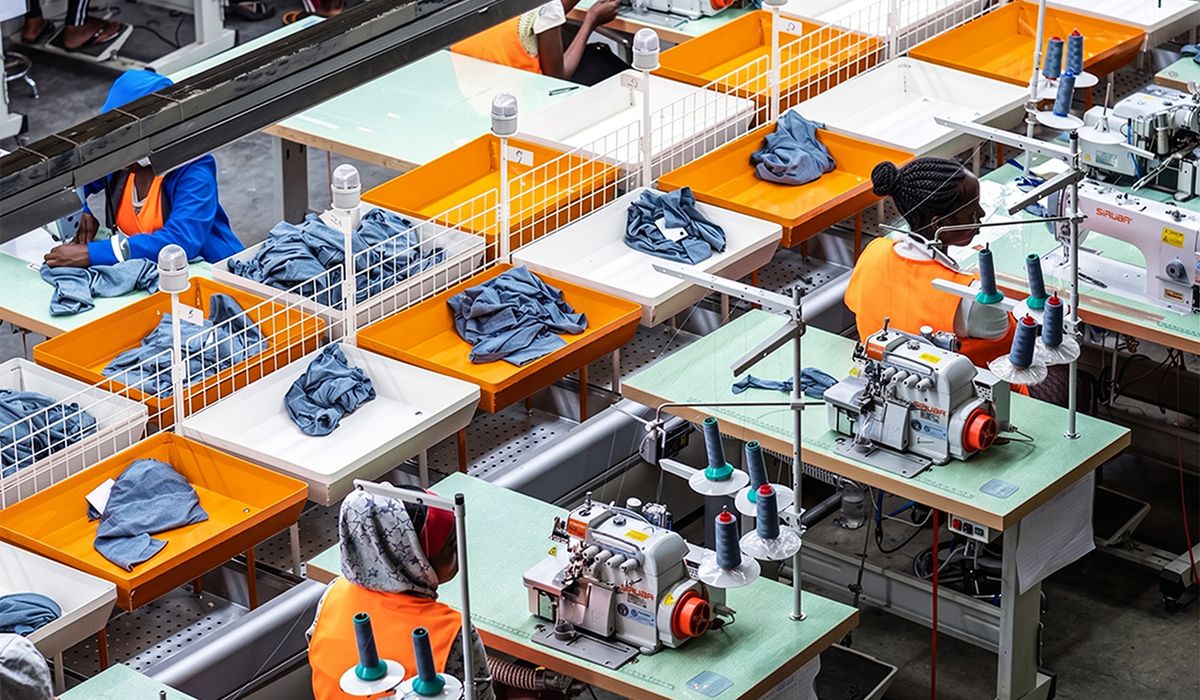
That dependency became a liability on January 1, 2022, when the United States suspended Ethiopia's AGOA eligibility, citing ‘human rights violations tied to the conflict in the country's northern regions’. Eighteen foreign companies exited the parks, more than 11,500 workers lost their jobs, and the parks lost a combined $45 million in revenue over the following year, according to a National Bank of Ethiopia study cited in the same report. PVH, the parent company of Calvin Klein and Tommy Hilfiger, was among the firms that withdrew. Ethiopia remains ineligible for AGOA as of 2026, according to the Office of the United States Trade Representative.
The export slump inside the parks coincided with a broader ideological shift in Addis Ababa. In September 2019, Prime Minister Abiy Ahmed introduced the Homegrown Economic Reform Agenda, presenting it as a departure from the state-led investment model of the previous two decades and proposing private-sector-led growth, financial liberalization and the formation of Ethiopian Investment Holdings to modernise how state enterprises are run.
Within that same period, the wider economy moved through a currency float and a coordinated reform program that the National Bank of Ethiopia credits with turning the country's balance of payments to surplus for the first time since before the reform effort began, according to Governor Eyob Tekalign. National export earnings reached $10.7 billion for the 2025/26 fiscal year, up 29 percent from $8.3 billion the year before. Gold and coffee together accounted for approximately $8.5 billion of that total, or about 79.4 percent, with gold alone contributing roughly $5.5 billion. IPDC's $266.9 million therefore represents approximately 2.5 percent of national export earnings — a recovery confined to a still narrow segment of a still concentrated export base.
The corporation reported ancillary figures alongside the export total: 166 new investment projects registering more than $750 million in committed initial capital, and market linkages connecting more than 152 enterprises and 5,800 farmers into supply chains valued at over 17 billion birr, a 19 percent increase from the prior year. IPDC's communications department told that the corporation now operates 14 industrial parks and that companies inside them added more than 70,000 jobs during the fiscal year.