
Ethiopia's 31.8 Million-Tonne Wheat Harvest is 6 Million Tonnes Heavier Than the Renaissance Dam
Official Ministry of Agriculture data records a 318.4 million quintal haul across irrigated and rain-fed acreage, eliminating $1 billion in foreign exchange expenditures as domestic currency floats.
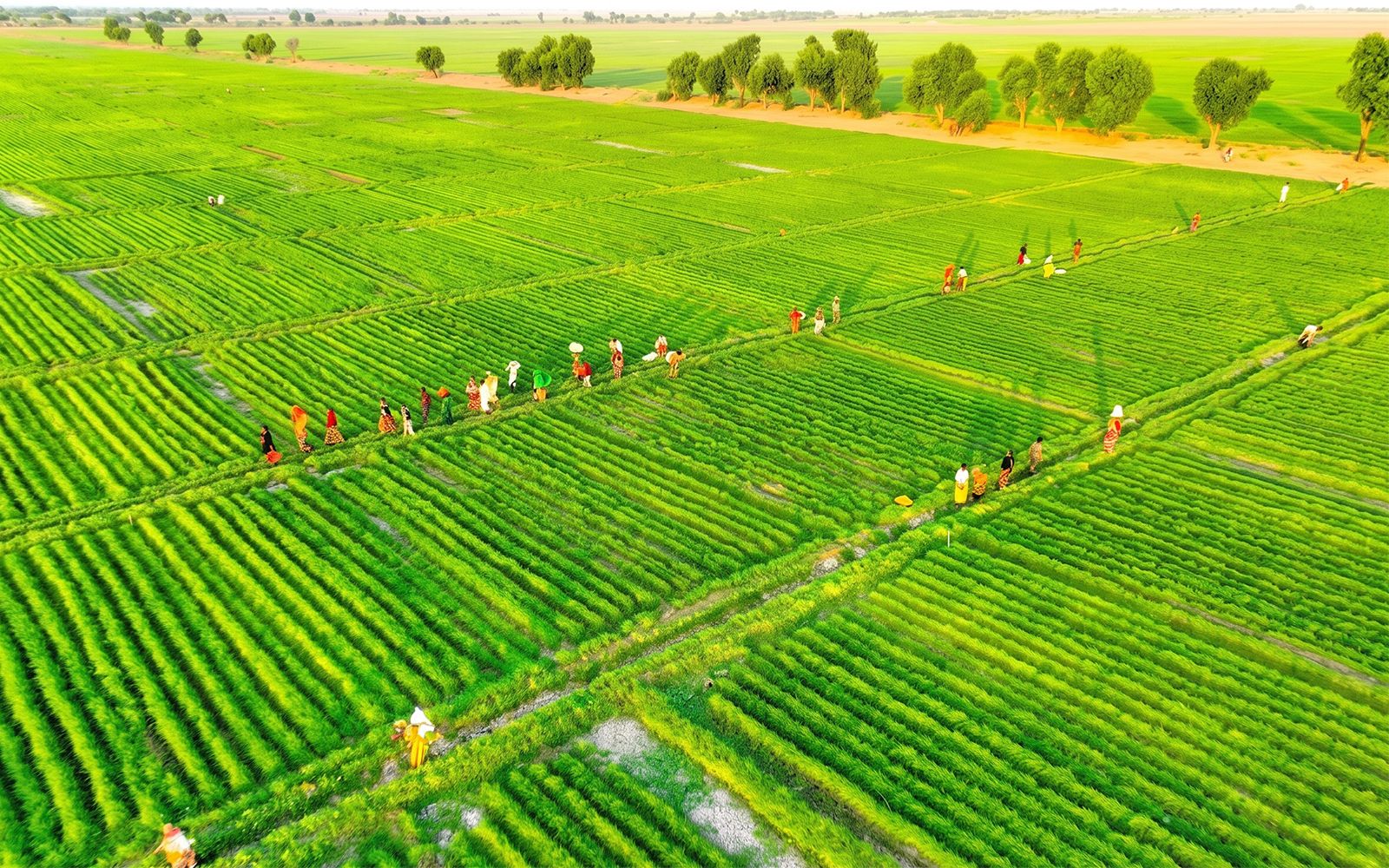
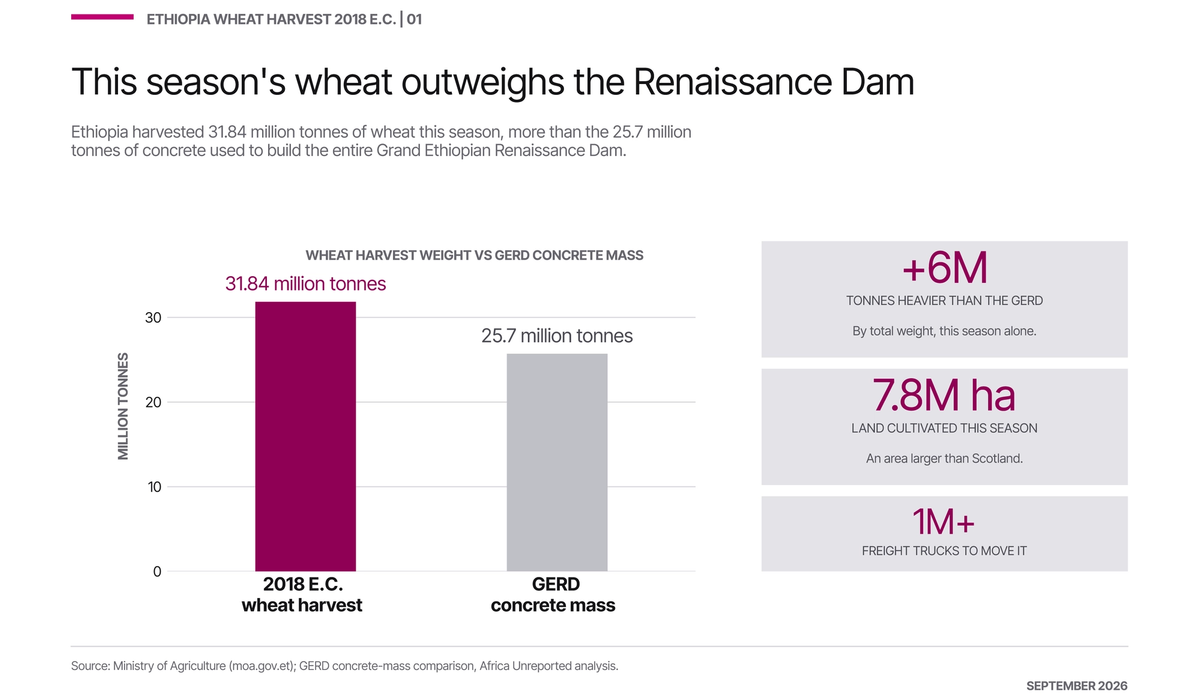
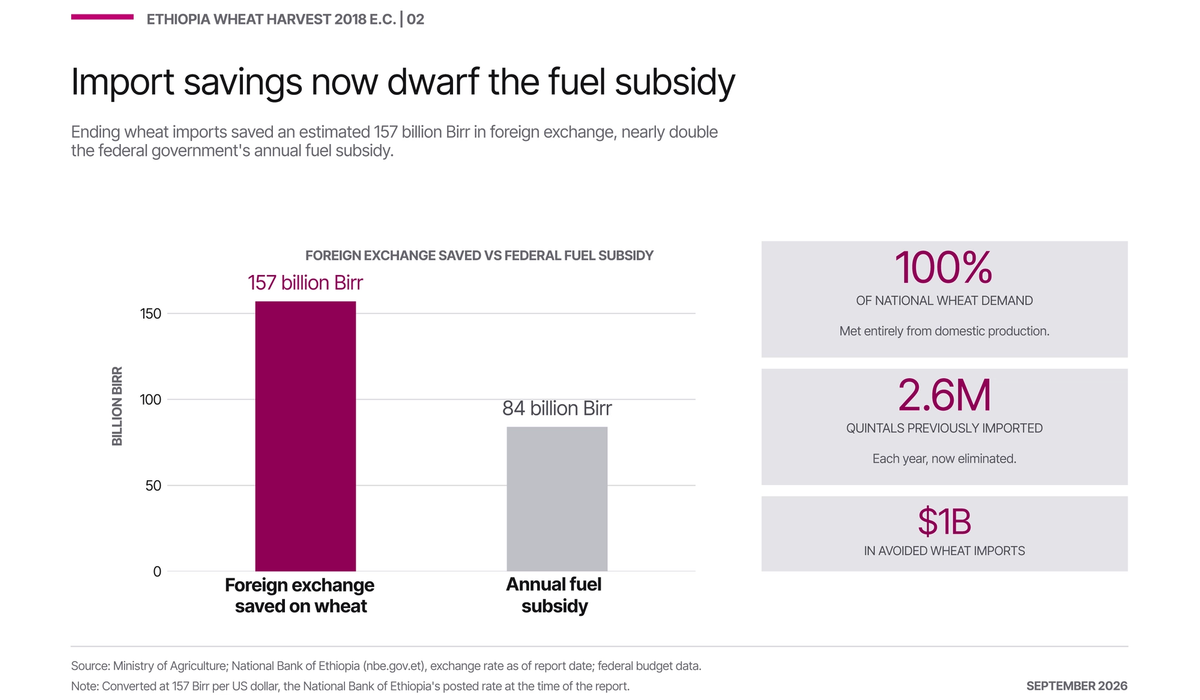
Ethiopia harvested 318.4 million quintals of wheat across the 2018 Ethiopian calendar year. That total equals 31.84 million metric tons. To picture that weight, the 10.7 million cubic meters of concrete inside the Grand Ethiopian Renaissance Dam weighs about 25.7 million tonnes. This single wheat harvest is over 6 million tonnes heavier than the entire dam, and would fill more than one million 30-tonne freight trucks. It marks an agricultural footprint spanning 7.8 million hectares, creating a cultivated area larger than Scotland. Official figures released by the Ministry of Agriculture confirm that combined output from the Meher rainy season and lowland irrigation networks met 100 percent of national requirements, ending commercial grain purchases abroad. Displacing the 2.6 million quintals previously imported annually preserved $1 billion in hard currency. Converted at the current rate of 157 Birr to the dollar posted by the National Bank of Ethiopia, that foreign exchange saving represents 157 billion Birr.
That sum is nearly double the federal government's 84 billion Birr annual fuel subsidy expenditure. It buffers domestic milling plants from the severe import cost surges triggered by last month's foreign exchange liberalisation.
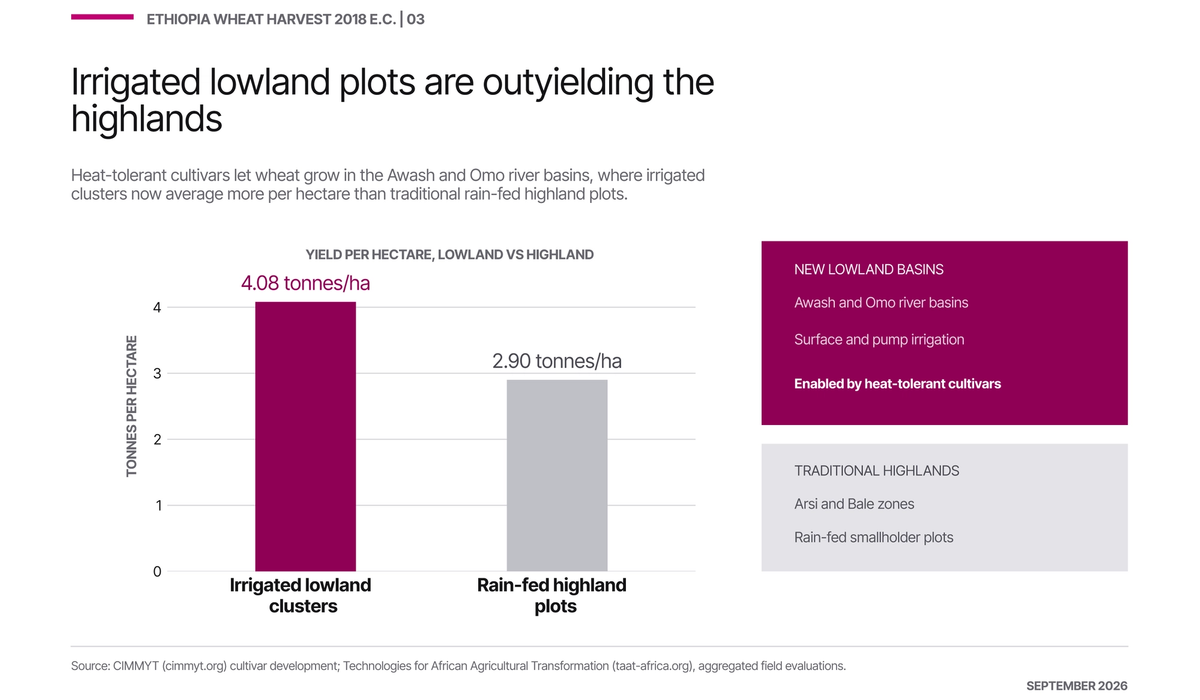
The production expansion broke out of the cool highland zones of Arsi and Bale into the arid lowland river basins of the Awash and Omo. Agronomists at CIMMYT developed the heat-tolerant cultivars that enabled farmers to plant winter wheat under surface and pump irrigation where temperatures once scorched traditional varieties. Aggregated field evaluations published by the Technologies for African Agricultural Transformation initiative indicate cluster yields averaging 4.08 tonnes per hectare across these managed blocks. Highland smallholders farming rain-fed plots historically recorded under three tonnes.
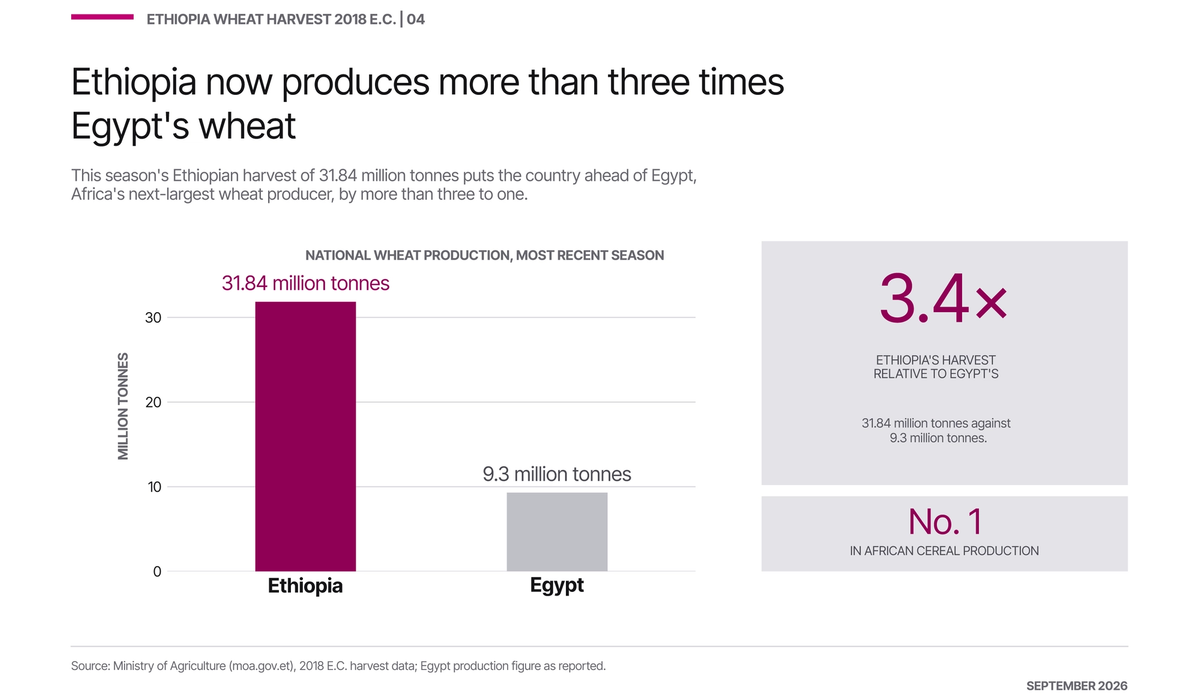
At 31.84 million tonnes, the national volume is more than three times the 9.3 million tonnes harvested by Egypt, positioning the country at the head of African cereal production.
The reallocation of capital shifts financial power inside the domestic grain market. Regional cooperative unions and commercial agricultural aggregators now capture the procurement tenders formerly awarded to global trading conglomerates like Cargill and Louis Dreyfus.
Local food processors secure guaranteed grain consignments denominated in local currency, while maritime shipping lines and port clearing agents along the Djibouti corridor face the elimination of an import flow that once moved hundreds of thousands of tonnes of foreign grain through the Red Sea each quarter.