Ethiopia's Nile Dam Produced Nearly 11,000 Tons of Fish Last Year About a Fifth of the Country's Total Fishery Potential
A lake that didn't exist a decade ago is now a food-security asset in its own right: 46 fishing associations, hundreds of young people in steady work, and a catch already rivalling entire river systems.
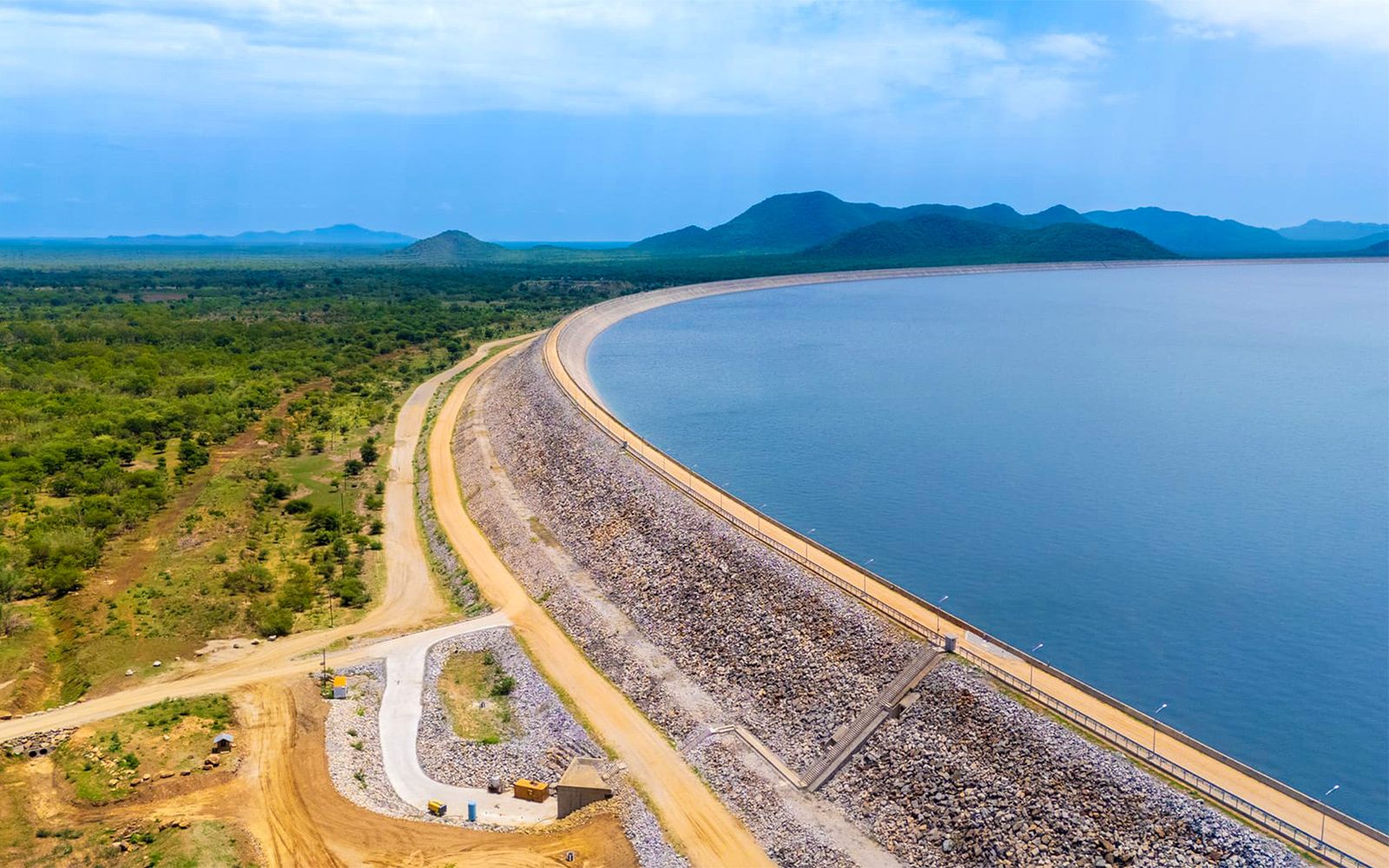
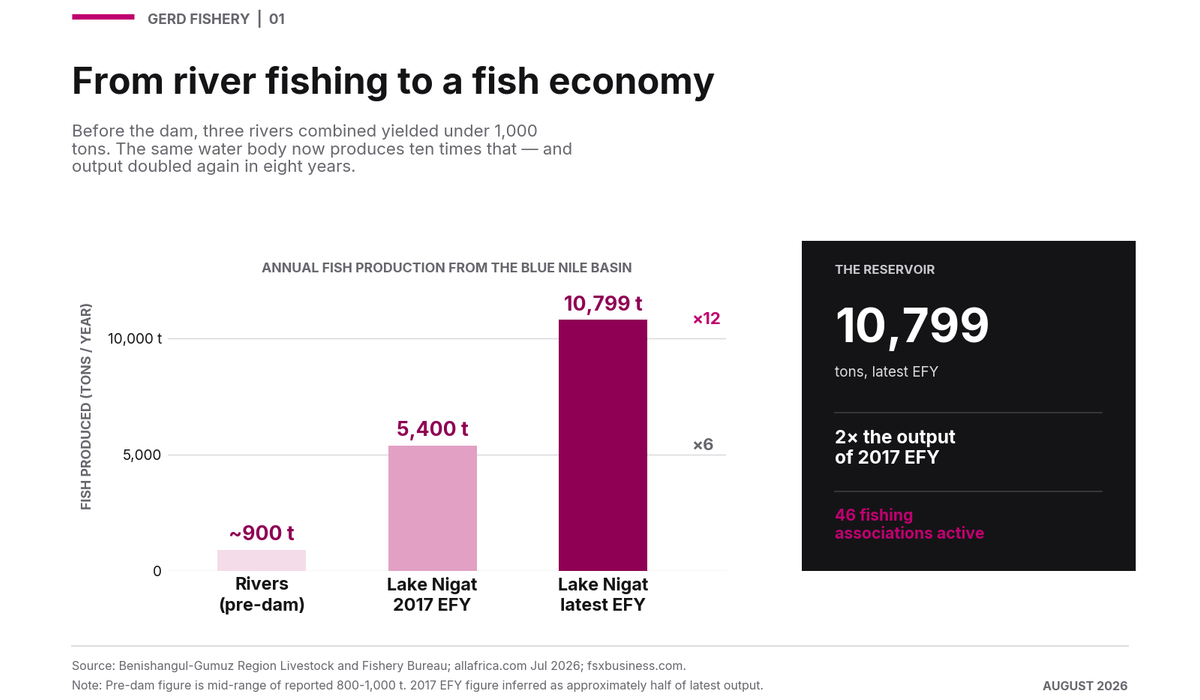
The reservoir behind the Grand Ethiopian Renaissance Dam produced 10,799 tons of fish in the concluded Ethiopian fiscal year, according to the Benishangul-Gumuz Region The bureau's Livestock and Fishery Development Sector Deputy Head, Berhanu Eticha, said the harvest from the reservoir, known locally as Lake Nigat, was double what the same water produced in the 2017 Ethiopian fiscal year, with 46 fishing associations now organized to work it. Before the dam, fishing in the area was confined to the Dabus, Dedesa and Beles rivers, which together yielded somewhere between 800 and 1,000 tons a year. Regional officials now put Benishangul-Gumuz's fishery capacity, with Lake Nigat as its main driver, at up to 15,000 tons annually — a ceiling the reservoir's own output is already closing in on.
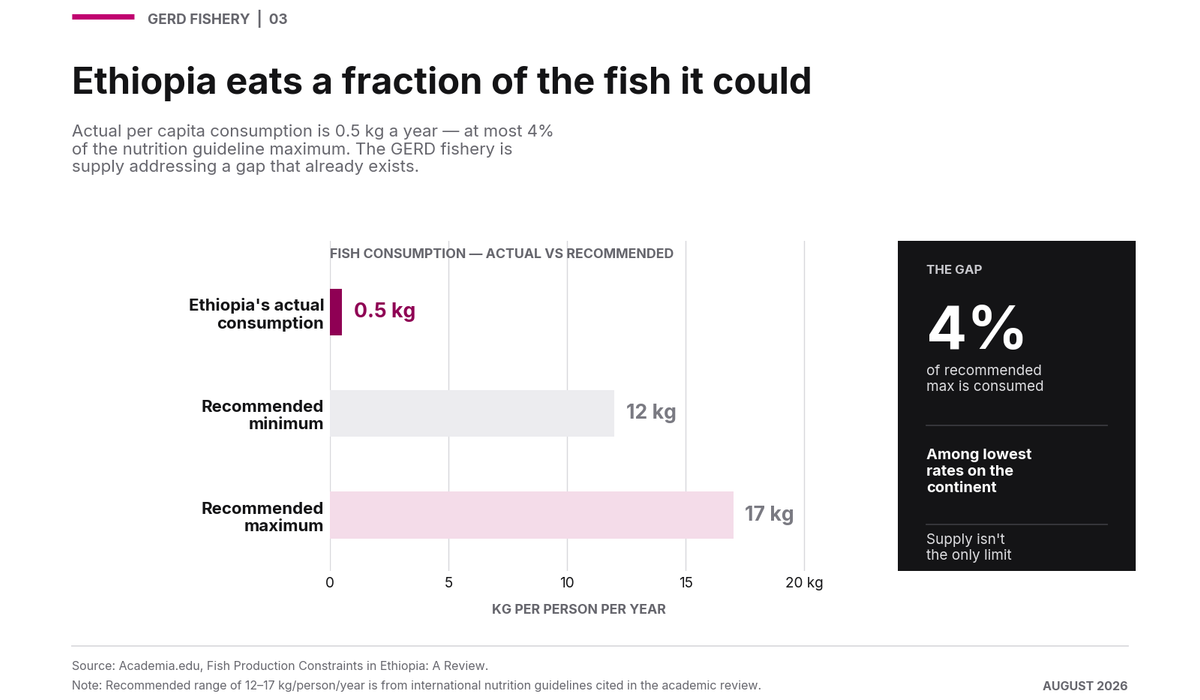
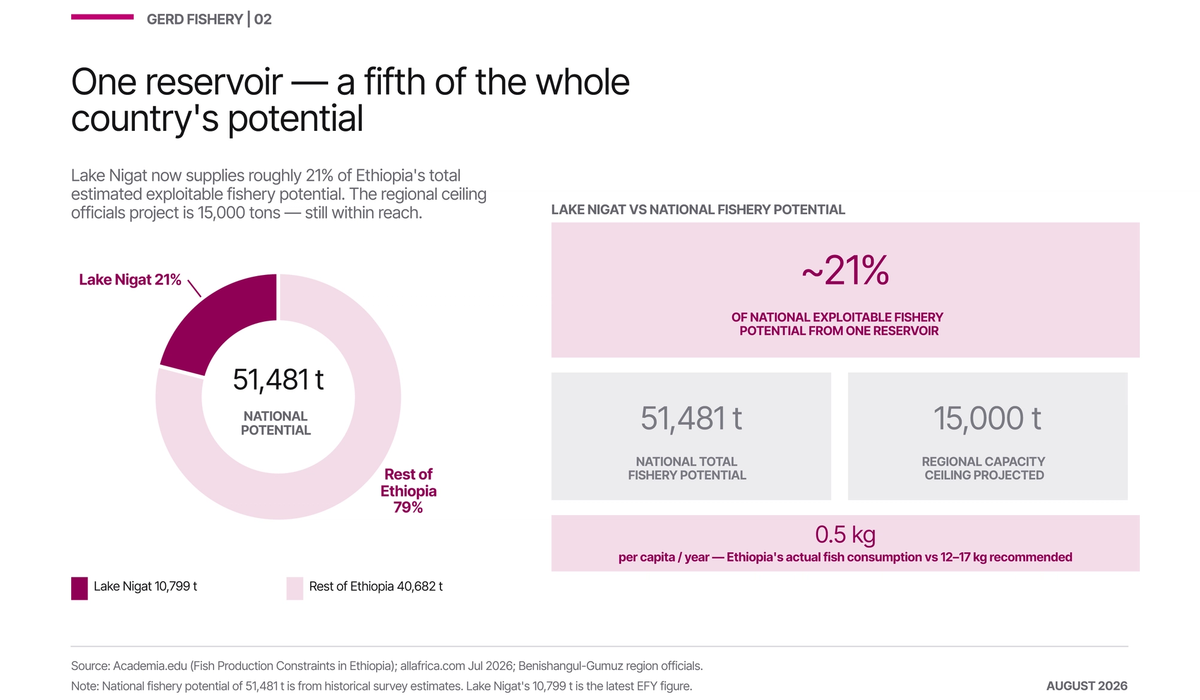
The growth has moved fast enough that mid-year and year-end counts already tell different stories. The scale matters because Ethiopia has almost nowhere to go but up on fish. National surveys have put the country's total exploitable fish potential at around 51,481 tons a year, against per capita consumption of roughly half a kilogram — a small fraction of the 12 to 17 kilograms nutrition guidelines recommend, and among the lowest fish-consumption rates on the continent.
None of this was the dam's original purpose. GERD was built for 5,150 megawatts of hydropower, and its reservoir's fishery output is a byproduct of flooding land to generate electricity. That makes the fishing associations, and the jobs they've created for young people in one of Ethiopia's least developed regions, a return the dam's engineers were not asked to deliver.