
Addis Ababa Just Added 24 Olympic Pools of Water a Day to its Supply.
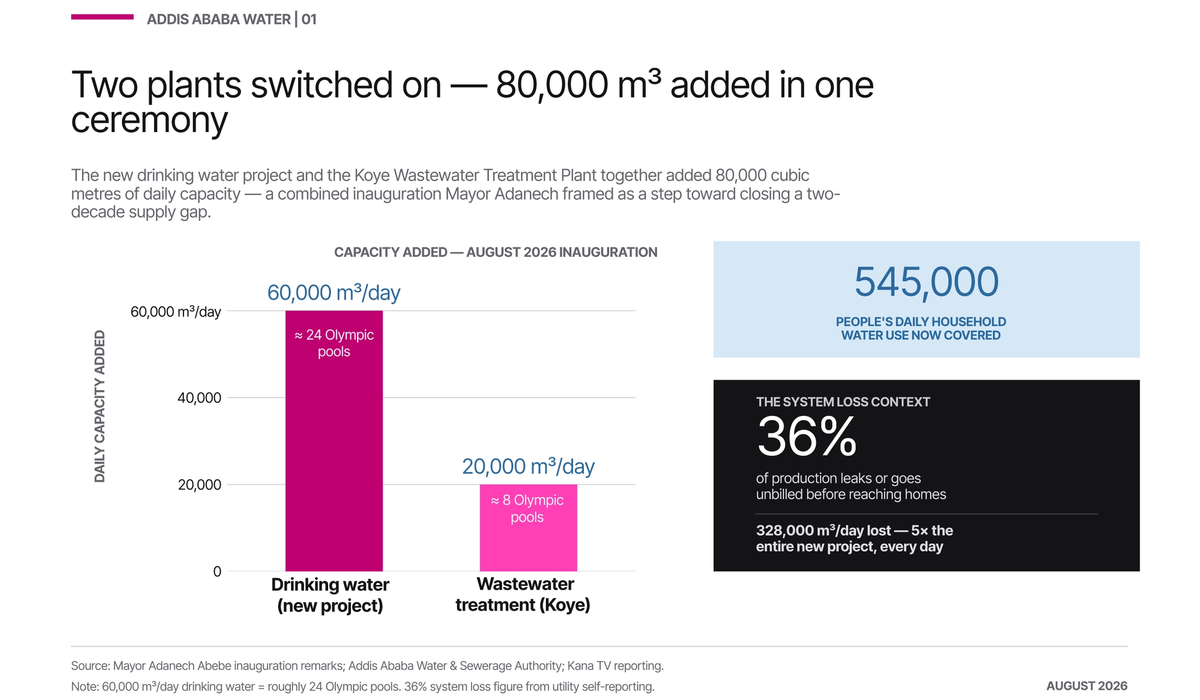
The city has switched on a new drinking water project and the Koye Wastewater Treatment Plant, adding a combined 60,000 cubic metres of clean water and 20,000 cubic metres of wastewater treatment to its daily totals.
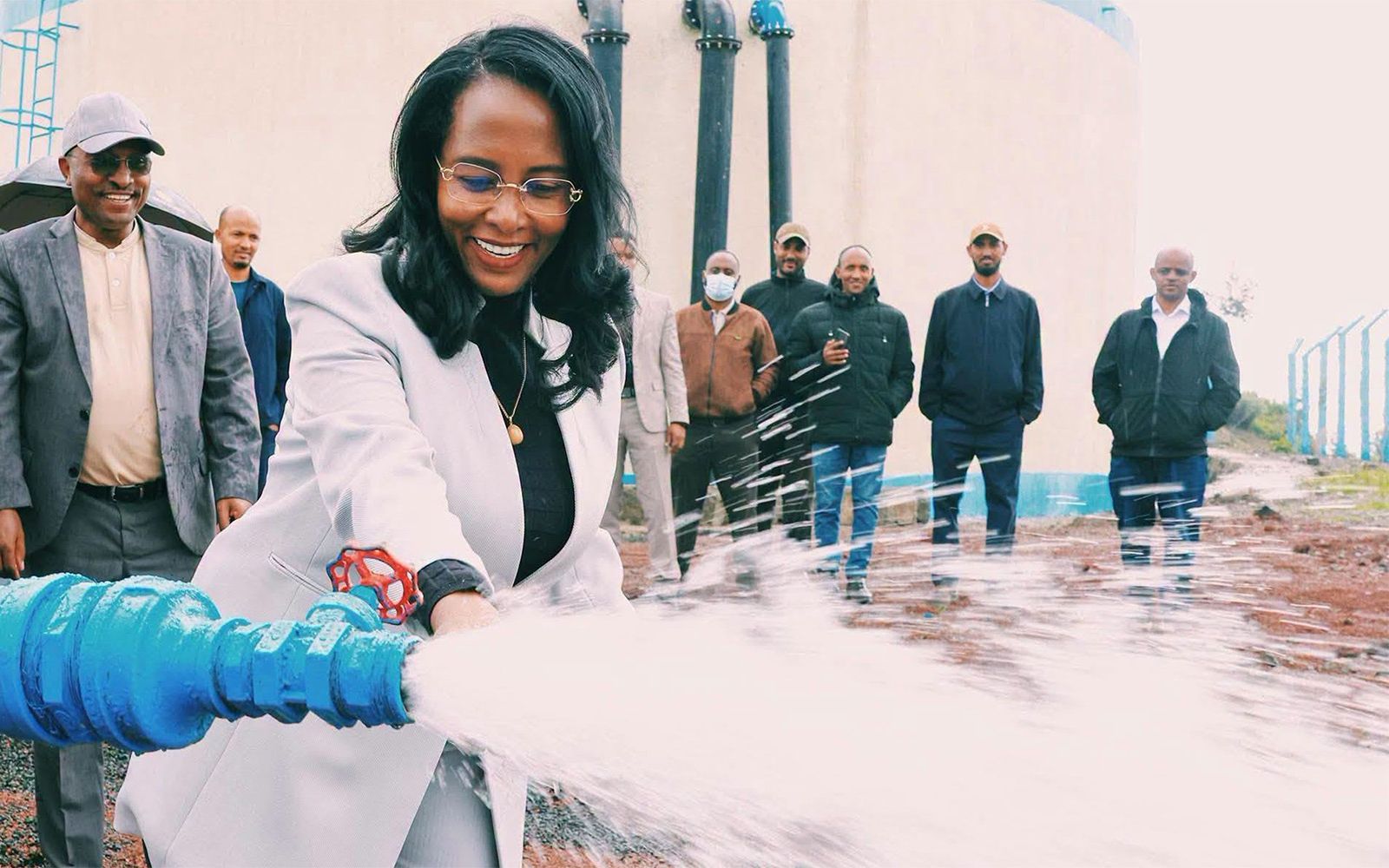
ADDIS ABABA — The city has switched on a new drinking water project and the Koye Wastewater Treatment Plant, adding a combined 60,000 cubic metres of clean water and 20,000 cubic metres of wastewater treatment to its daily totals. In plain terms: the new water alone is about 24 Olympic-sized swimming pools, produced fresh, every single day — enough to cover the daily household water use of roughly 545,000 people, at the rate an average resident here uses. Mayor Adanech Abebe inaugurated both projects, framing them as the latest step in closing a gap between water supply and demand that has defined the city for two decades.
"It fills us with great humility and pride to announce to our residents the completion and inauguration of the project capable of producing 60,000 cubic meters of drinking water daily," Mayor Adanech said at the ceremony. "These projects alleviate our city’s drinking water shortage on one hand, while expanding our waste management capacity, safeguarding the health and hygiene of our residents, protecting our rivers from pollution."
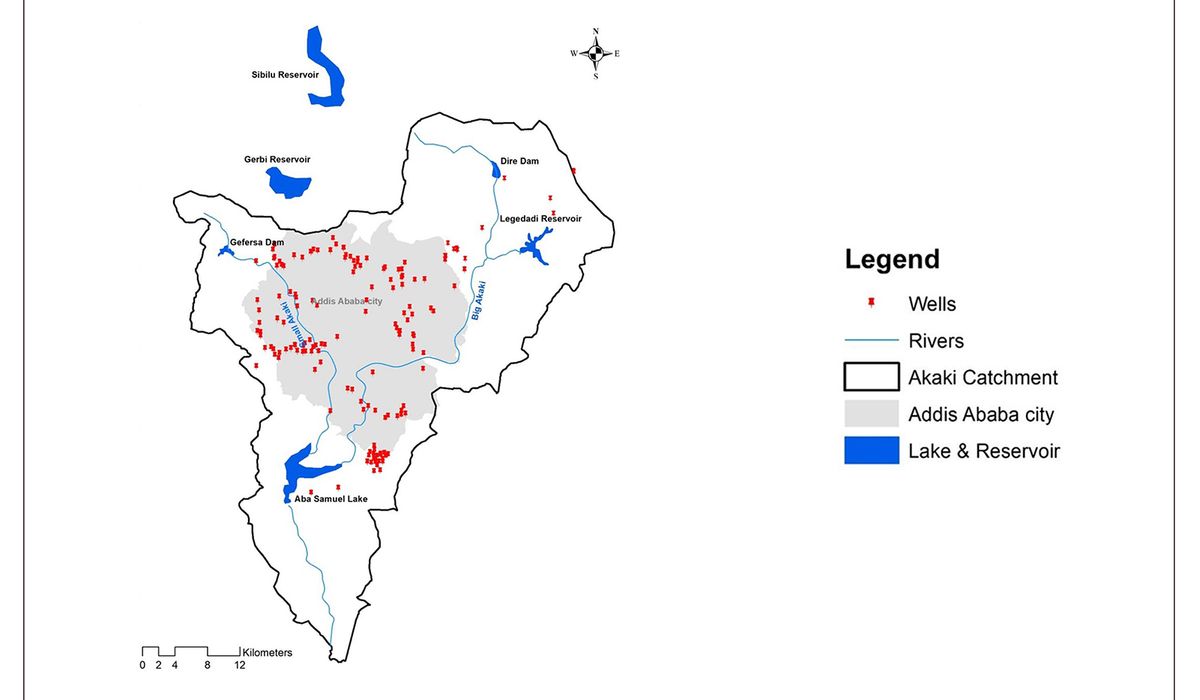
Addis Ababa sits inside the Akaki catchment, a roughly 1,490-square-kilometre basin — nearly three times the size of the city's own 527-square-kilometre footprint. Water reaching a tap has typically come from one of two places: three surface reservoirs on the plateau, or a volcanic aquifer of layered basalt and scoria tapped by wells. Groundwater, once treated as a backup source, now supplies an estimated 63 percent of the city's piped water — roughly two out of every three litres coming from underground rather than from a dam.
That reliance is leaving a mark. A basin-wide survey of 166 boreholes found that 84.5 percent of current pumping levels at the Akaki wellfield sit below the field's original water level — roughly five out of every six wells now pumping from lower than where they started. Of the 24 wells drilled in the old Akaki field, 13 have already been abandoned as yields declined too far to recover.
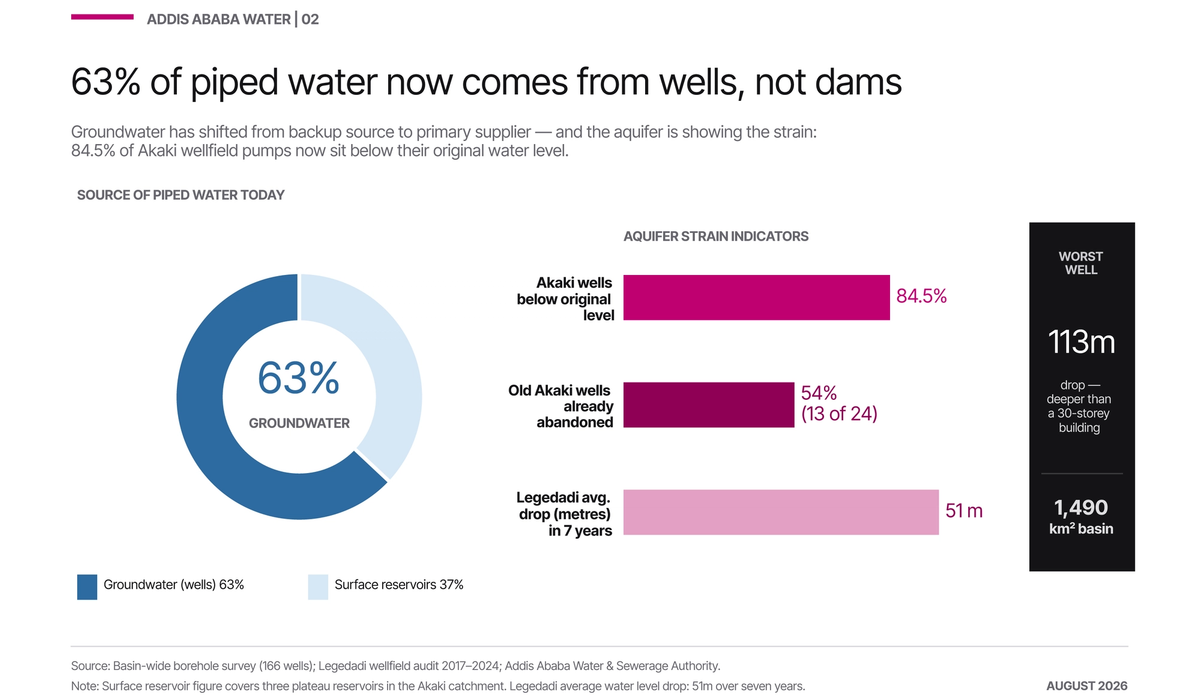
At the newer Legedadi wellfield, an audit of wells tracked from 2017 to 2024 found water levels dropping by an average of just over 51 metres — roughly the length of an Olympic pool, straight down, in seven years. The single worst-affected well fell by 112.9 metres — deeper than a 30-storey building is tall. Researchers tied part of the decline to unregulated, round-the-clock pumping, on top of natural aquifer limits.
Private wells add to the draw. A recent count identified 449 registered private wells within the city, some close enough together to interfere with each other's yield, and researchers have noted that well-drilling depths around the city have crept steadily deeper as shallower water runs out. Meanwhile, as the city itself spreads, paved and built-up surfaces have spread across the land that used to let rain soak into the aquifer, so less rain replaces what the wells take out.
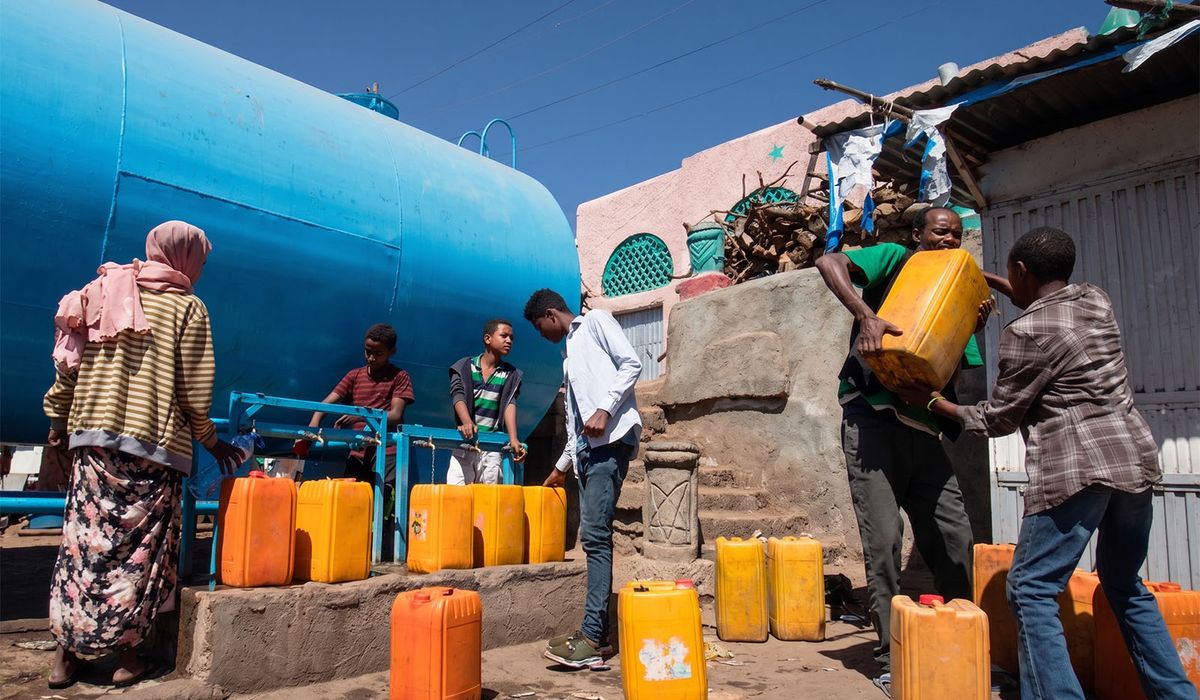
None of this is happening in a city that has stopped growing. Addis Ababa's population has been expanding at an estimated 3.3 to 3.8 percent a year, and the utility's own figures show supply has covered only about half of demand since 2005. One demand-management study put unmet water demand at 219 million cubic metres in 2023, rising to 752 million cubic metres by 2043 — more than a threefold increase over twenty years, even accounting for new projects like this week's.
Some of the shortfall never even reaches a tap. The utility has reported system losses of roughly 36 percent — meaning more than one in three litres produced leaks out of pipes or goes unbilled before reaching a household. At the city's current production of 910,000 cubic metres a day, that works out to roughly 328,000 cubic metres lost daily — more than five times the size of the entire new project celebrated this week.
The city says a further water project with 130,000 cubic metres a day of capacity — about 52 Olympic pools, or enough for roughly 1.2 million more people's daily use — is due to come online in the next fiscal year. On sanitation, planned facilities along the Entoto-Peacock river corridor (50,000 m³/day, about 20 pools) and in Goro (106,000 m³/day, about 42 pools) would add a further 150,000 cubic metres of daily wastewater treatment, part of the same push that has already taken the city's treatment capacity from a single plant a decade ago to 46 today.
Taken together, this week's ceremony marks real, measurable progress on one side of the ledger. The research on the other side — the aquifer's response to decades of pumping, and a catchment losing the vegetation and open ground that used to recharge it — is the reason engineers and city planners describe this as a race that new production alone does not settle.